Naili Conveyor
Scenario and Requirements
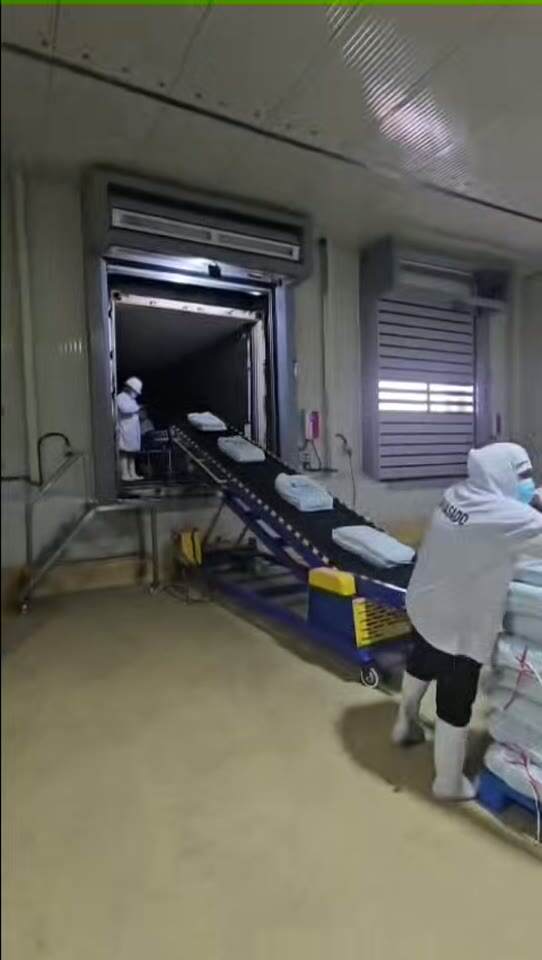
White soft-packaged bags move between an enclosed truck body and an indoor loading and unloading area. The loading door connects the truck side with the indoor operating area, while blue pallets are used to place the bagged goods that have already been organized. Goods must be transferred near the doorway, with personnel receiving the bagged goods at the end of the conveyor line and placing, organizing, or stacking them beside the pallets.
How the Solution Connects
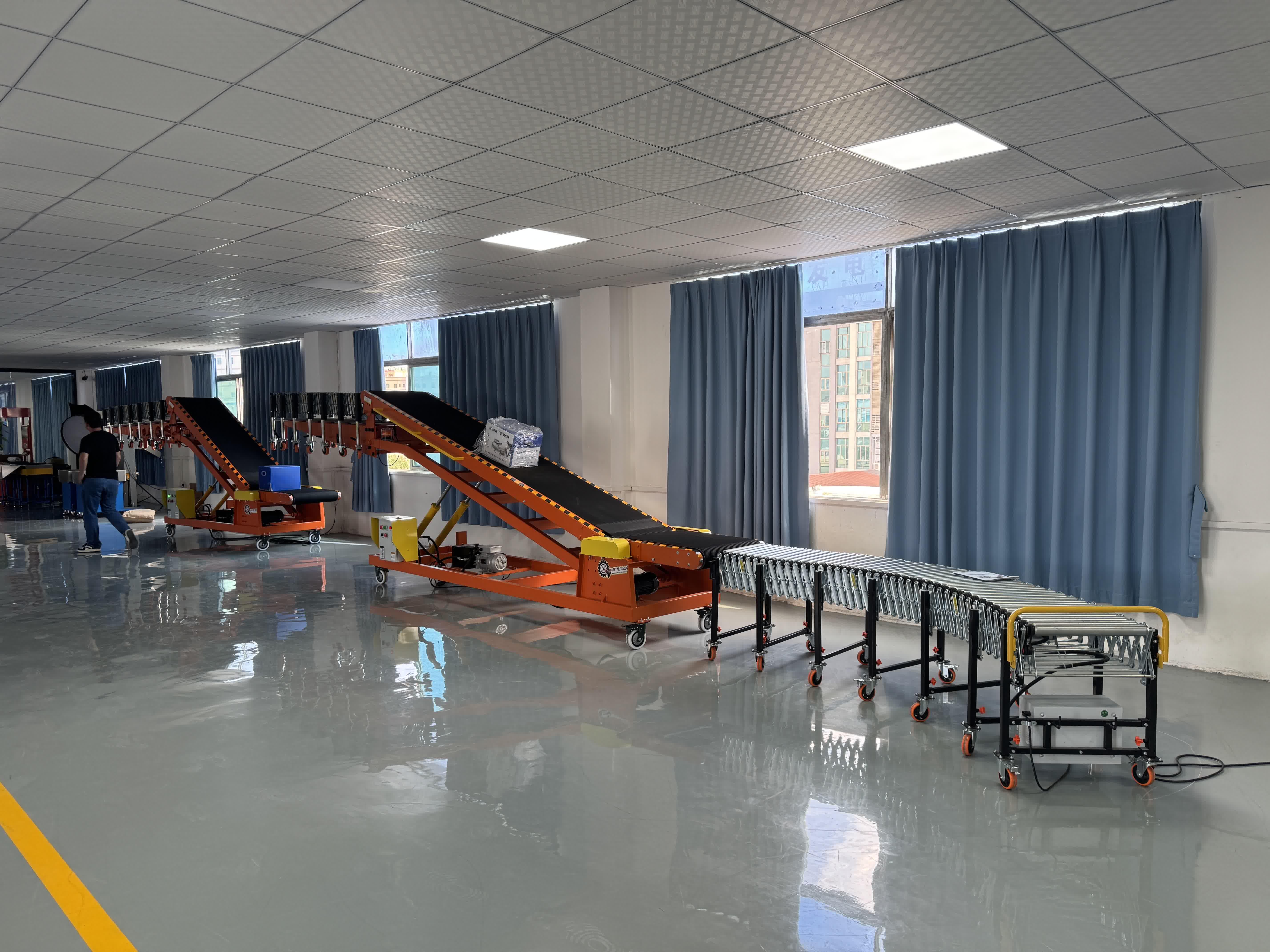
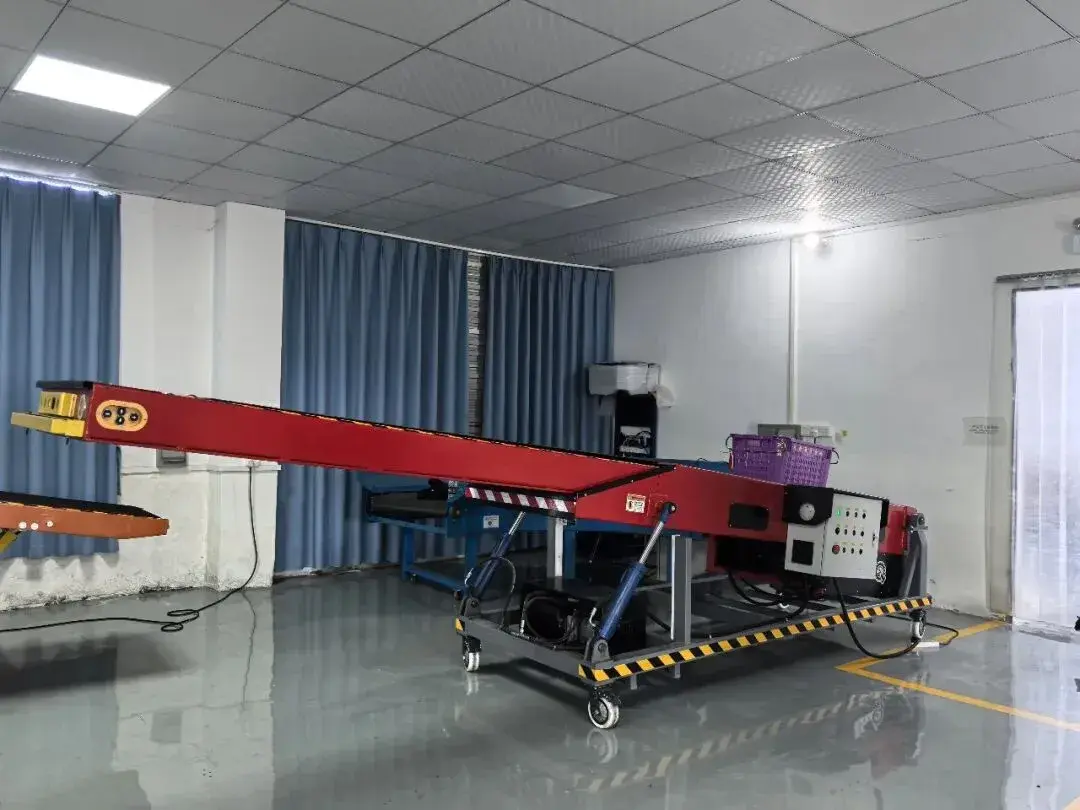
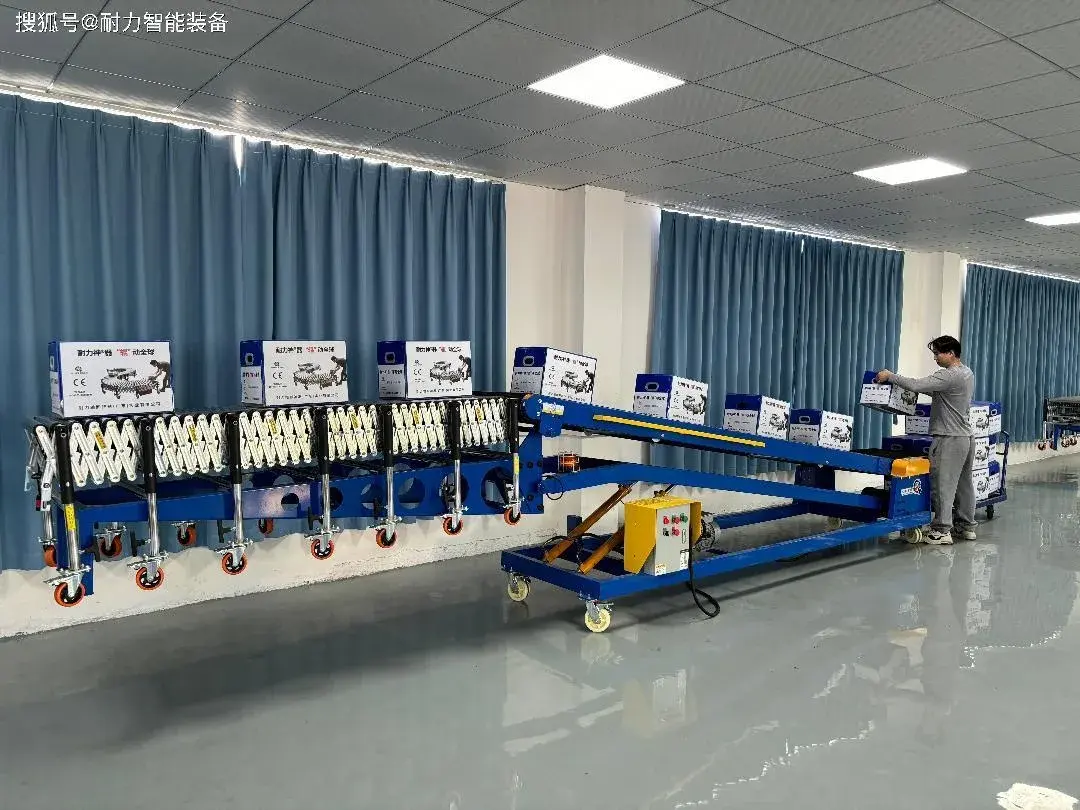
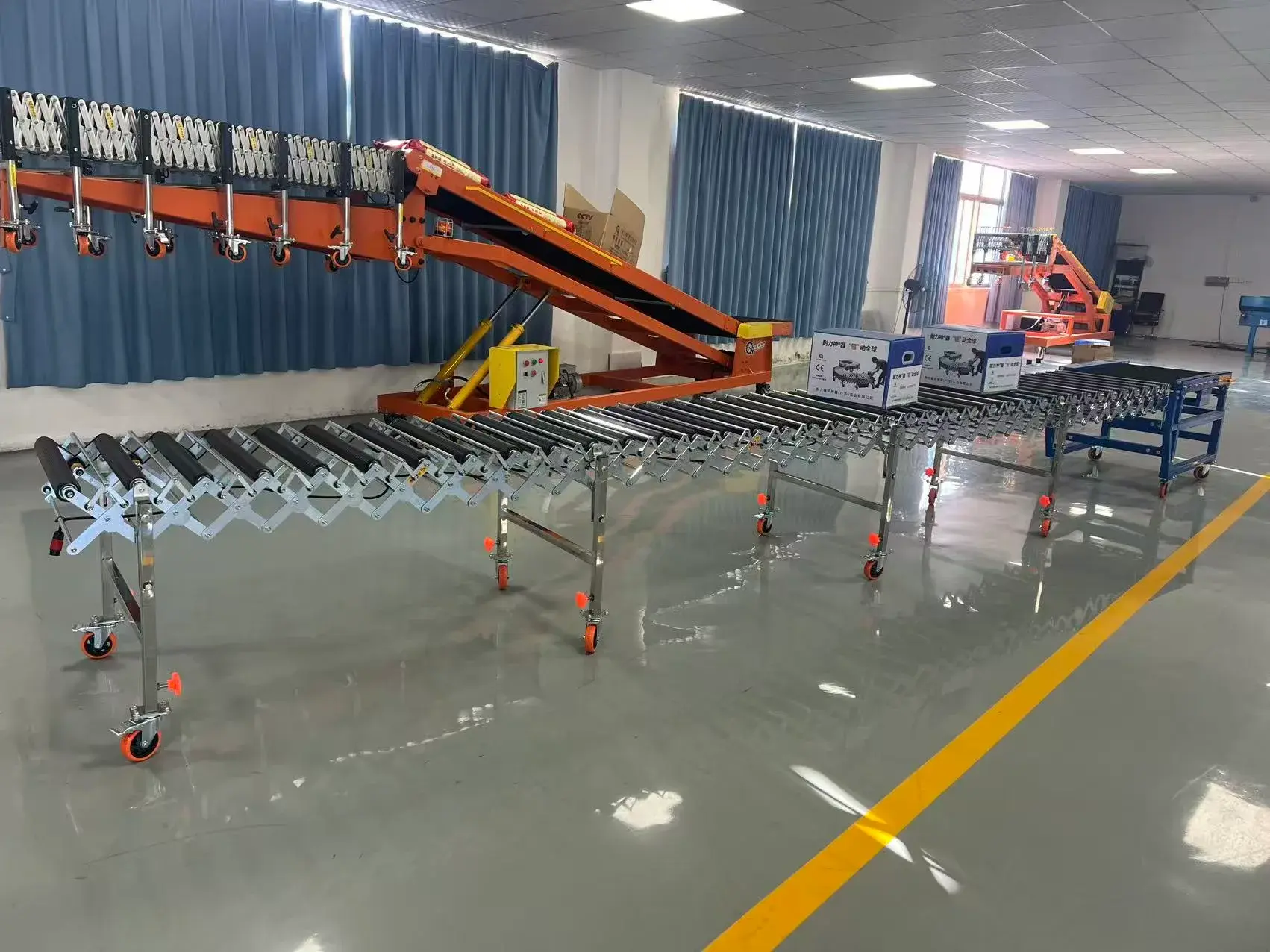
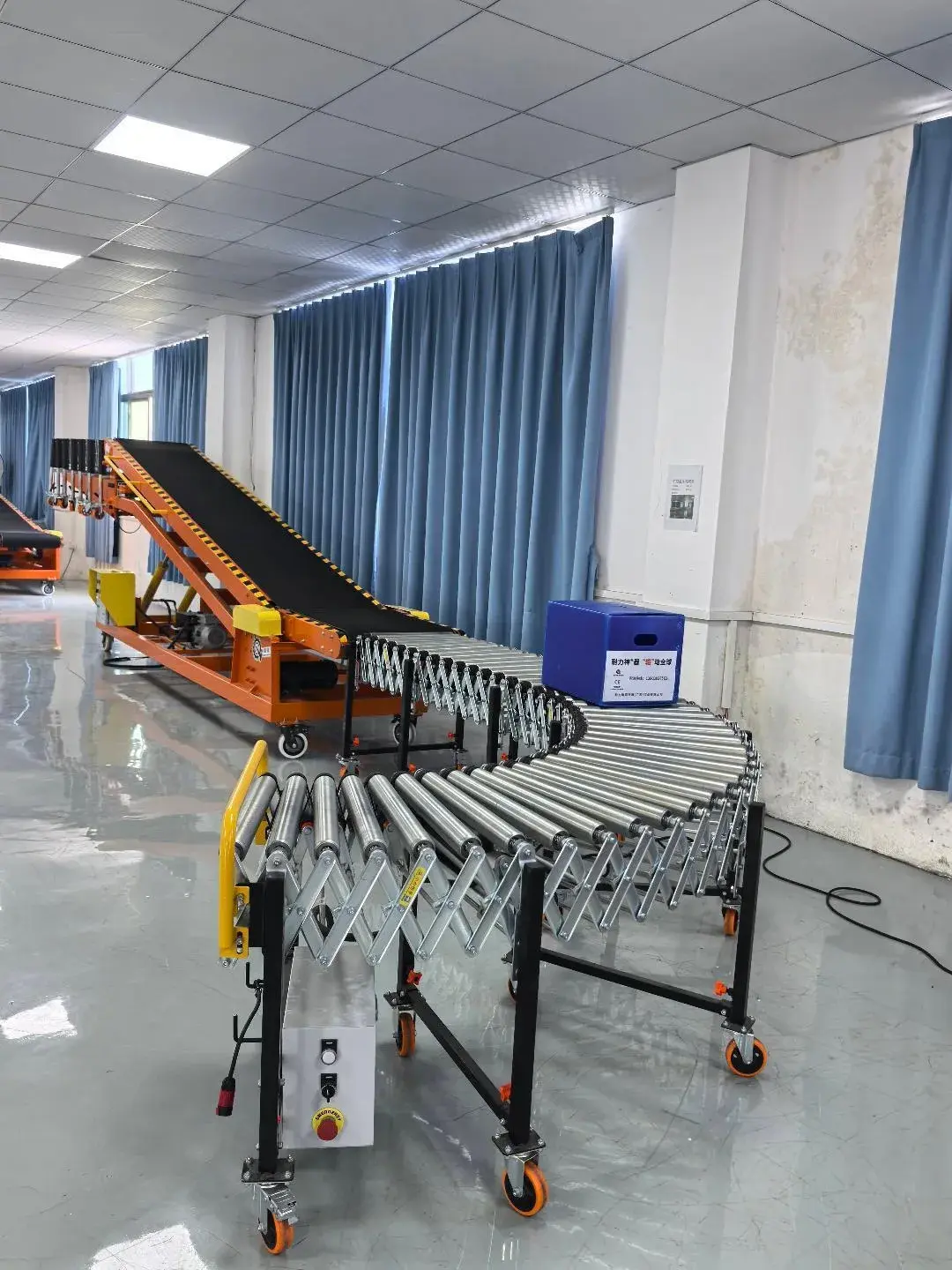
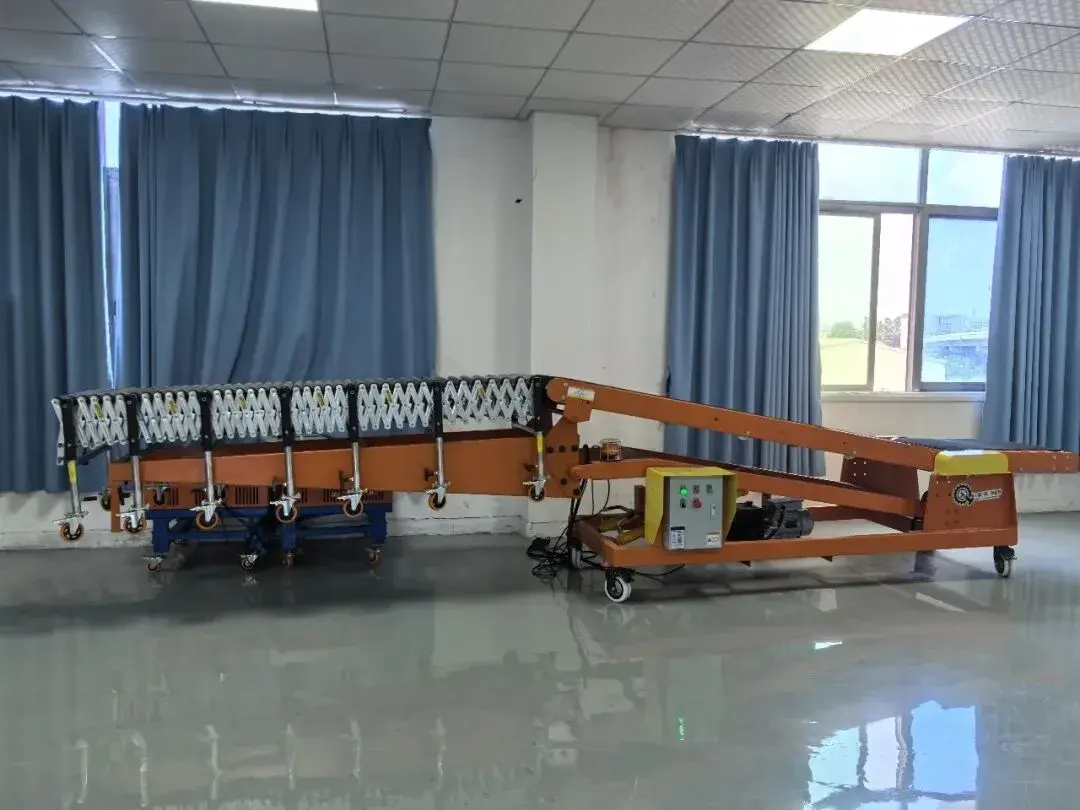
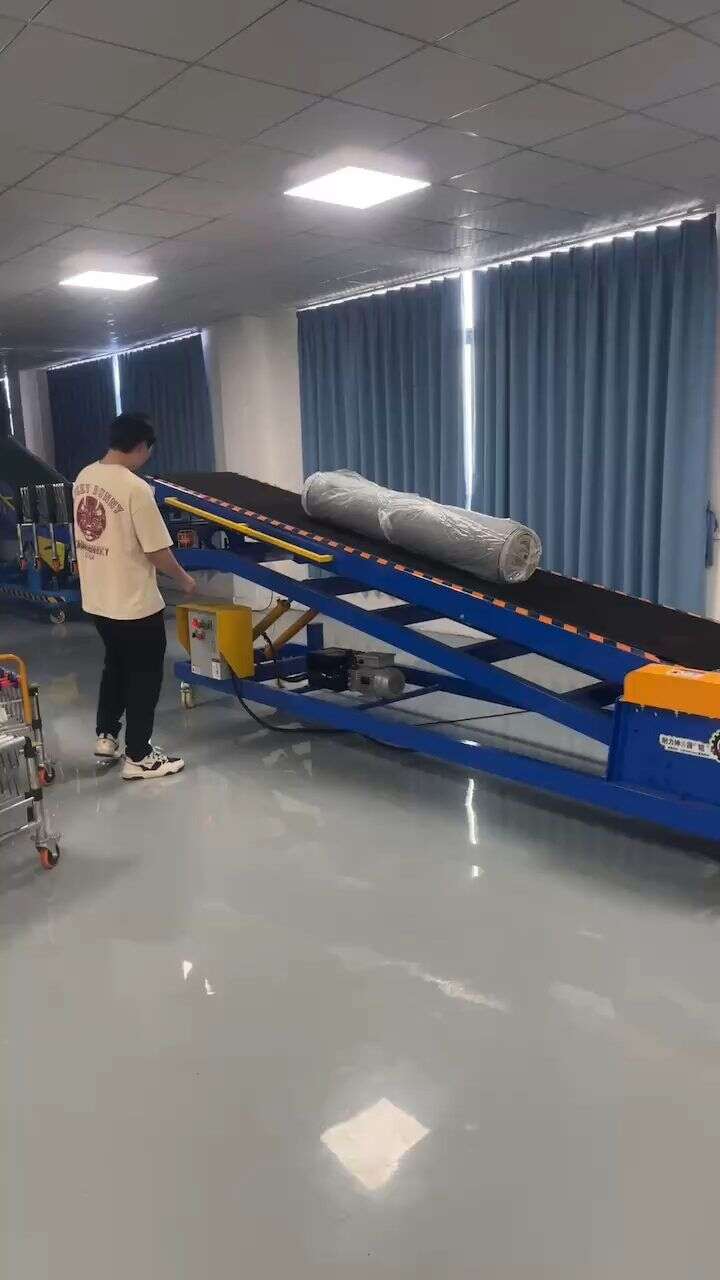
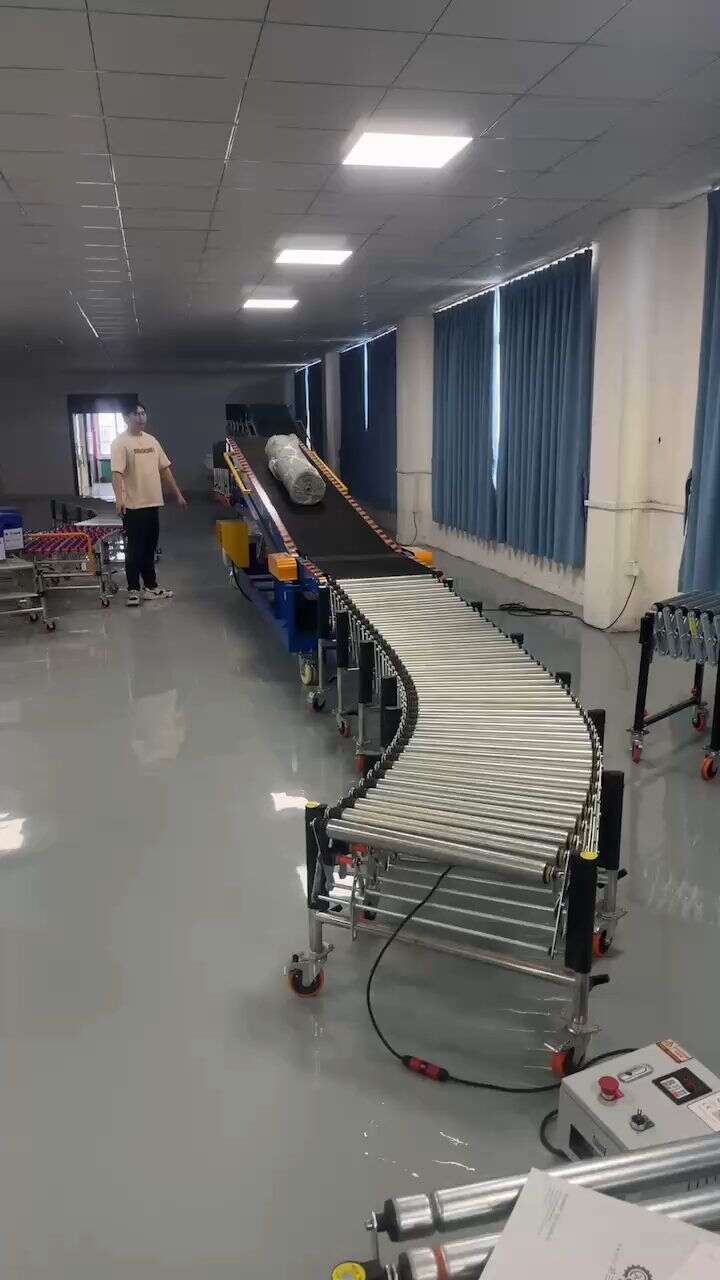
An inclined belt conveyor is arranged near the doorway. The white soft-packaged bags pass through the loading door along the belt section, completing transport between the indoor operating area and the truck entrance. A roller conveyor section is installed inside the truck to support and continue conveying the bagged goods entering the truck. The belt section and roller section are positioned outside the doorway and inside the truck, respectively, connecting the preceding and following stages within the same loading and unloading area.
Operating Process and Manual Coordination
The bagged goods first enter the inclined belt conveyor and, after passing through the loading doorway, transfer to the roller conveyor section inside the truck. The white soft-packaged bags are transferred between the belt and roller sections. Personnel receive the goods at the end of the conveyor line and place, organize, or stack them near the blue pallets. The equipment conveys the goods through the doorway and the section inside the truck, while personnel handle end-point receiving and subsequent organization.
Changes After Use and Application Significance
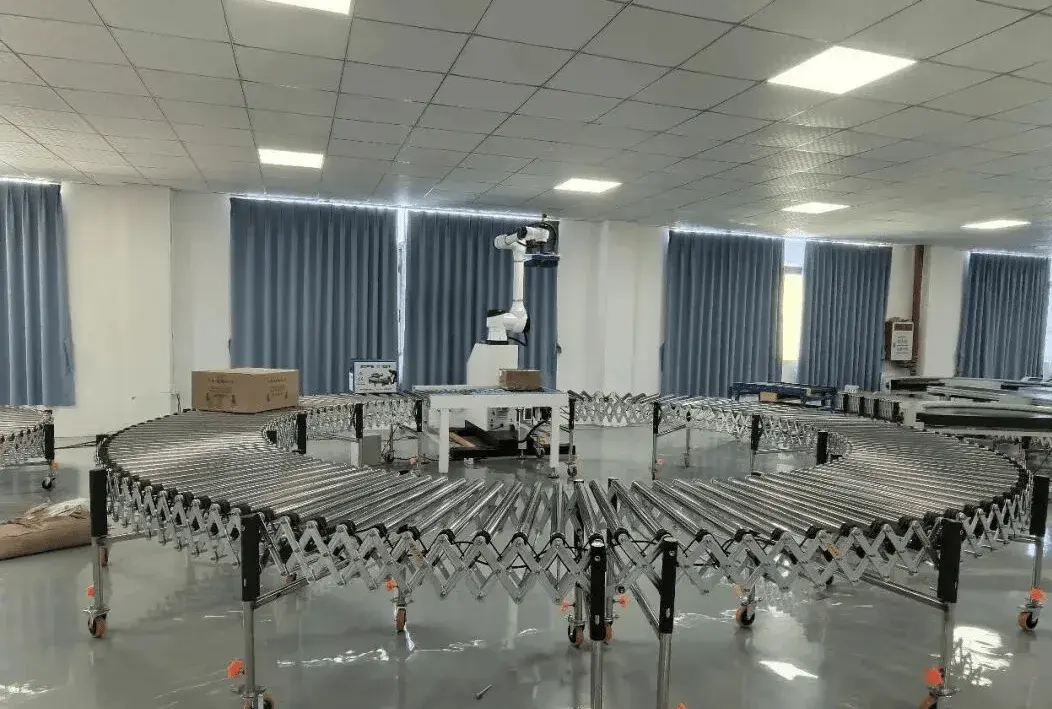
The roller conveyor section inside the truck and the inclined belt conveyor near the doorway have clearly defined roles, enabling the bagged goods to be transferred between the truck and the indoor operating area while concentrating goods receipt near the end of the conveyor line and the pallets. This equipment layout by Naili Conveyor arranges doorway conveying, in-truck support, end-point receiving, and pallet organization at adjacent operating positions. Before reuse, verify the stability of the bagged goods’ outer packaging, the truck interface, and the end-point goods-receiving method.