Naili Conveyor
Scenario and Requirements
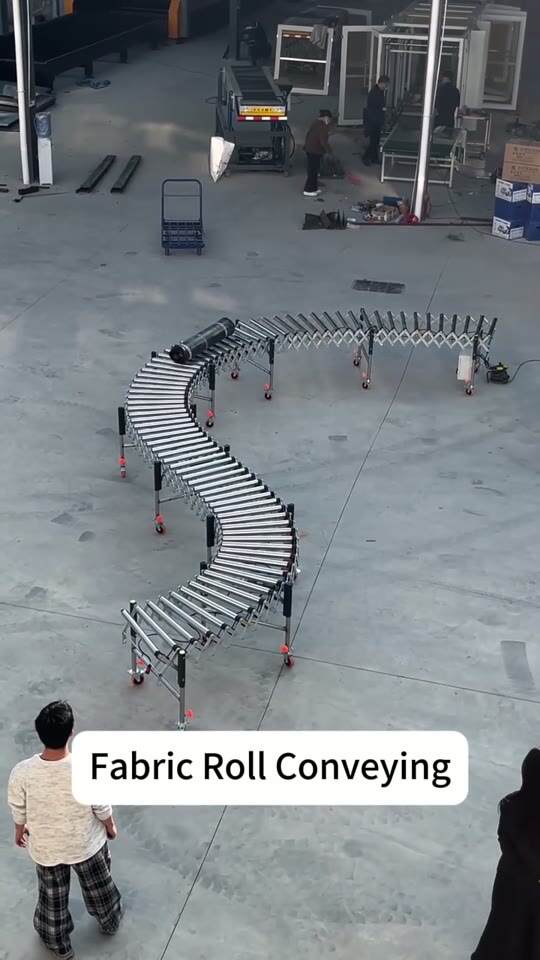
In the workshop, black cylindrical fabric rolls are placed on a curved metal roller section. The operating path does not extend in a straight line but transfers the rolls along a continuously curved direction. The rollers support the rolls and keep them on the designated path as they pass through the curved section. This scenario demonstrates an application for handling fabric rolls.
How the Solution Connects
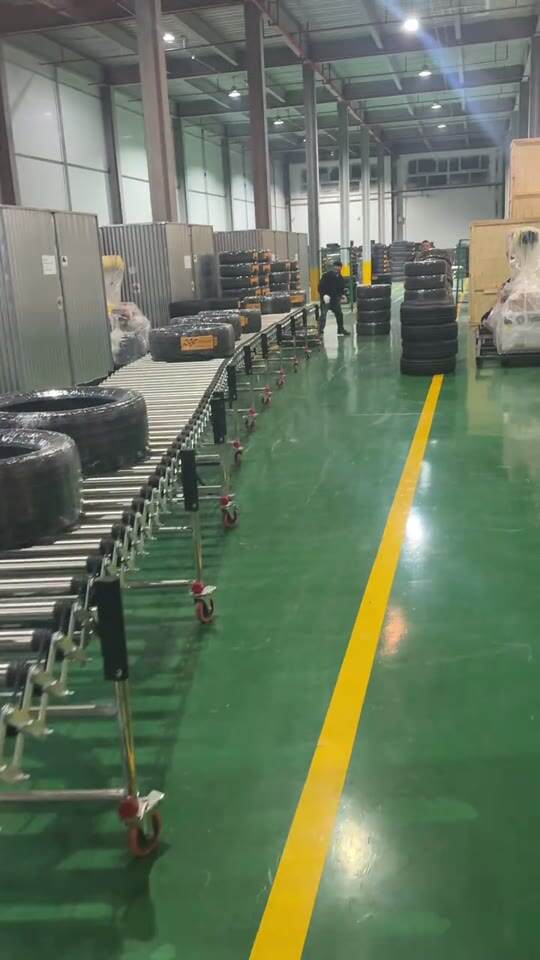
The curved roller section connects two operating positions. After entering from one end, the black rolls turn along the curved path formed by the metal rollers before reaching the other end for transfer. The roller section supports and guides the rolls through the turn, while the front and rear ends correspond to the positions where the rolls enter and leave the equipment. This demonstration layout by Naili Conveyor also includes casters and folding supports. Personnel can adjust the equipment position according to the end-connection requirements and inspect the support structure and roller section.
Operating Process and Manual Coordination
The operation begins with placing the roll on the curved roller section. The black cylindrical roll follows the curved path through the turning area and then reaches the end for transfer. Personnel observe the roll position from the side of the equipment and inspect or push the equipment structure at the end, keeping the roll aligned with the preceding and following positions as it enters, turns through, and leaves the roller section. On-site coordination focuses on roll alignment, equipment inspection, and end transfer, without adding specific drive methods or operating parameters.
Changes After Use
The curved roller path allows fabric rolls to be conveyed around turns within the workshop, so the preceding and following operating positions do not all need to be arranged along the same straight line. Casters and folding supports provide structural conditions for adjusting the equipment position, connecting the ends, and conducting on-site inspections, allowing the roll-handling route to be arranged around the actual positions. Before reusing this type of layout, verify the roll dimensions, roller support conditions, curved turning path, and the methods of receiving goods at both ends.