Scenario and truck-loading requirements
A large tire warehouse has no loading platform, so tires need to be transferred from the warehouse end into a 40-foot container for loading. The warehouse conveyor and the loading position inside the 40-foot container require elevation and positional alignment. Naili Conveyor is used in this tire-loading connection scenario.
How Multi-Wedge Belt Powered Roller Conveyor connects with a medium-sized inclined conveyor
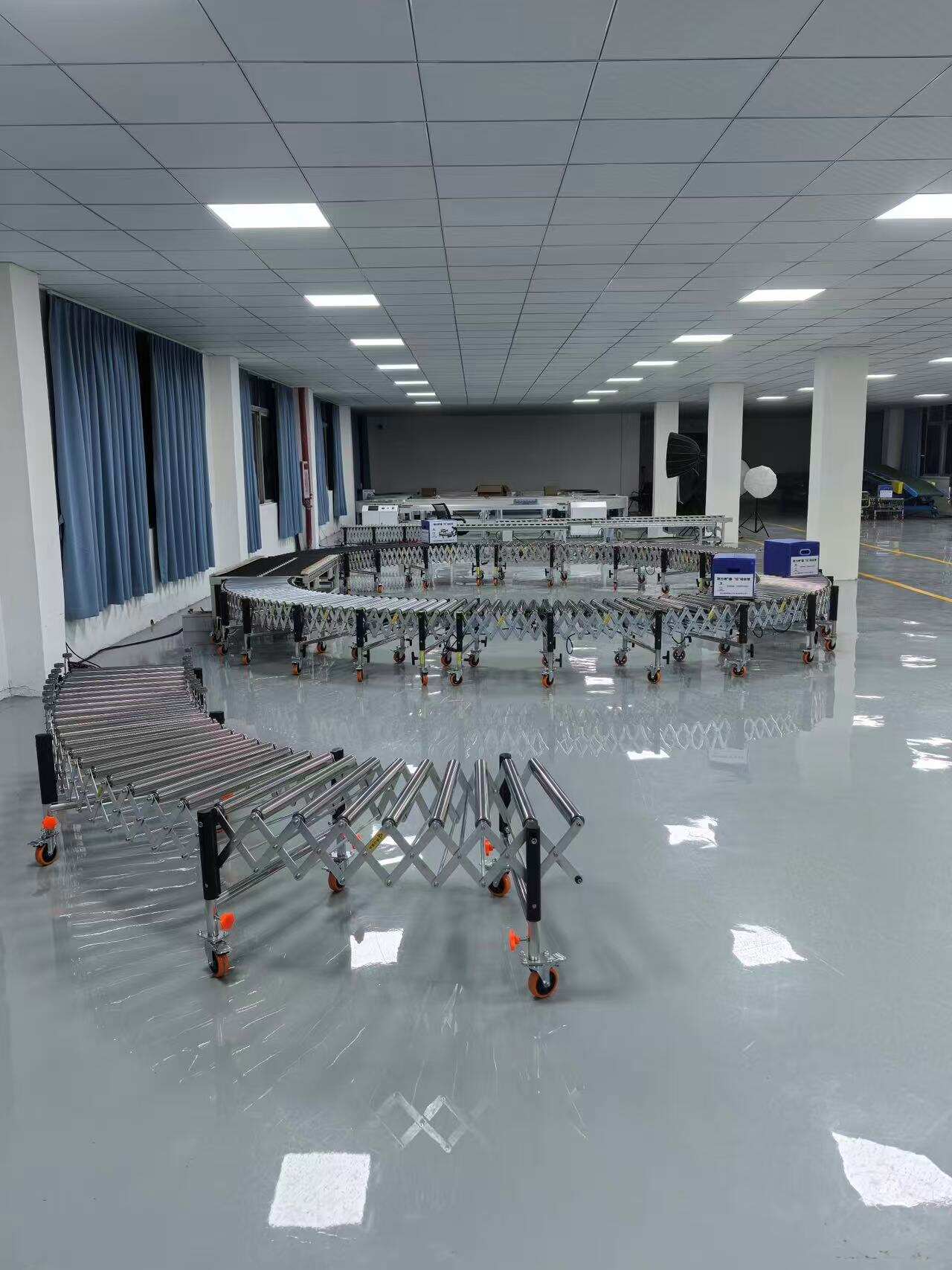
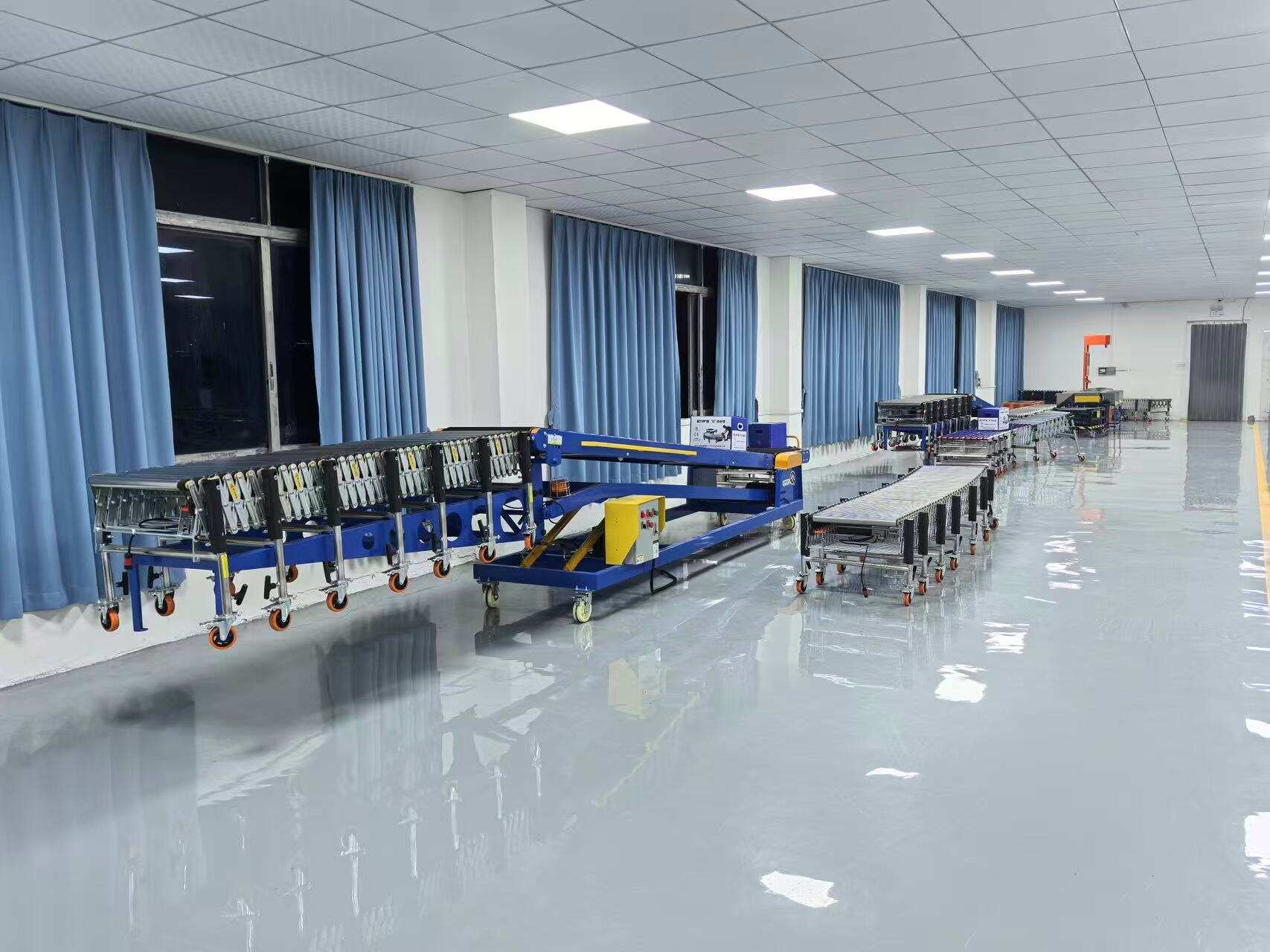
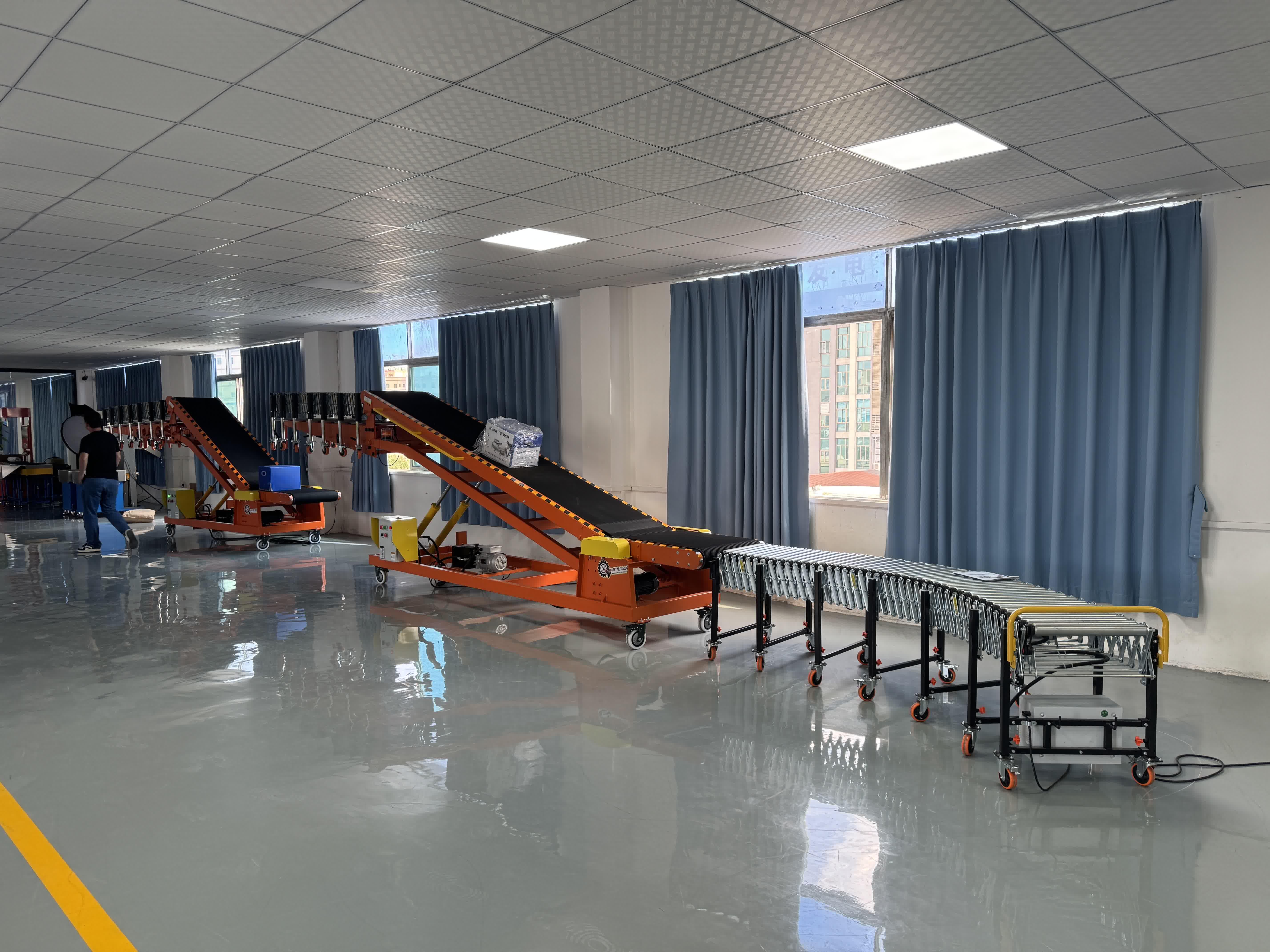
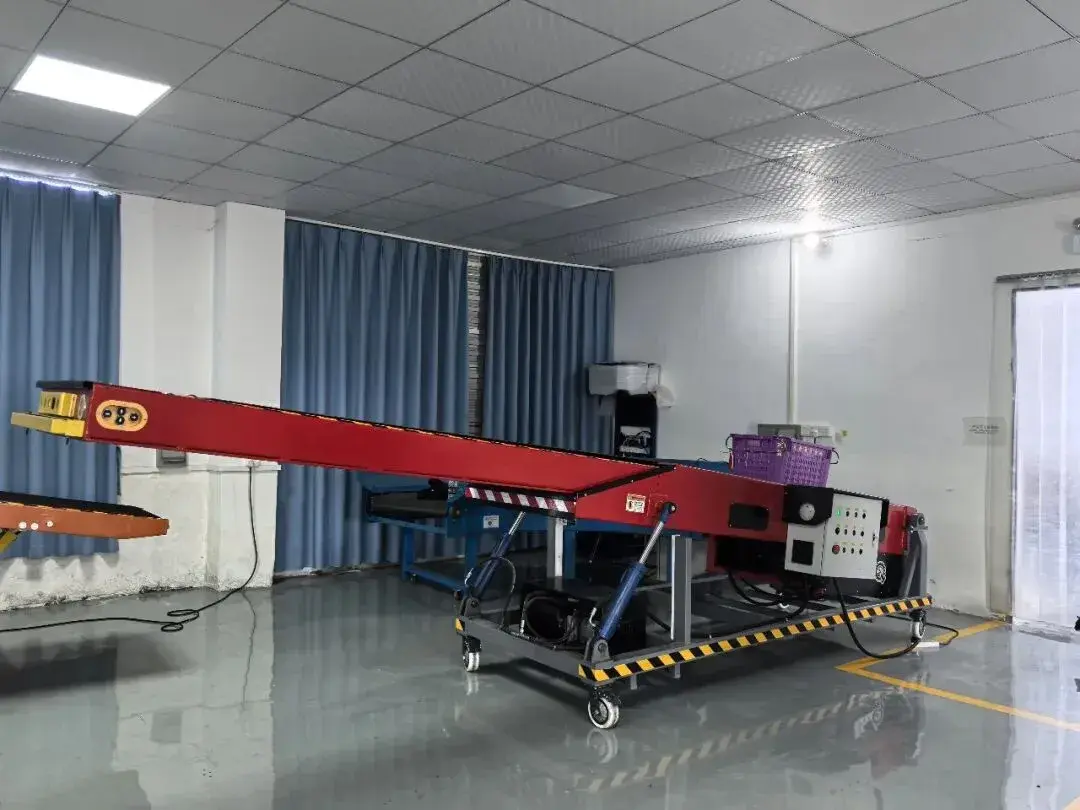
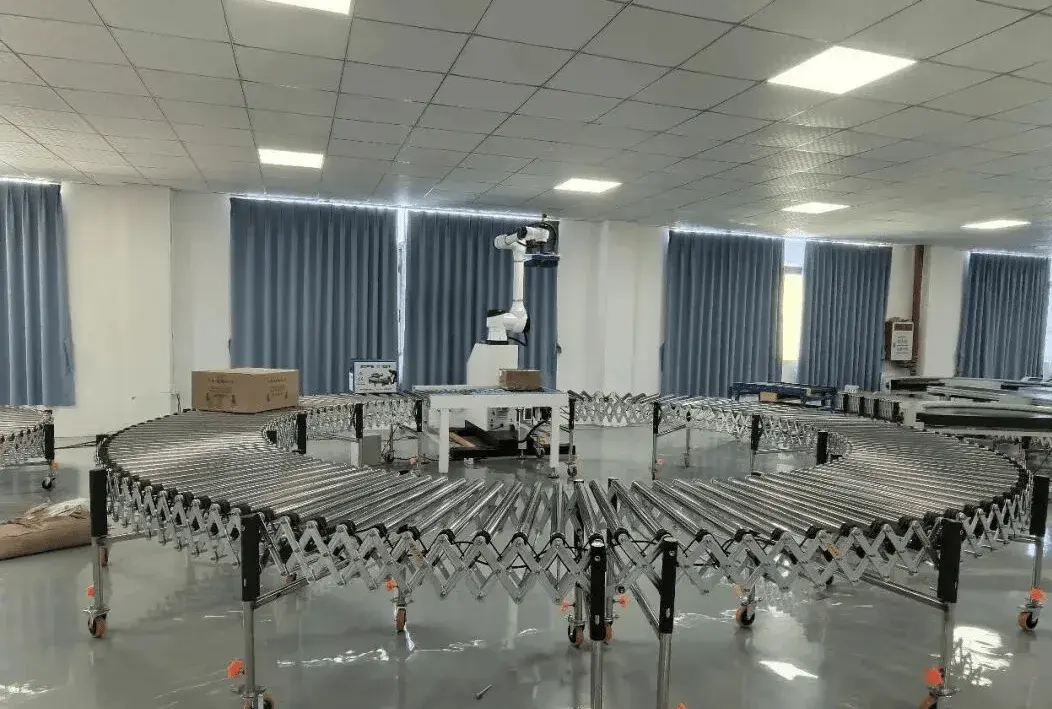
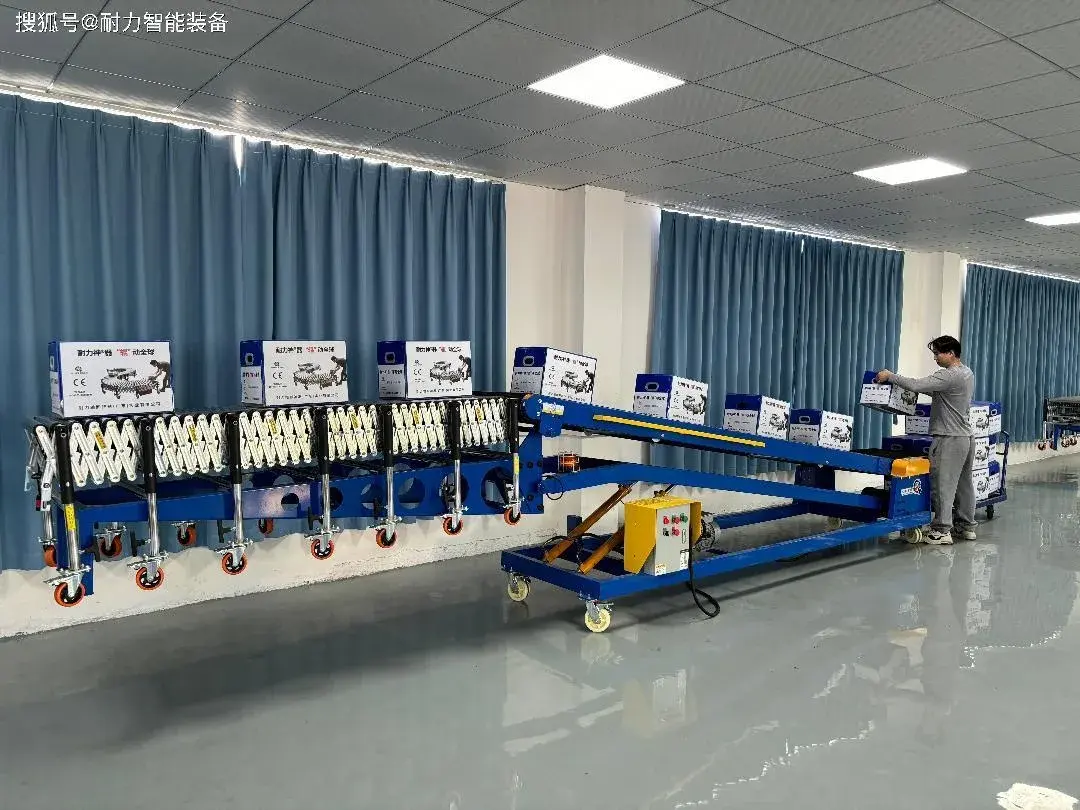
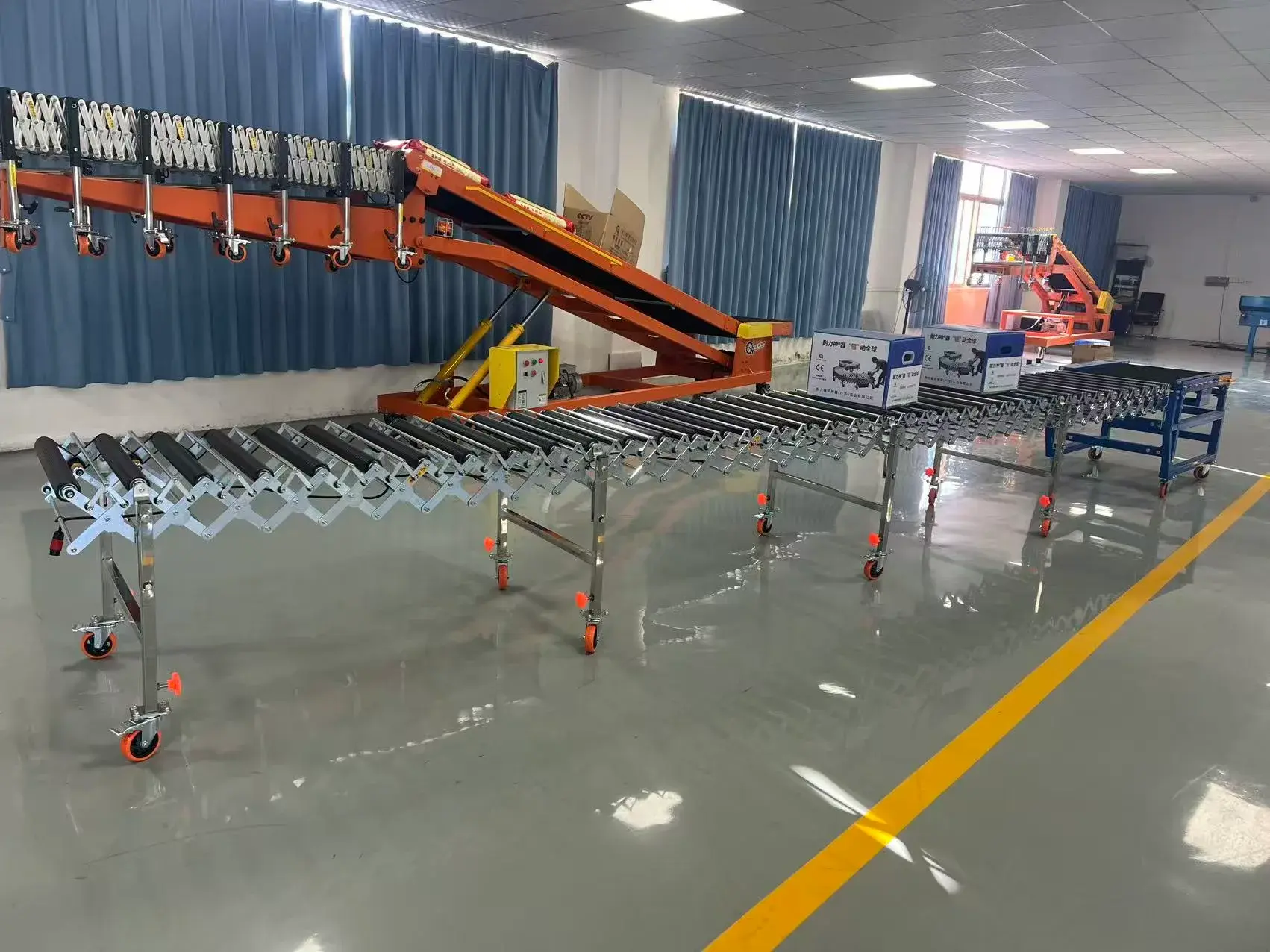
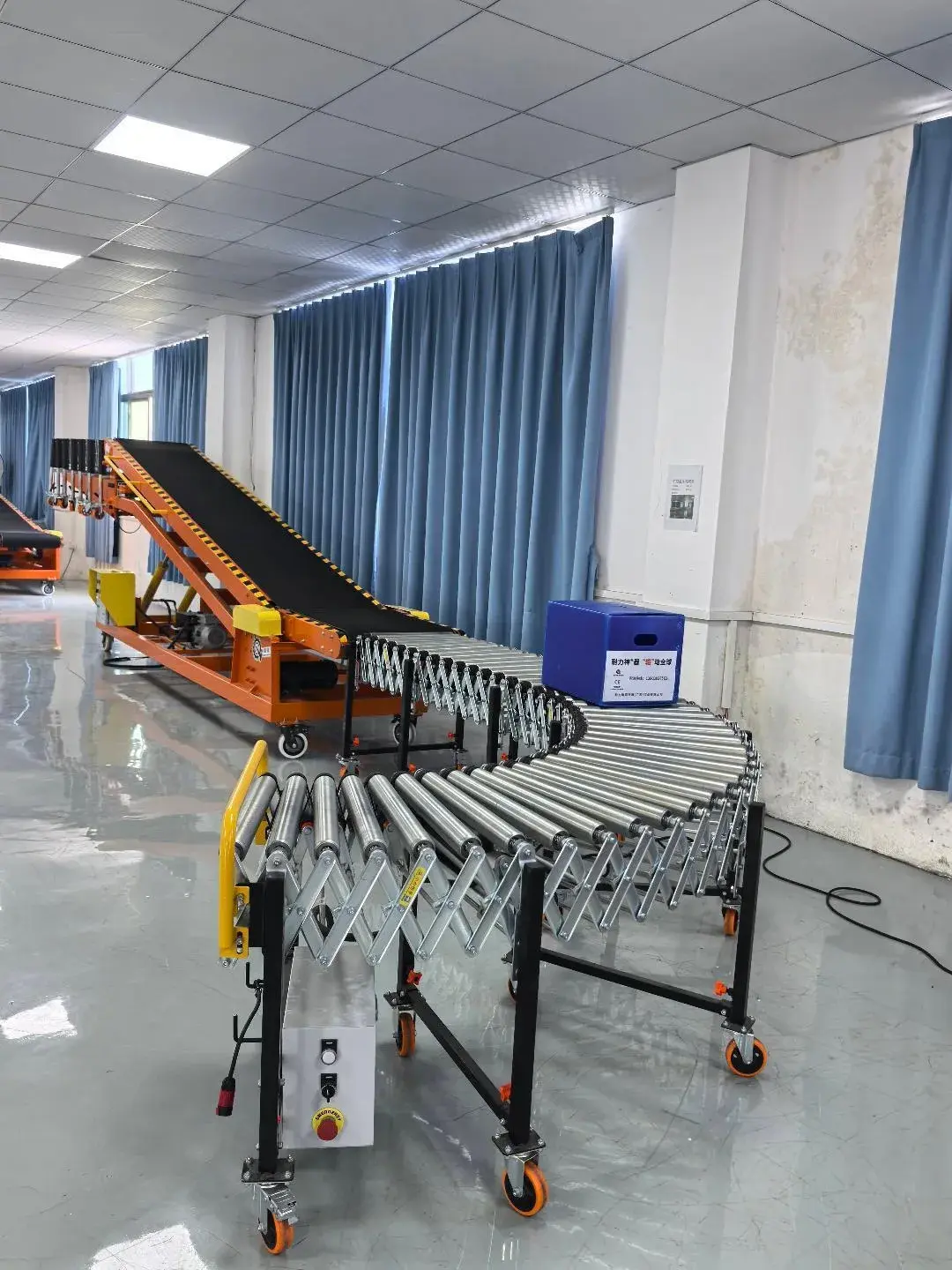
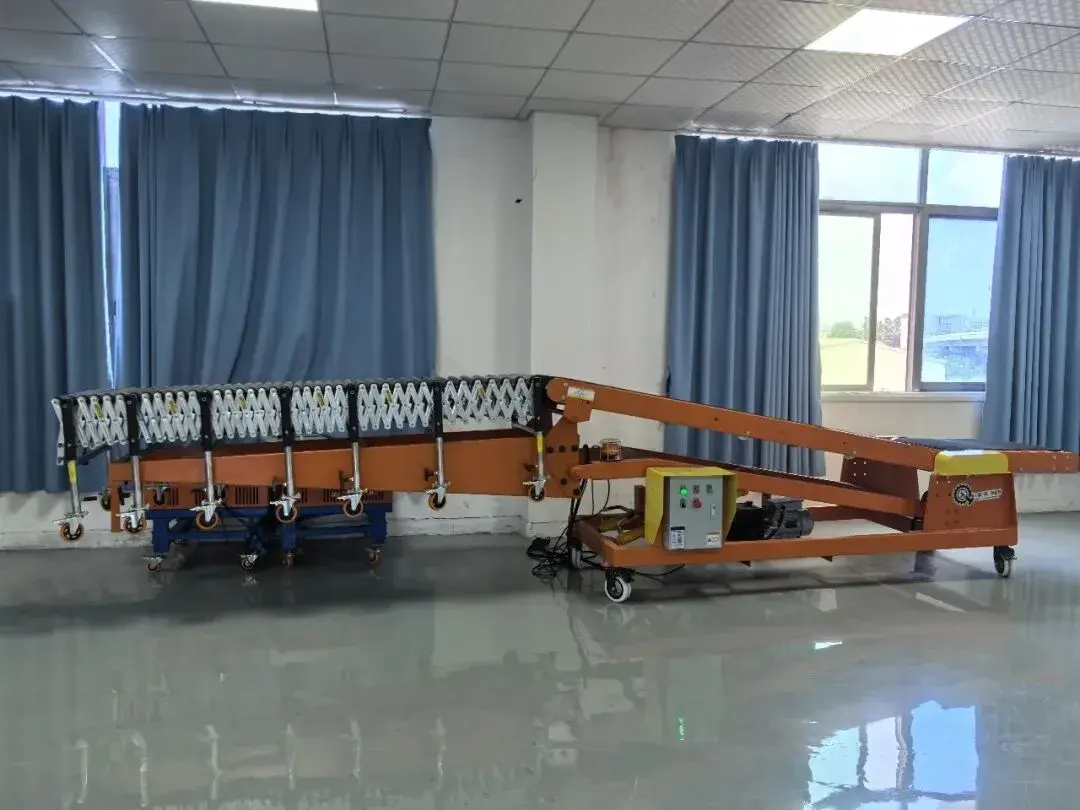
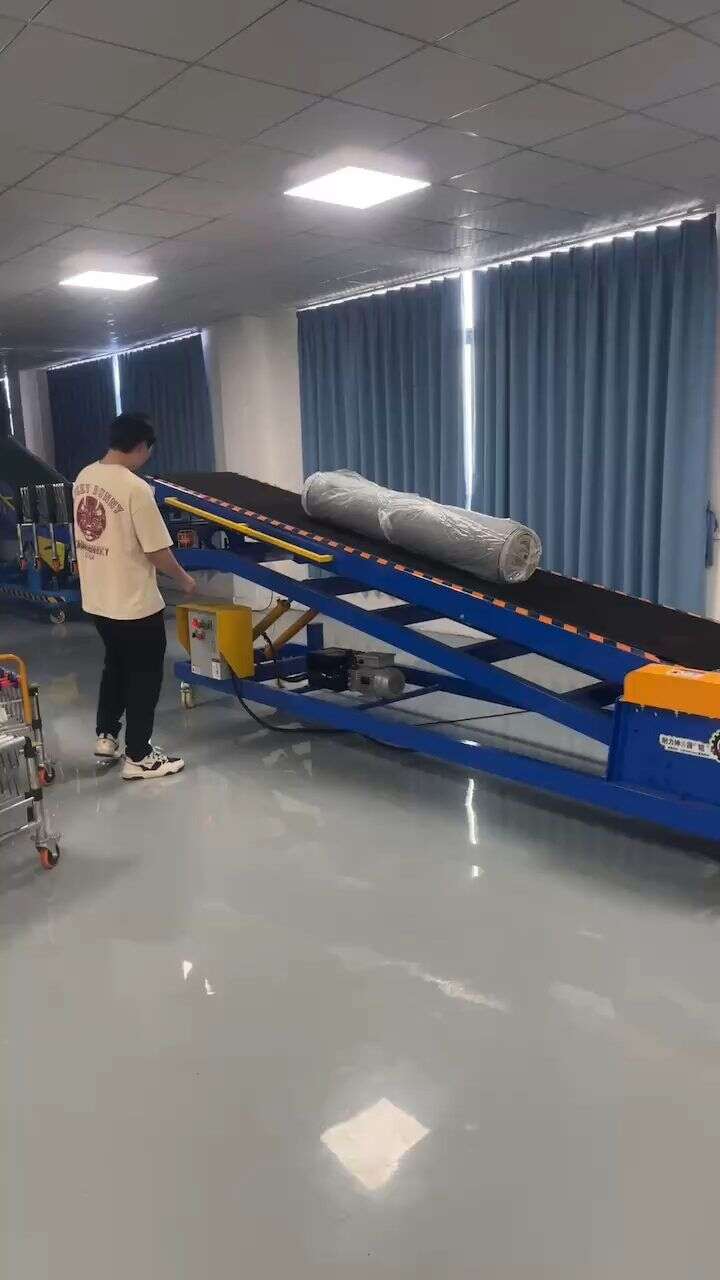
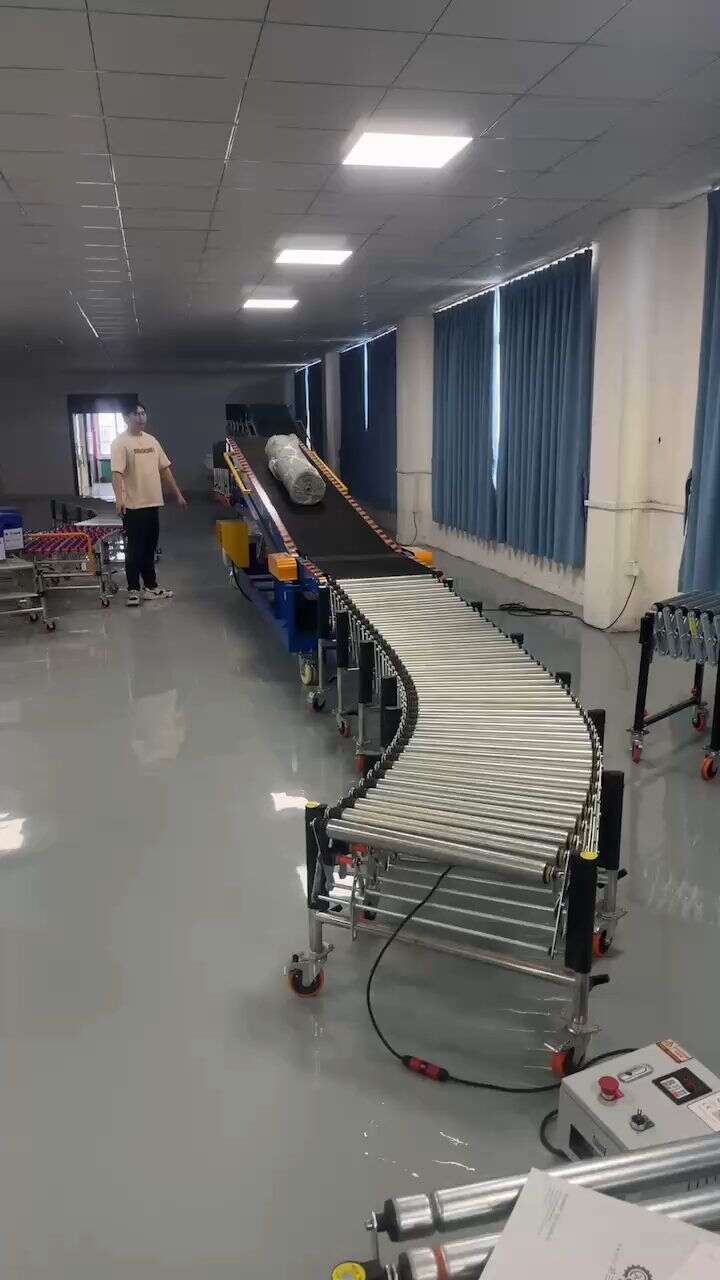
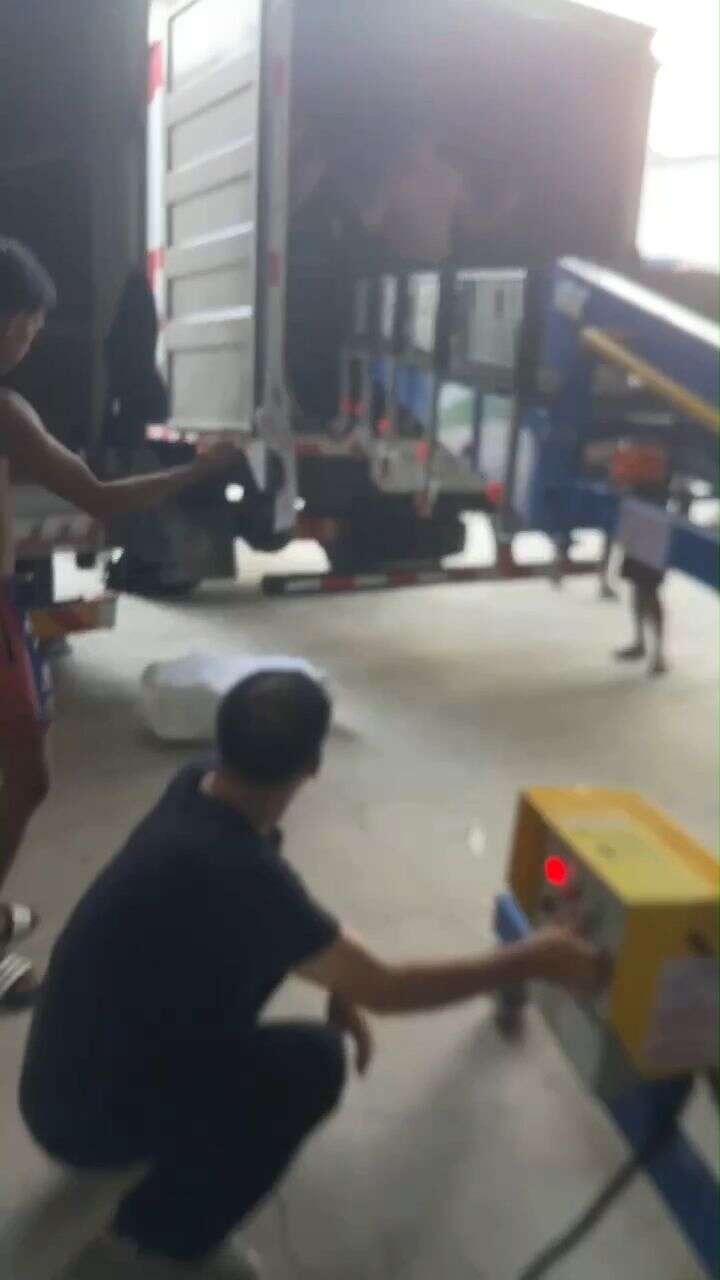
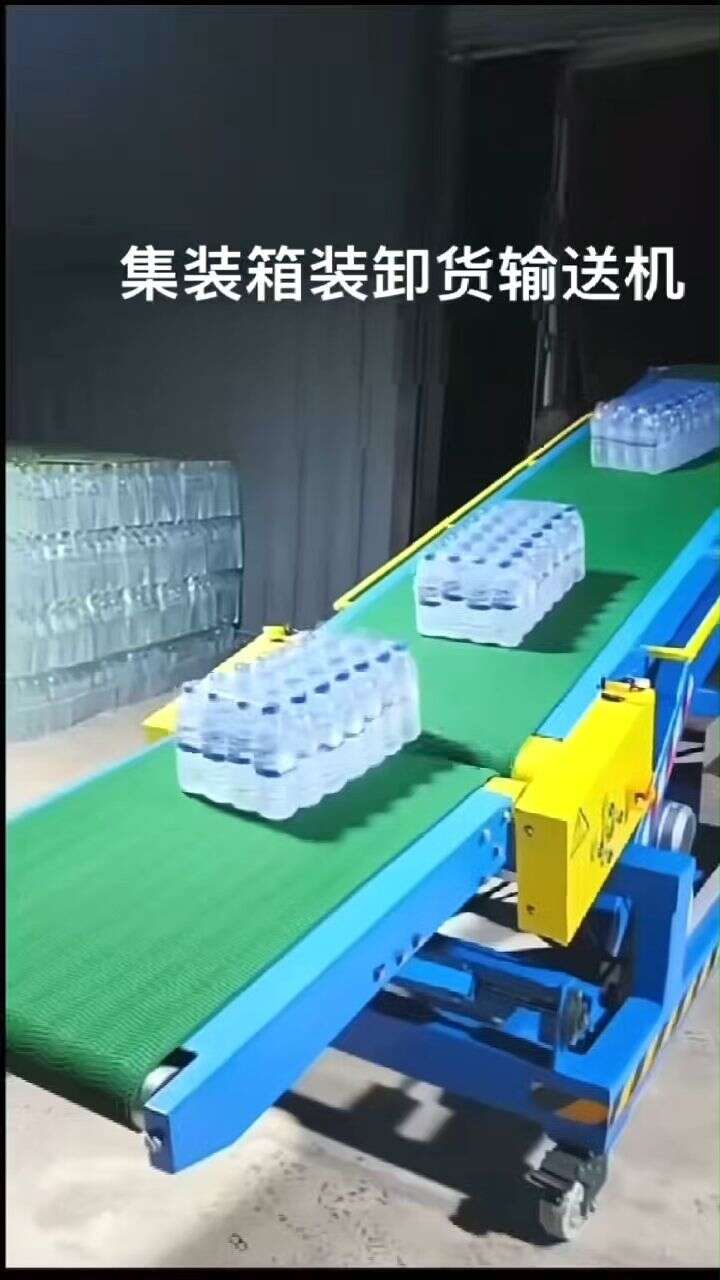
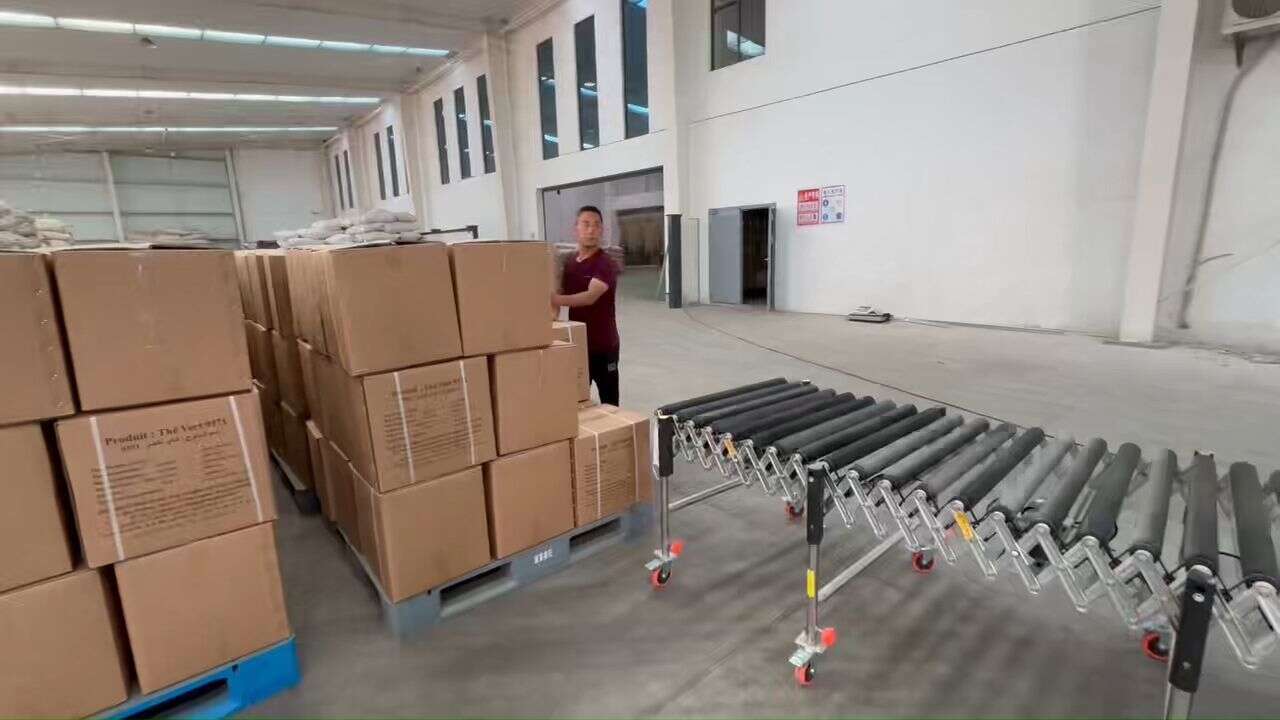
The site uses Multi-Wedge Belt Powered Roller Conveyor together with a medium-sized inclined conveyor. Multi-Wedge Belt Powered Roller Conveyor receives the tire flow from the warehouse end, while the medium-sized inclined conveyor connects the warehouse conveying section with the loading position inside the 40-foot container and handles the elevation and positional transition as the tires enter the container loading area.
Workflow and manual receiving and organization
The operation begins with loading at the warehouse end. The tires enter Multi-Wedge Belt Powered Roller Conveyor and are transferred toward the loading direction by the upstream conveying equipment. After passing through the medium-sized inclined conveyor, the tires are delivered into the 40-foot container. Multi-Wedge Belt Powered Roller Conveyor handles the upstream tire conveying, while the medium-sized inclined conveyor provides the transition into the container loading position.
After the tires enter the container, personnel still manually receive, organize, and coordinate the loading process. The equipment handles conveying and the transition between the warehouse end and the loading position inside the container, while manual receiving and organization remain necessary inside the container.
On-site changes after use
For a large tire warehouse without a loading platform, this equipment combination connects tire conveying at the warehouse end with the loading position inside a 40-foot container. Multi-Wedge Belt Powered Roller Conveyor handles conveying at the warehouse end, while the medium-sized inclined conveyor manages the transition into the container loading position, creating a clear division of labor between warehouse-end conveying, elevation transition, and receiving inside the container.
After the equipment completes the upstream conveying and positional transition, personnel inside the container still handle receiving, organization, and loading coordination. Before reusing this solution, verify the weight of each tire, the loading height, and the receiving method inside the container.