Naili Conveyor
Warehouse and truck loading requirements
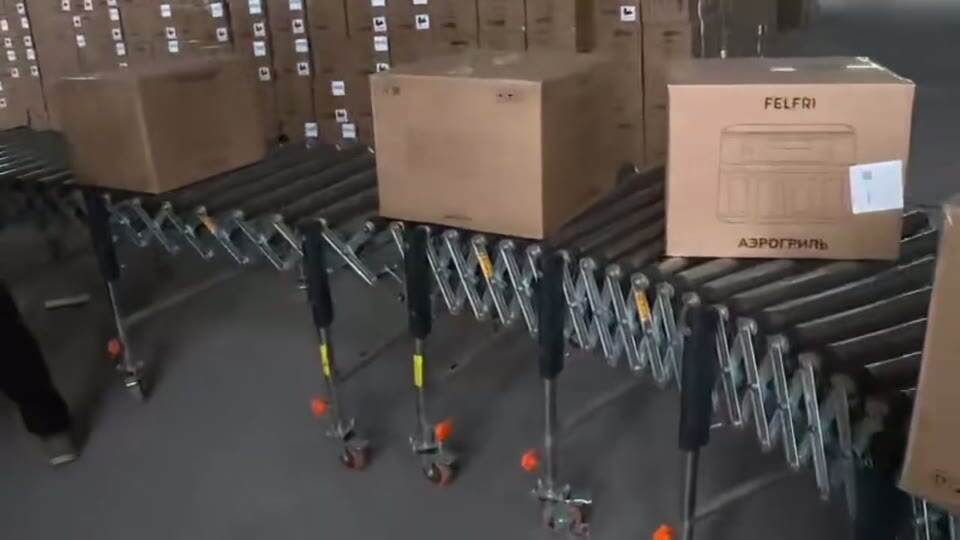
This case involves boxed finished products of kitchen small appliances such as air fryers and air ovens. The brown outer cartons are printed with an air fryer illustration, the FELFRI logo, and the Russian product name "АЭРОГРИЛЬ". The goods are transferred from the warehouse's open doorway and concrete loading passage to the rear door of a box truck, and then into the truck body.
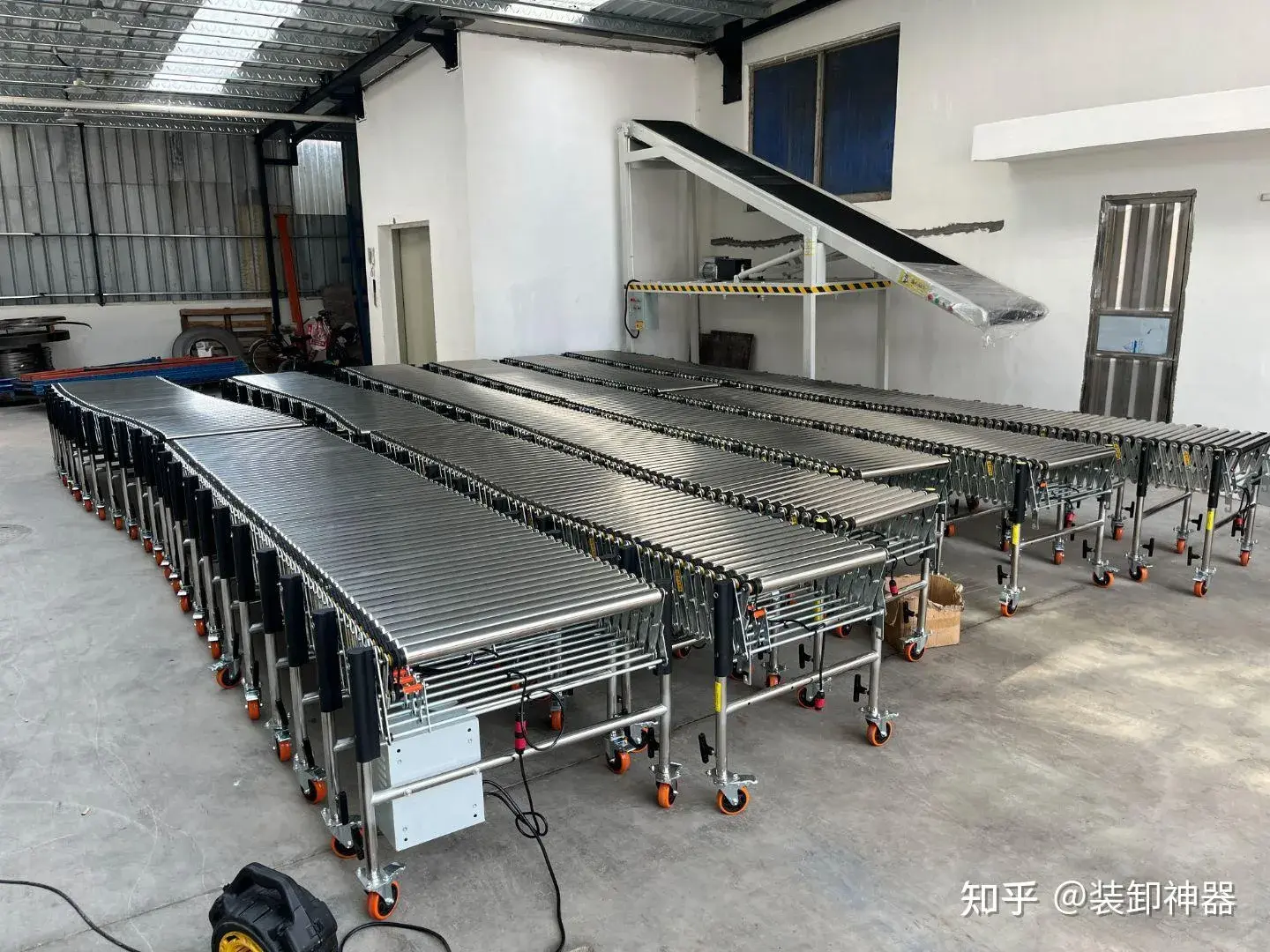
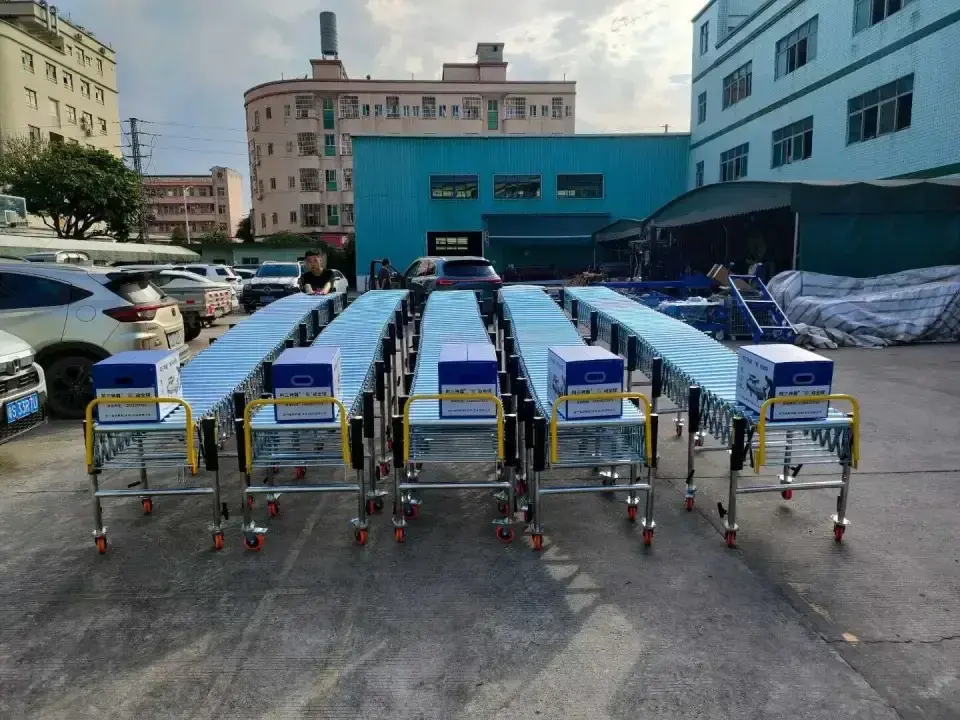
The warehouse is equipped with roller conveyor equipment fitted with casters, with brown outer cartons placed on the rollers. Roller conveyor sections are also installed inside the truck body. The outer cartons are arranged along the conveying direction toward the front of the truck, while personnel inside the truck assist with receiving and placement.
How the inclined belt and roller conveyors connect
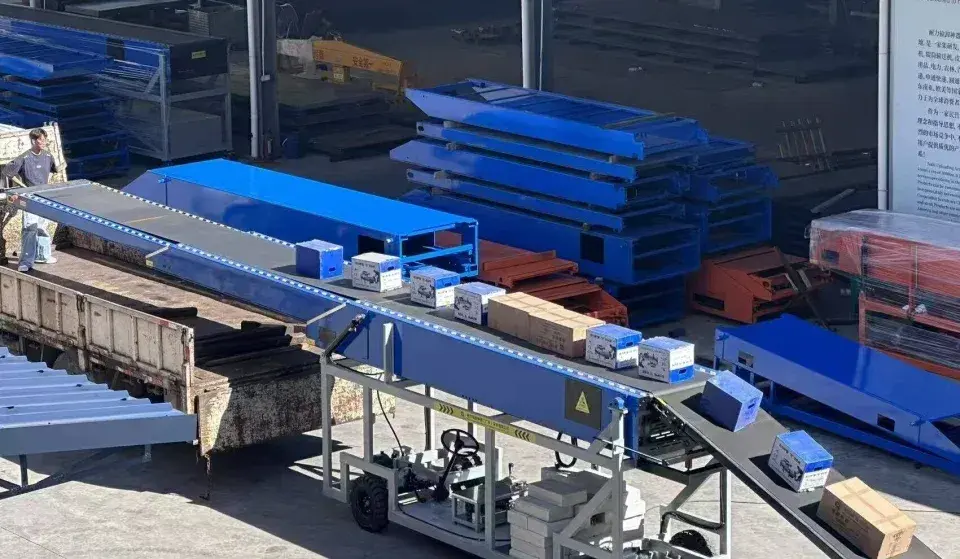
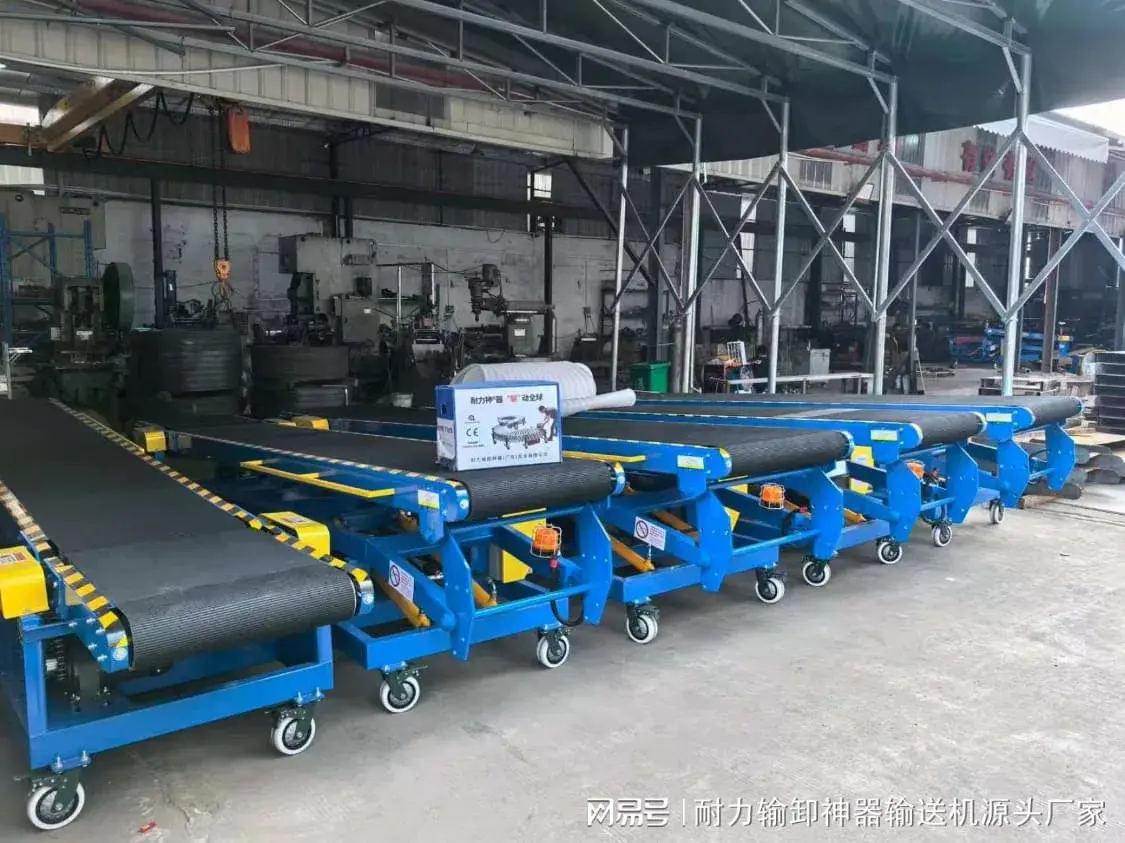
There is a height difference between the warehouse floor and the entrance of the box truck. A blue inclined belt conveyor with yellow guardrails extends from the warehouse floor to the truck body with its rear doors open, carrying the air fryer outer cartons to the truck entrance. The roller conveyor supports the brown outer cartons and connects the warehouse, entrance, and interior of the truck.
The outer cartons are first placed on the warehouse roller conveyor section, pass through the height transition via the inclined belt conveyor, and then enter the roller conveyor sections at the truck entrance and inside the truck. Naili Conveyor provides this loading connection, where the transfer points between the equipment must allow the cartons to land smoothly on the next supporting surface while maintaining an orientation that enables personnel inside the truck to continue handling them.
Carton loading with personnel assistance
The air fryer outer cartons move from the warehouse roller conveyor section onto the inclined belt conveyor, pass through the rear door of the box truck, and enter the roller conveyor section inside the truck. The cartons inside the truck bear the text "АЭРОГРИЛЬ" and air fryer illustrations, and are arranged along the rollers toward the front of the truck.
Personnel inside the truck receive the incoming cartons and guide their direction. They adjust the orientation of the outer cartons according to their position on the rollers, then organize and stack the goods toward the front of the truck. The equipment transfers the outer cartons between the warehouse and the truck, while personnel continue placing them inside the truck.
Loading changes after the cargo transfer connection
The inclined belt conveyor carries the air fryer outer cartons from the warehouse floor to the truck entrance, while the roller conveyor supports the cartons as they enter the truck body. The goods no longer remain at the warehouse doorway but move along the equipment toward the front of the truck, where personnel continue guiding, organizing, and arranging the cartons.
This loading process connects the warehouse dispatch area, truck entrance, and truck interior, creating a coordinated method in which the equipment conveys boxed air fryer products and personnel receive and place them manually. Before reuse, verify the dimensions and weight of each air fryer outer carton, the truck entrance height, and the receiving method inside the truck.