Logistics and warehouse automation is shifting from simply adding more equipment toward a refined upgrade that places greater emphasis on on-site adaptability, investment control, and actual efficiency. Intelligent sorting, automated storage and retrieval, and intelligent scheduling systems have gradually been adopted in medium-sized and large warehouses, but end-of-line processes such as truck loading and unloading, dock transfer, and vehicle compartment interfacing remain important factors affecting the efficiency of the overall logistics chain.
Traditional end-of-line loading and unloading has long relied on manual labor and is easily affected by recruitment difficulties, rising labor costs, fluctuations in handling efficiency, and cargo impacts. Operations inside vehicle compartments, at elevated positions, or in narrow areas may also increase safety risks. Fixed automated conveyor lines commonly have limited application scenarios, large space requirements, complex installation processes, and a need for supporting civil construction modifications, making them unsuitable for companies with coexisting new and old facilities, inconsistent site specifications, and diverse freight vehicle types. For warehouses and factories with limited budgets, restricted space, or no ability to shut down for renovation, flexible conveying equipment has therefore become a lightweight option for upgrading end-of-line automation.
Telescopic Roller Conveyors adapt to a variety of loading and unloading scenarios
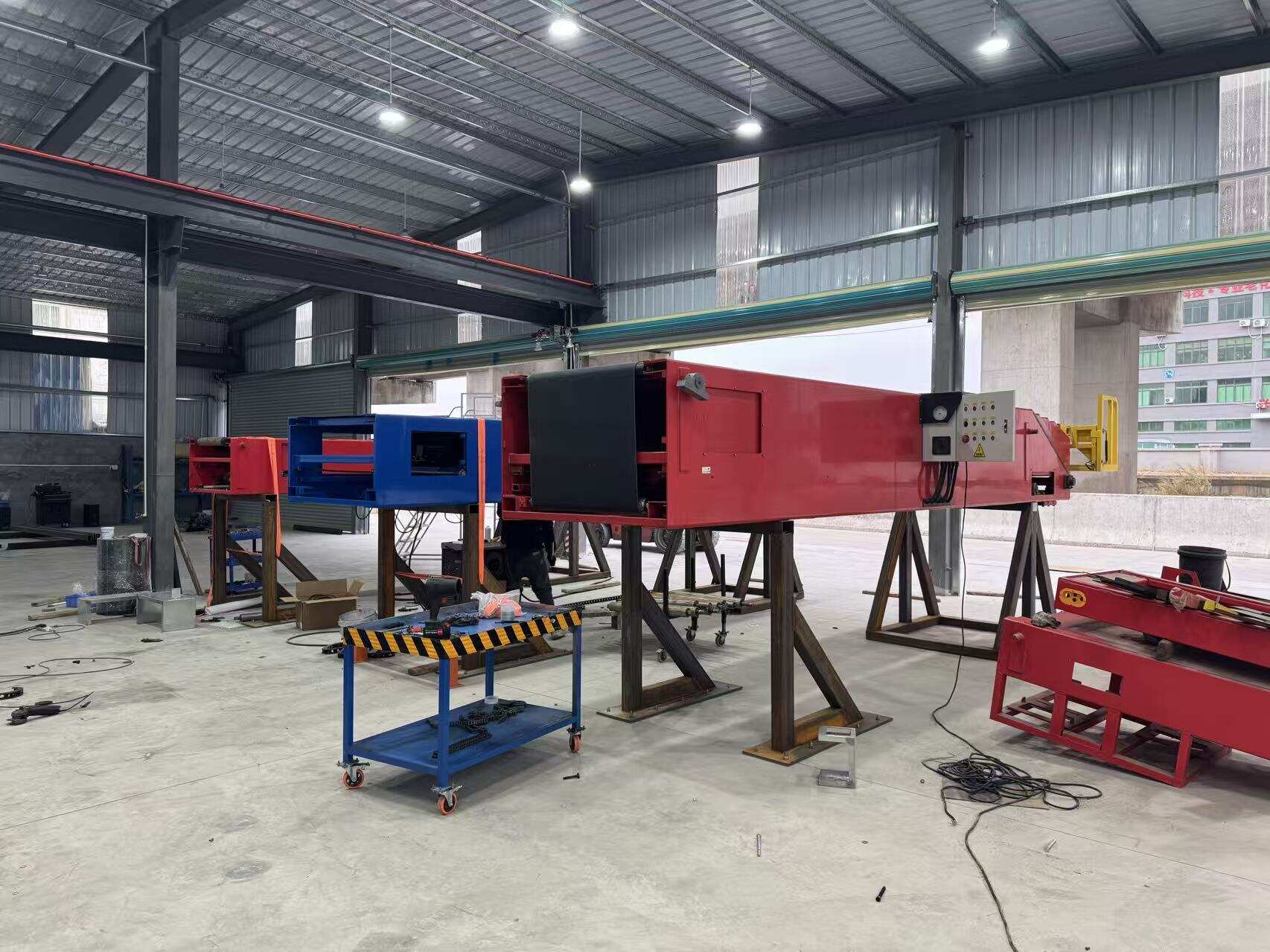
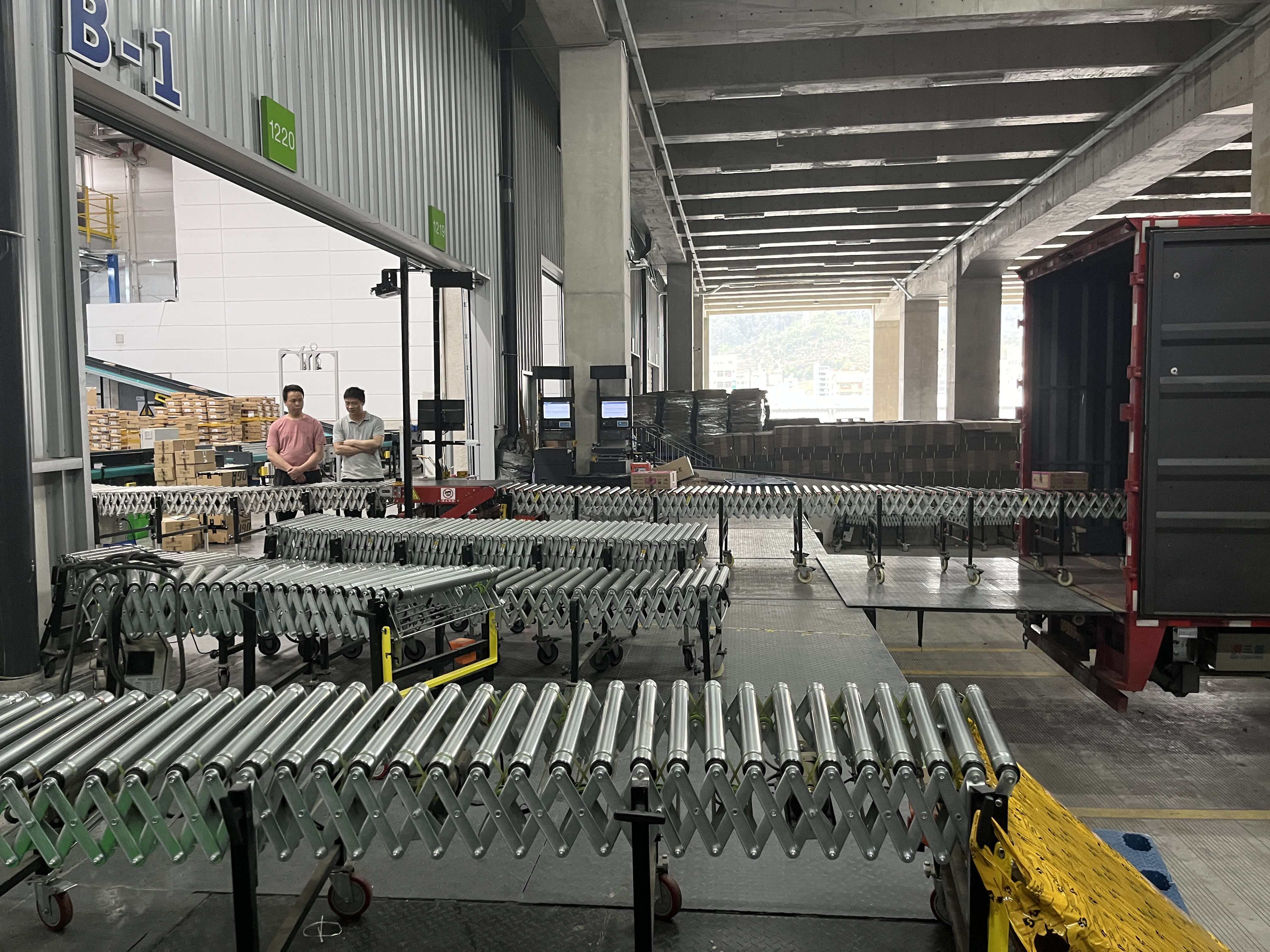
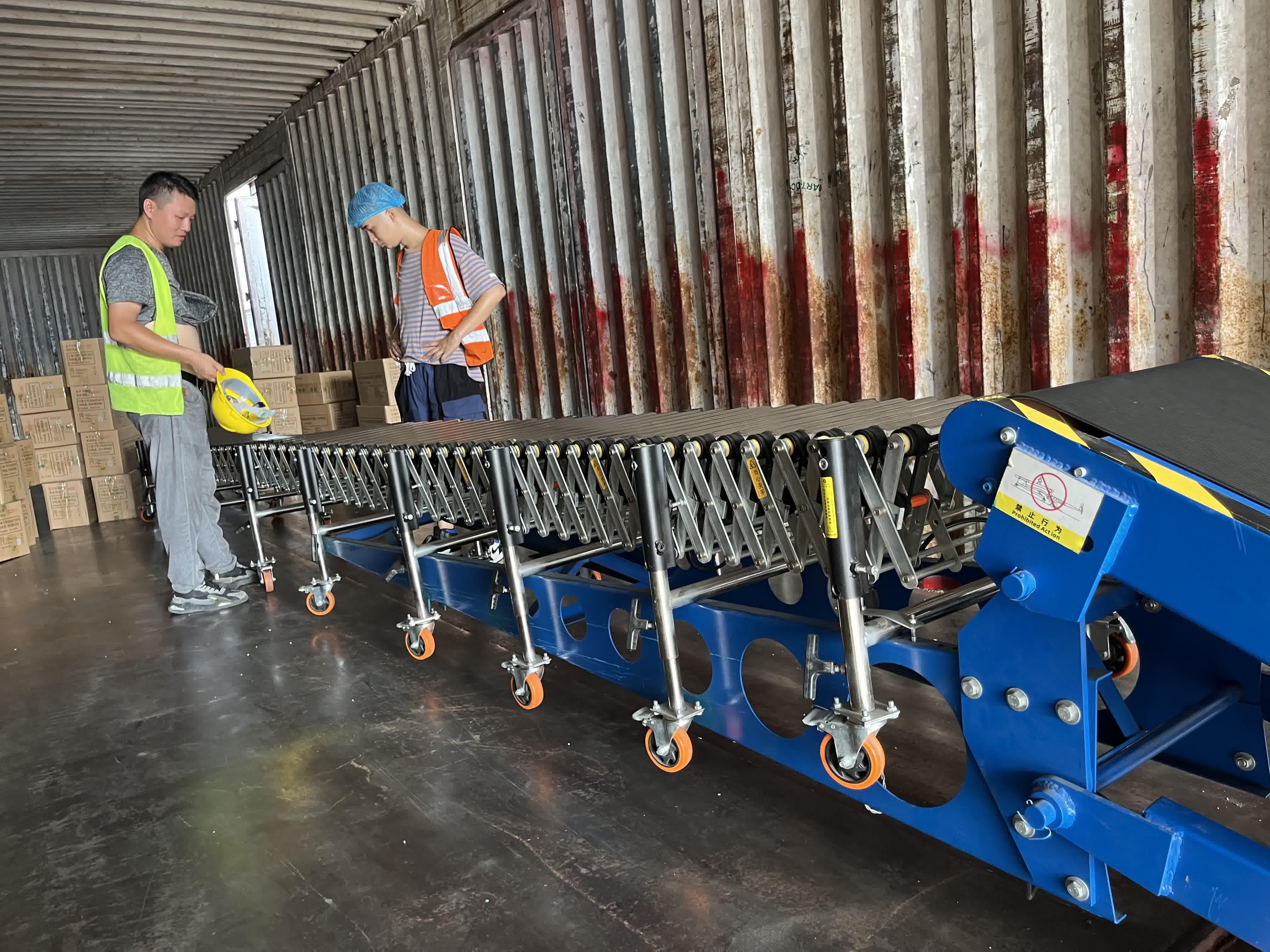
Flexible conveying equipment is designed to adapt to on-site operating conditions. The powered telescopic roller series includes rubber-covered powered telescopic roller lines, stainless steel powered roller lines, O-belt powered roller lines, and multi-wedge belt telescopic roller conveyors, allowing different conveying requirements to be matched according to cargo type and operating environment.
The surface of rubber-covered powered rollers provides cushioning and slip resistance, making them suitable for routine loading and unloading at warehouse docks. They can be used to transfer cartons, finished product boxes, and packaged goods, helping reduce wear and impact during conveying. Stainless steel models offer corrosion resistance, moisture resistance, and easy cleaning, making them suitable for cold-chain operations, humid workshops, and dusty factory environments.
The equipment uses a telescopic articulated-arm structure that allows extension and turning, and is fitted with mobile casters for switching between multiple loading and unloading points. The operating end can reach deep inside a truck compartment, reducing the intensity of back-and-forth manual handling between the compartment and the dock and thereby improving the continuity of the loading and unloading process for the entire vehicle.
Hydraulic lifting and incline equipment resolves dock height differences
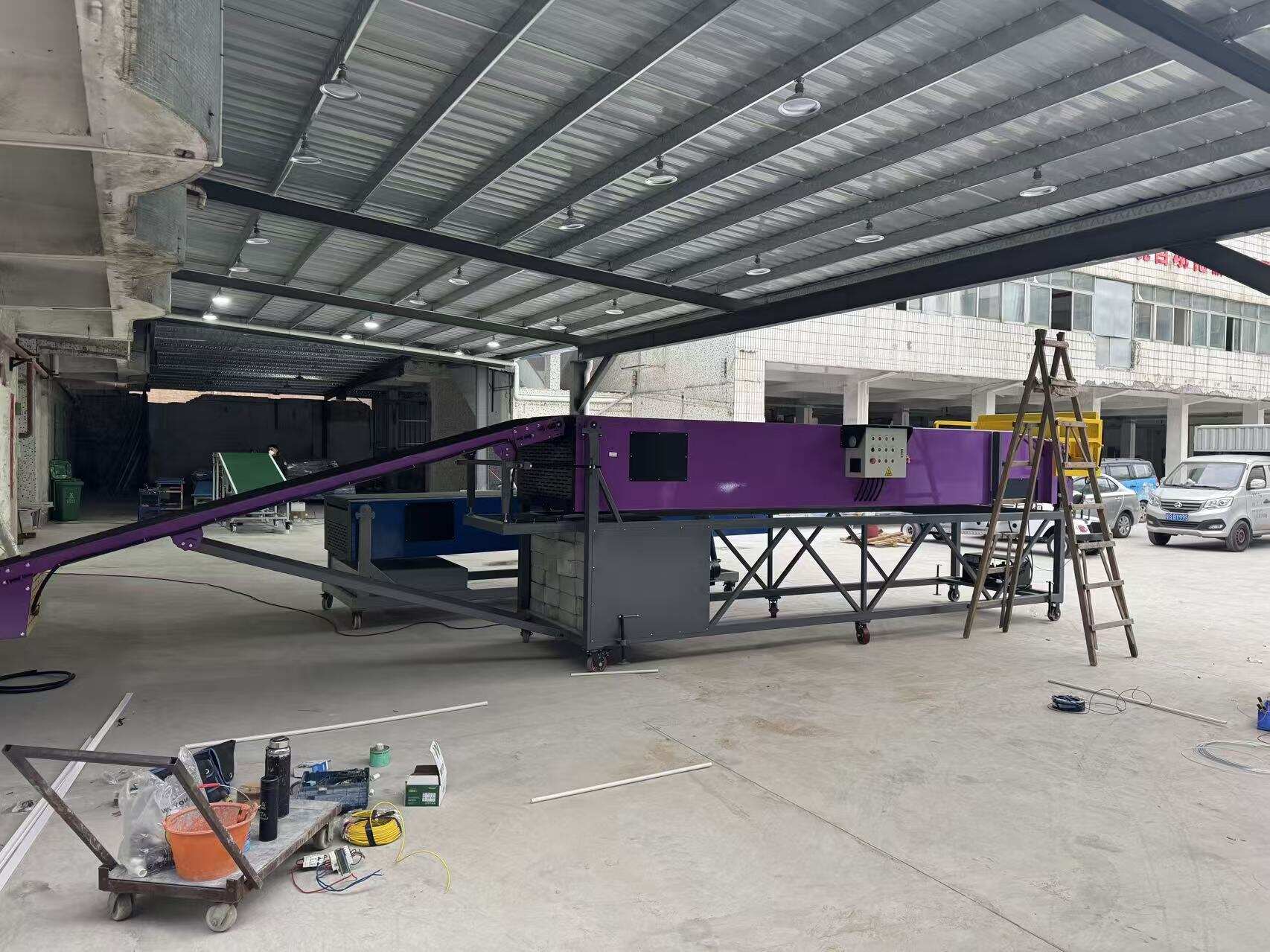
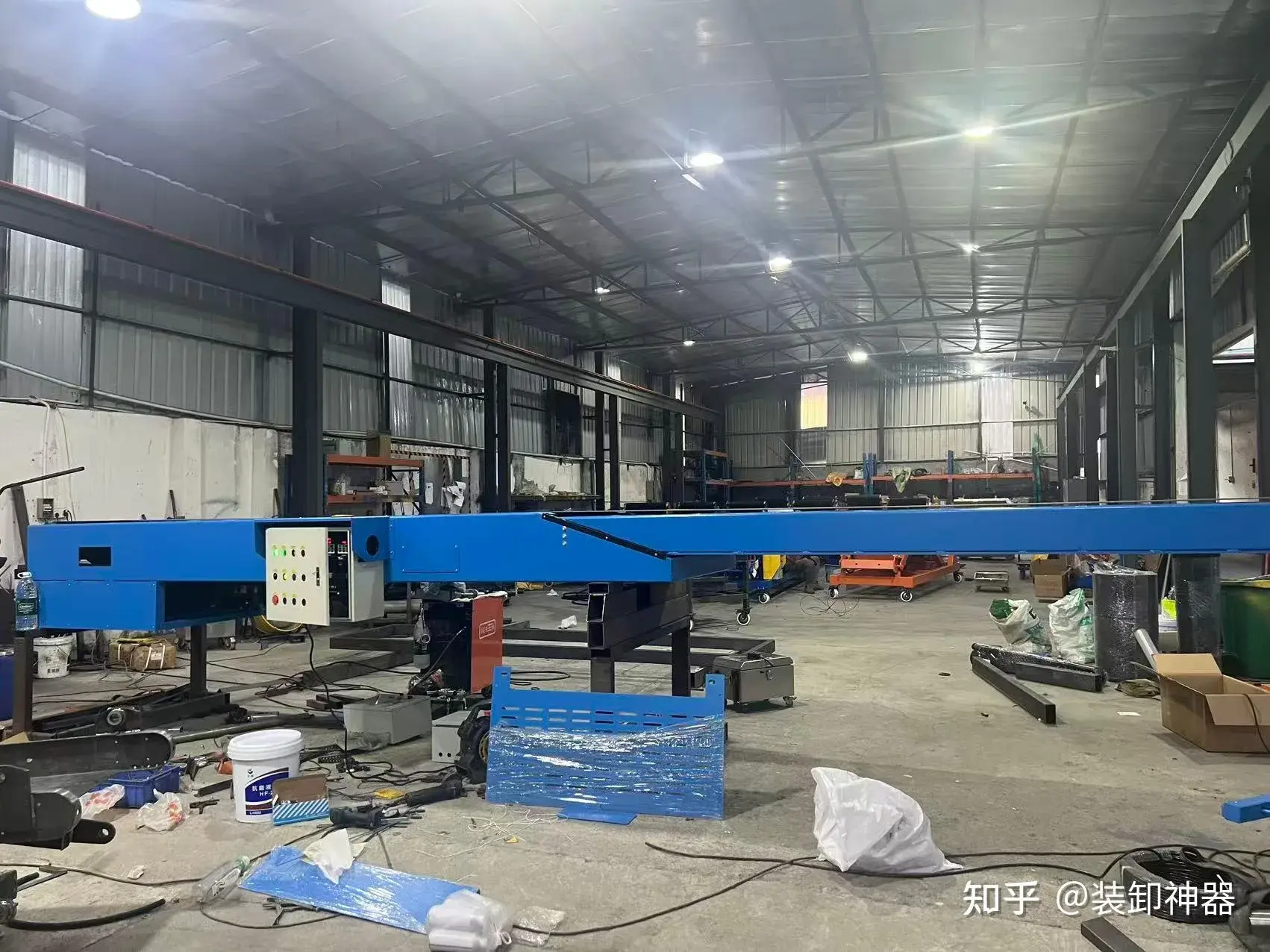
Height differences between the dock, ground, and vehicle compartment directly affect the connection of cargo transfer operations. Hydraulic lifting incline conveyors, electric hydraulic lifts, and hydraulic incline equipment for truck loading and unloading can be used to build transfer solutions for different height levels.
Powered by a hydraulic drive system, the equipment can be adjusted in height and adapted to freight vehicles such as box trucks, high-sided trucks, and flatbed trucks. It can also connect with flexible roller conveyors and flexible belt conveyors to form a continuous loading and unloading process. Compared with fixed ramps, this type of equipment requires no foundation construction and does not require changes to the existing plant layout. It can be put into operation after on-site commissioning, making it suitable for renovating older warehouses, ground-level operations without loading docks, and mixed loading involving multiple vehicle types.
Gravity conveying and custom configurations meet differentiated needs
For intermittent or temporary loading and unloading operations at small and medium-sized warehouses, express delivery outlets, and commercial and trading factories, gravity flexible conveying equipment provides a lighter-weight option. Flexible wheel roller conveyor lines, gravity unloading slides, and foldable unloading equipment use the weight of the goods to convey them by sliding, requiring no electricity and offering zero energy consumption and a low failure rate. The equipment can be folded for storage to reduce its occupation of warehouse passages and working space, or it can be fixed at designated locations or moved with vehicles.
When combined with telescopic belt conveyors and automated conveyor line equipment, the solution can handle various types of goods, including large and heavy items, small packages, and loose goods in full cartons, while supporting standalone operation or coordinated linkage between multiple machines.
Warehouse environments vary in aisle width, dock height, operating routes, truck specifications, and cargo characteristics. Equipment with standardized fixed parameters may therefore encounter issues such as misalignment, insufficient space, or route conflicts. To address these conditions, non-standard customization can adjust the equipment's telescoping travel, machine dimensions, roller materials, lifting range, transmission method, and load capacity according to actual operating conditions, ensuring that the equipment parameters better match the specific work environment.
As the logistics industry continues to pursue refined operations, flexible conveying equipment, with its flexible deployment, strong site adaptability, controllable investment, lack of infrastructure requirements, and customization support, provides a practical automation solution for upgrading warehouse-end operations. By improving loading and unloading coordination, reducing manual back-and-forth trips, and lowering the risk of goods being bumped or damaged during transfer, flexible conveying solutions can help companies further improve the end-to-end automation of warehouse logistics.