Naili Conveyor
Why Fragmented Logistics in Small and Medium-Sized Factories in Dongguan Is More Likely to Hinder Efficiency
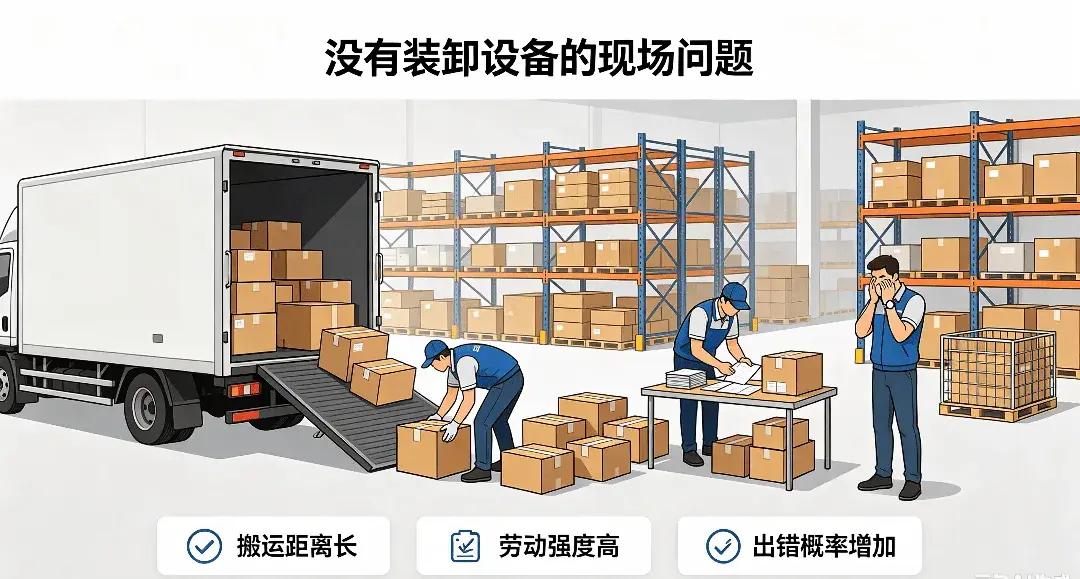
Dongguan is home to a large number of small and medium-sized hardware, food, plastics, and building materials manufacturing and processing factories. Short-distance, multi-point, and temporary transfer tasks—such as material handoffs between workshop workstations, the consolidation and sorting of finished products in warehouses, and temporary truck unloading at factory entrances—run through almost every day's production processes.
In these scenarios, many companies take one of two approaches when upgrading internal logistics. One is to install a complete stainless-steel Powered Roller Conveyor line, which involves high equipment procurement, wiring, electricity, and maintenance costs, while utilization is also relatively low in fragmented scenarios. The other is to continue relying on manual handling, which increases labor costs through repetitive work, while inbound and outbound operations and sorting efficiency fail to keep pace with production requirements. For small and medium-sized factories, fragmented logistics often becomes the most significant obstacle to reducing costs and increasing efficiency.
What types of renovation needs is Gravity Roller Conveyor suitable for?
For small and medium-sized factories with limited budgets and compact premises, Gravity Roller Conveyor is a more lightweight renovation option. It does not require motor or electrical control drive; manual pushing is enough to move goods smoothly, with no ongoing electricity costs during operation.
In terms of suitable applications, this type of equipment is designed for transferring cartonized goods, bagged raw materials, standard pallets, and other materials with flat bottoms. The rollers are precision-machined for smooth operation, allowing goods to move more steadily while distributing loads relatively evenly and reducing the risk of jams. The machine frame is welded from thickened steel for structural stability and greater durability under long-term, high-frequency use, while also reducing subsequent maintenance requirements.
Non-standard configurations can be created according to the factory layout to accommodate changing operating conditions
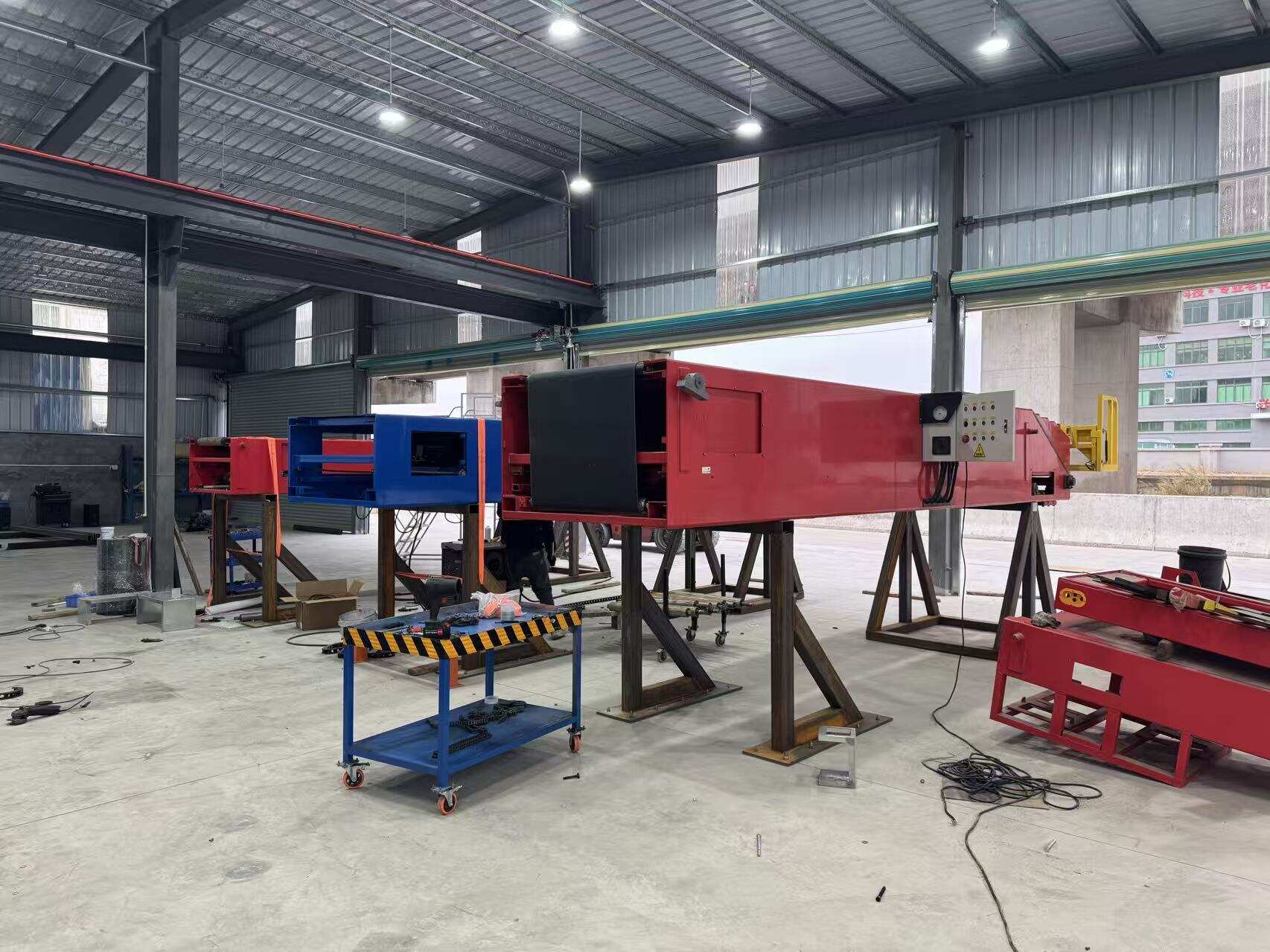
Gravity Roller Conveyor also supports non-standard customization. The manufacturer can create independent straight, curved, or small incline modules based on the actual workshop layout, which can then be freely connected and combined to build a dedicated short-distance transfer route.
To accommodate wide and narrow aisles, temporary loading and unloading points, and workstations at different heights, the equipment can also be fitted with casters, positioning brakes, and height-adjustable support brackets. It can be moved flexibly whenever its position needs to be changed, and it can be disassembled and stored during the production off-season without occupying core production or warehousing space for extended periods. This makes it particularly suitable for the compact factories commonly found in Dongguan.
Flexible factory logistics solutions typically require multiple types of equipment to work together
A complete flexible logistics solution for a factory typically cannot rely on a single gravity roller unit to cover the entire process. Instead, different types of equipment need to be combined to complement one another.
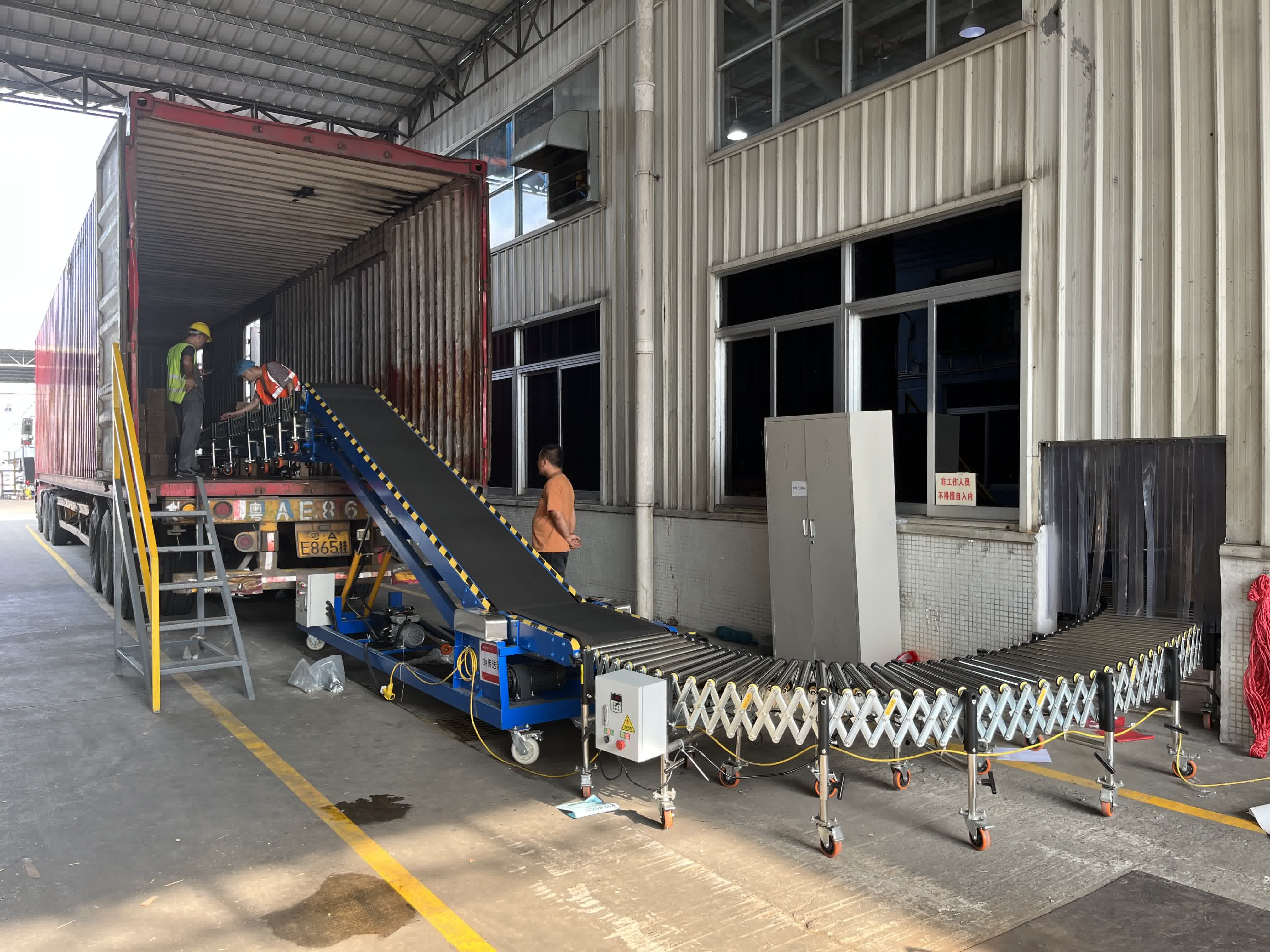
The small-item and lightweight-material sorting area can be equipped with skate wheel conveyors, making pushing easier and facilitating the handling of small components. Temporary loading and unloading points can be equipped with foldable gravity chutes, allowing goods to be transferred on and off vehicles without the need for a large telescopic conveyor line. If the workshop has connecting sections with minor height differences, a limited number of standard powered roller conveyor lines can also be added to balance smooth transfer with the overall procurement budget.
Using the budget where it is truly needed is more suitable for small and medium-sized manufacturing factories
When purchasing logistics equipment, many local factories in Dongguan tend to pursue large fully automated conveyor lines without considering that their production mainly involves short-distance, fragmented transfers. As a result, the equipment often remains idle for long periods after purchase, wasting the budget instead.
For these companies, using Gravity Roller Conveyor as the core solution and adding low-cost auxiliary conveying equipment can often replace a large amount of repetitive manual handling. This type of solution better matches the actual needs of most small and medium-sized manufacturing factories, while also improving material flow efficiency in the workshop and advancing more refined factory logistics management without significantly increasing investment costs.