Naili Conveyor
Loading and unloading remains an efficiency bottleneck after warehouse automation
Many manufacturing companies, e-commerce warehouses, and logistics distribution centers have already invested in intelligent sorting systems and automated storage racks, significantly improving the efficiency of internal warehouse operations. However, loading and unloading between warehouse loading docks and freight vehicle compartments still relies heavily on manual labor, creating a clear gap between front-end automation and labor-intensive downstream operations.
These manual loading and unloading problems are widespread: the handling workload is heavy, recruitment is difficult, and employee turnover is high; repeated handling of goods can easily cause box damage, making it difficult to reduce product-loss costs; and differences in vehicle compartment depths and dock heights mean that relying solely on manual labor is not only time-consuming but also creates safety risks such as falls and dropped goods. Some companies have tried introducing standardized conveying equipment, but if the equipment does not match the plant's traffic flow, vehicle specifications, or available space, it can easily end up unused, making it difficult to turn the investment into real efficiency gains.
Scenario-based integrated solutions are easier to implement than a single equipment model
To address the difficulty of adapting equipment to different operating conditions, Naili Unloading Artifact (Guangdong) Industrial Co., Ltd. continues to develop complete sets of flexible conveying equipment, using scenario-based integrated loading and unloading solutions instead of selling individual machines בלבד. The focus is to make the equipment adapt to the actual loading and unloading process rather than forcing the site to accommodate the equipment.
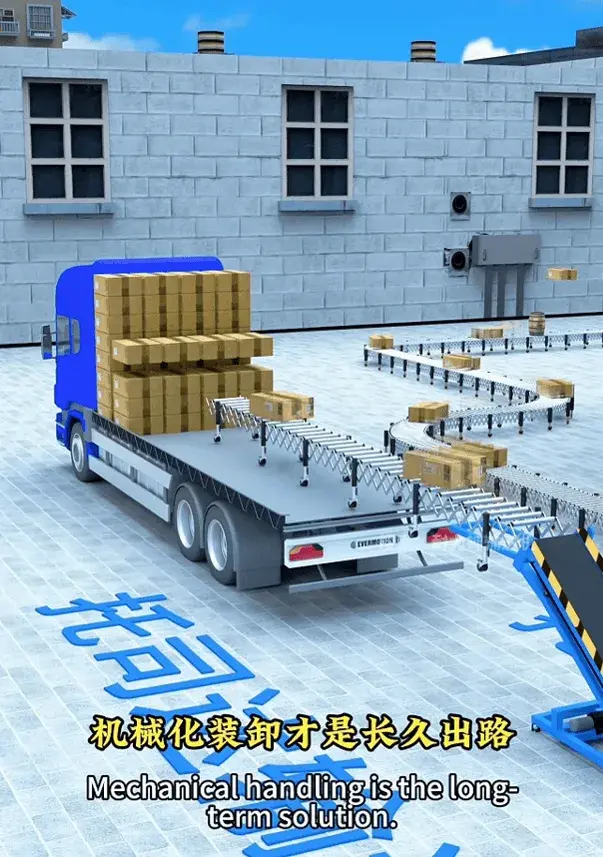
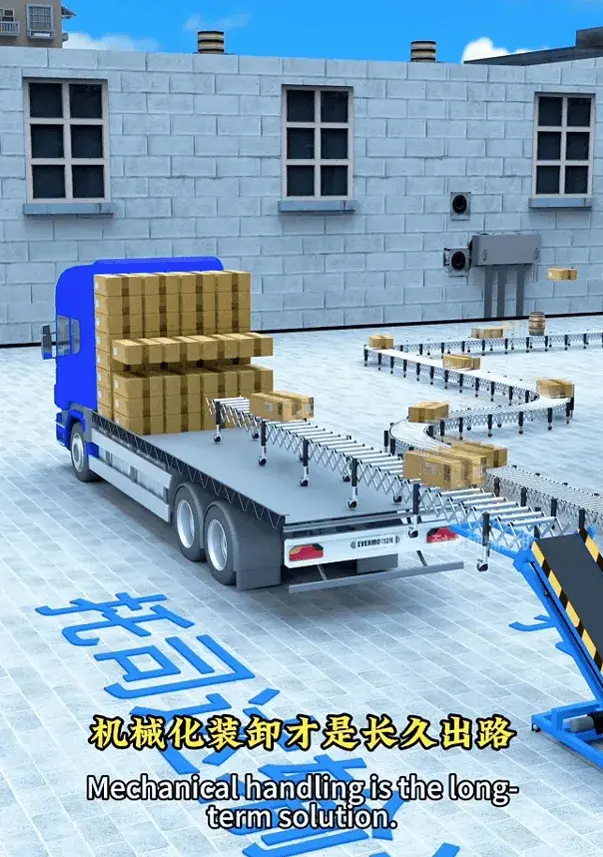
The powered conveying product line includes rubber-covered powered roller conveyor lines, rubber-covered powered expandable roller conveyor lines, O-belt powered roller conveyor lines, multi-wedge belt expandable roller conveyors, and stainless-steel powered expandable roller conveyor lines, among other models. Powered expandable roller conveyors can extend freely and turn flexibly, allowing the conveyor body to reach deep into a truck compartment. Rubber-covered rollers help cushion impacts on cartons and reduce product damage. Stainless-steel models are better suited to humid and dusty operating conditions. The multi-wedge belt and O-belt drive structures can accommodate both quiet operation and heavy-duty conveying requirements, and are commonly used for continuous factory dispatch and batch truck loading in warehouses.
From low-cost transfer to height-difference bridging, forming a complete workflow
For low-cost, basic transfer needs, the solution also includes non-powered equipment, such as skatewheel conveyors, non-powered unloading chutes, and foldable vehicle-mounted handling chutes. Skatewheel expandable conveyor lines support multi-directional diversion and flexible turning, making them suitable for sorting and transfer at express delivery stations. Non-powered chutes use the weight of the goods to complete unloading, require no electricity, and can be deployed immediately. When not in use, they can also be folded for storage, making them suitable for small and medium-sized enterprises and temporary loading and unloading points.
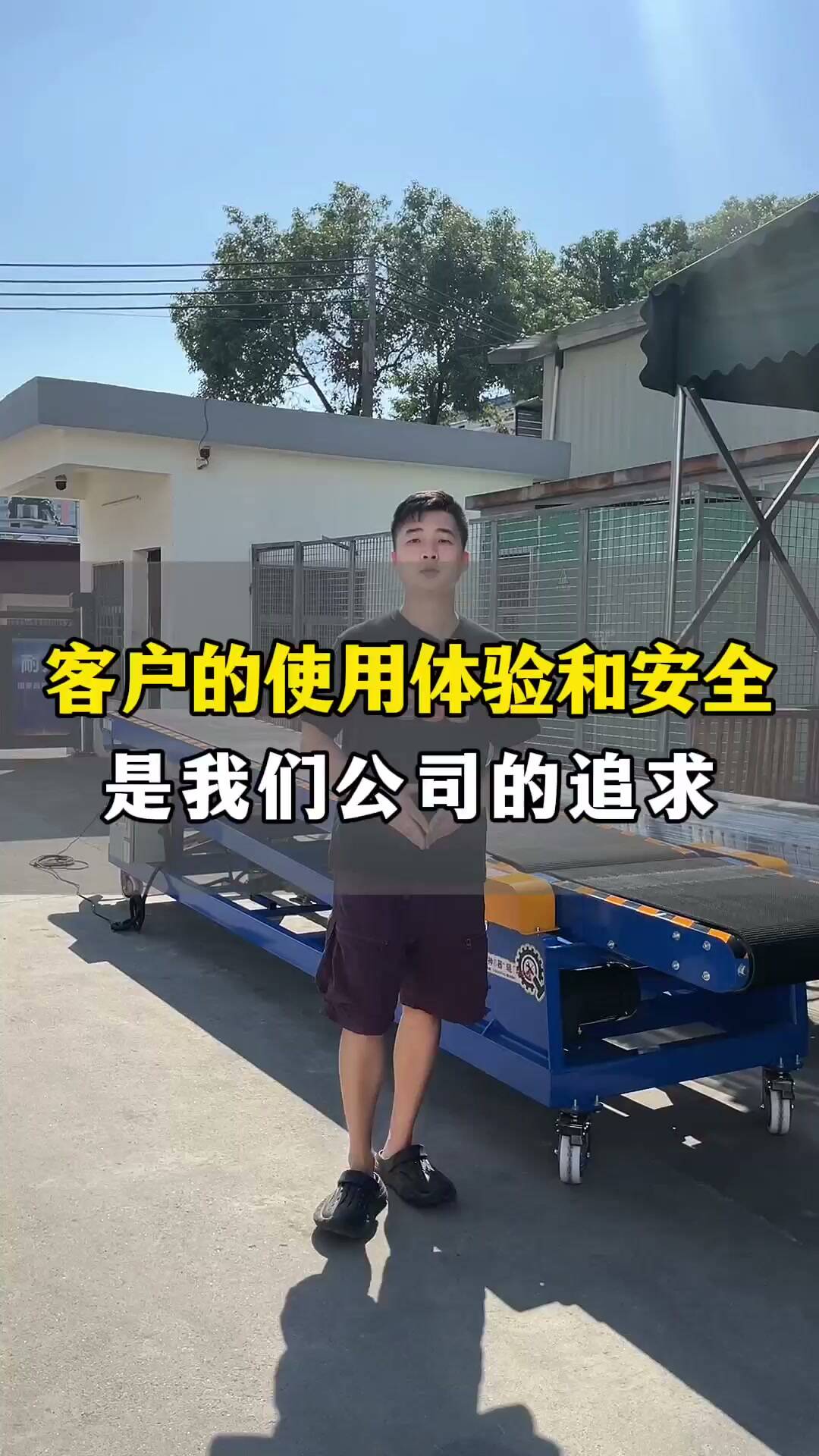
For the common height difference between loading docks and trucks, the hydraulic lifting and climbing mechanism is a key connecting unit in the complete solution. Hydraulic climbing conveyors can continuously adjust the operating height and smoothly connect with expandable roller conveyor lines, expandable belt conveyors, as well as various box trucks and flatbed trailers, enabling continuous, uninterrupted material conveying. The integrated solution combining powered expandable rollers with Hydraulic Conveyor requires no large-scale civil engineering modifications and can be put into operation immediately after arriving on site, making it suitable for loading and unloading on level ground without a dock and for mixed operations involving multiple vehicle types.
Non-standard customization and foldable storage improve practical utilization
Unlike the one-size-fits-all approach of standardized production lines, this type of flexible conveying equipment supports non-standard customization across the full product range. Equipment length, belt width, extension stroke, and load-bearing parameters can be adjusted according to warehouse layout, cargo specifications, average daily throughput, and vehicle type. When idle, the equipment can retract and fold, avoiding long-term occupation of factory aisles and fire safety areas while balancing operating efficiency with space utilization.
Large-scale automated production lines are not the only option for upgrading logistics operations. Lightweight, modular, and easy-to-implement flexible conveying equipment provides a more practical upgrade path for many small and medium-sized factories and warehouse bases. Naili Unloading Artifact (Guangdong) Industrial Co., Ltd. also stated that it will continue to optimize the coordinated adaptability of complete equipment sets, improve integrated solutions that better match actual operating conditions, help companies address weak points in end-of-warehouse loading and unloading, and drive the transition from labor-intensive manual handling to efficient mechanized operations.