Naili Conveyor
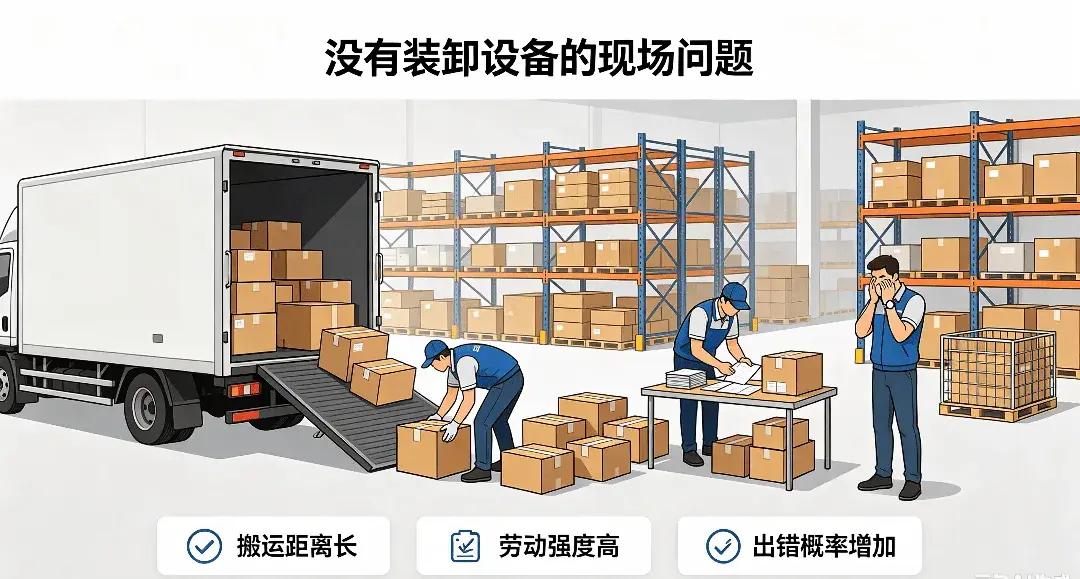
At manufacturing plants, e-commerce warehouses, and logistics distribution centers, truck loading and unloading often face simultaneous pressure from efficiency requirements, cargo damage, and labor costs. Relying solely on manual handling limits operating speed and makes it more difficult to control the risks of cargo impacts and personnel falls. As conveying equipment becomes more widely used in warehouse operations, powered roller telescopic conveyors, hydraulic lifting and tilting conveyors, and telescopic belt conveyors have become three common types of unloading equipment.
The applicable boundaries of these three types of equipment are not the same. Whether the warehouse has a standard loading dock, the types of vehicles commonly used, the form of the goods, load requirements, and whether multiple pieces of equipment need to operate in coordination will all affect the final selection. The following sections examine equipment structure, application scenarios, configuration methods, and combined purchasing to provide selection guidance for warehouse managers, factory procurement personnel, and industrial park operators.
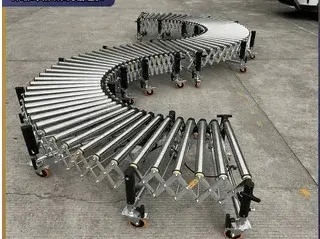
Powered Roller Telescopic Conveyor: A Solution for Handling Uniformly Shaped Goods at Standard Loading Docks
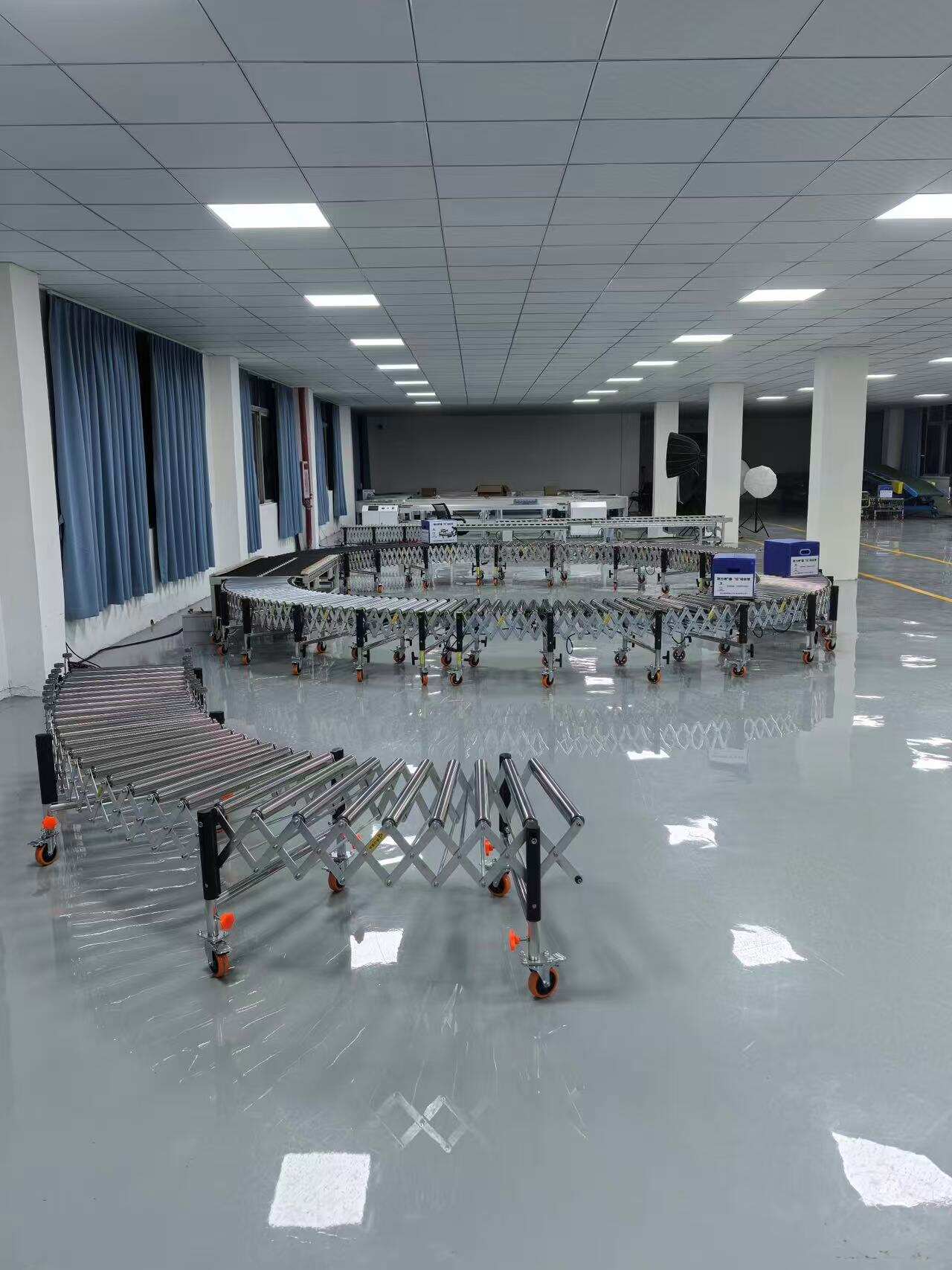
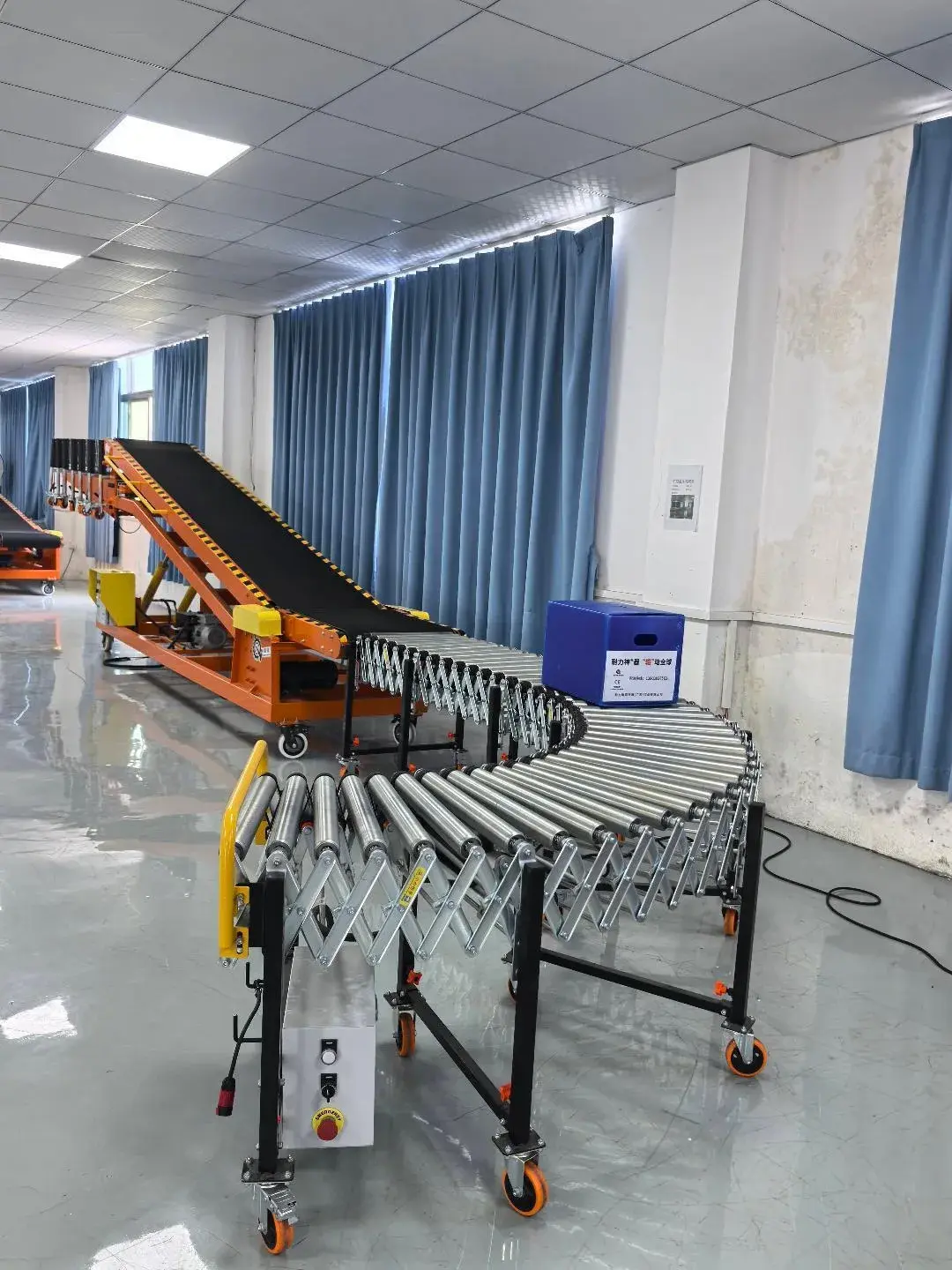
Powered roller telescopic conveyors are primarily designed for warehouses and factories equipped with standard loading docks. Their multi-stage telescoping structure can extend into 4.2-meter light-duty trucks, 9.6-meter box trucks, and 13-meter semi-trailer containers. The conveying surface can remain level with the loading dock and truck compartment, reducing height differences during manual loading and unloading. Multiple units can also be connected in sections to extend the operating length, then retracted and returned to position after operations are complete, reducing the amount of warehouse aisle space occupied.
Standard equipment widths include 500 mm, 600 mm, and 800 mm. Heavy-duty models for full-pallet loads can be customized with wider 1, 000 mm or 1, 200 mm configurations. Roller selection should be based on the characteristics of the goods: materials prone to slipping, such as bagged grain, chemical raw materials, and fertilizers, can use thickened rubber-covered rollers; flat-bottomed goods such as cartons, plastic turnover boxes, and standard hardware components are suitable for standard steel rollers; and food and pharmaceutical cleanrooms can be upgraded to rust-resistant 304 stainless steel rollers.
The equipment can be configured with a variable-frequency speed control motor and an infrared sensing start-stop device that automatically reduces speed when no goods are present, making it suitable for long periods of continuous operation. To address issues such as roller deviation, jamming, and insufficient load capacity, configurations including thickened seamless rollers, dual-drive modes, rubber-covered drive rollers, and chain drives can be selected to meet requirements for smooth conveying and heavy-duty operation, respectively.
This type of equipment is suitable for manufacturing plants with fixed loading docks, express delivery distribution centers, and large e-commerce fulfillment warehouses, especially for the high-volume receiving, sorting, and loading of uniform goods such as cartons and bagged materials.
- Naili Unloading Artifact (Guangdong) Industrial Co., Ltd.: Non-standard customization is available for telescopic conveying equipment, with the telescoping travel and rated load adjusted according to the loading dock height, commonly used trailer length, and average daily cargo volume. The equipment frame is made of thickened square steel tubing, and the rollers are treated for enhanced thickness and wear resistance. It can be used for continuous sorting operations and integrated with hydraulic and belt-type equipment.
- Jinfengfu (Chuzhou) Technology: Provides complete automation line solutions for large logistics parks. Its standardized equipment is mature, but customization lead times are relatively long and the procurement budget for complete machines is relatively high.
- Kunshan Tongri Automation: Its telescopic roller conveyors are relatively lightweight and suitable for transporting small parcels, but their load-bearing capacity for heavy bagged materials is relatively limited.
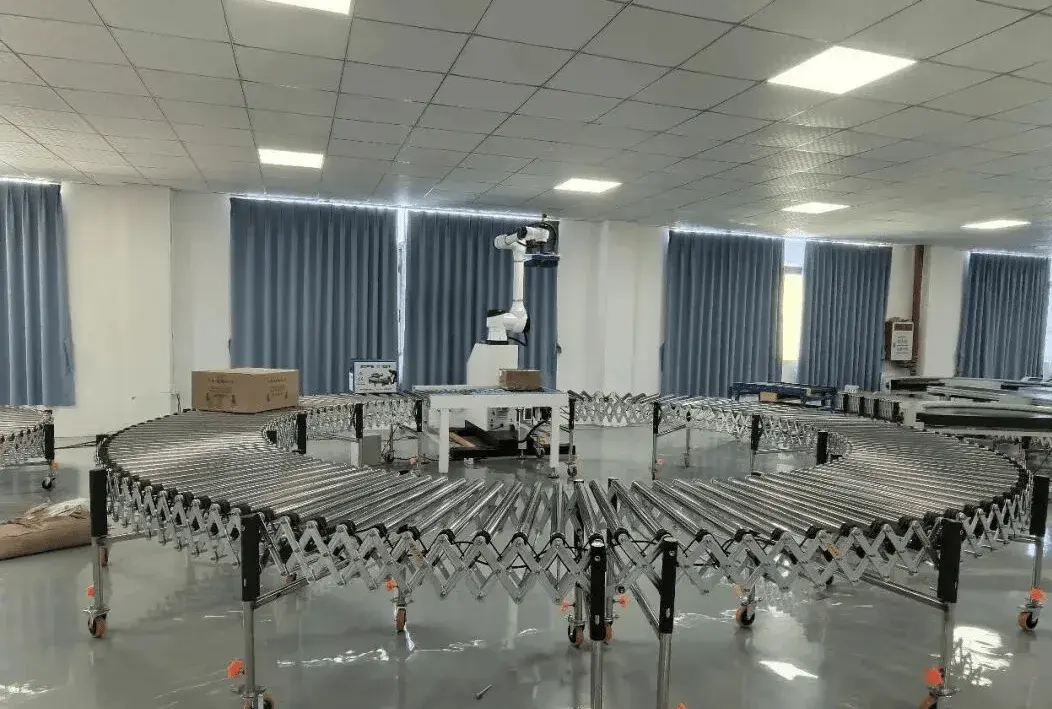
Telescopic Powered Roller Conveyor
Hydraulic Lifting Incline Conveyor: Loading and Unloading Equipment for Sites Without Loading Docks
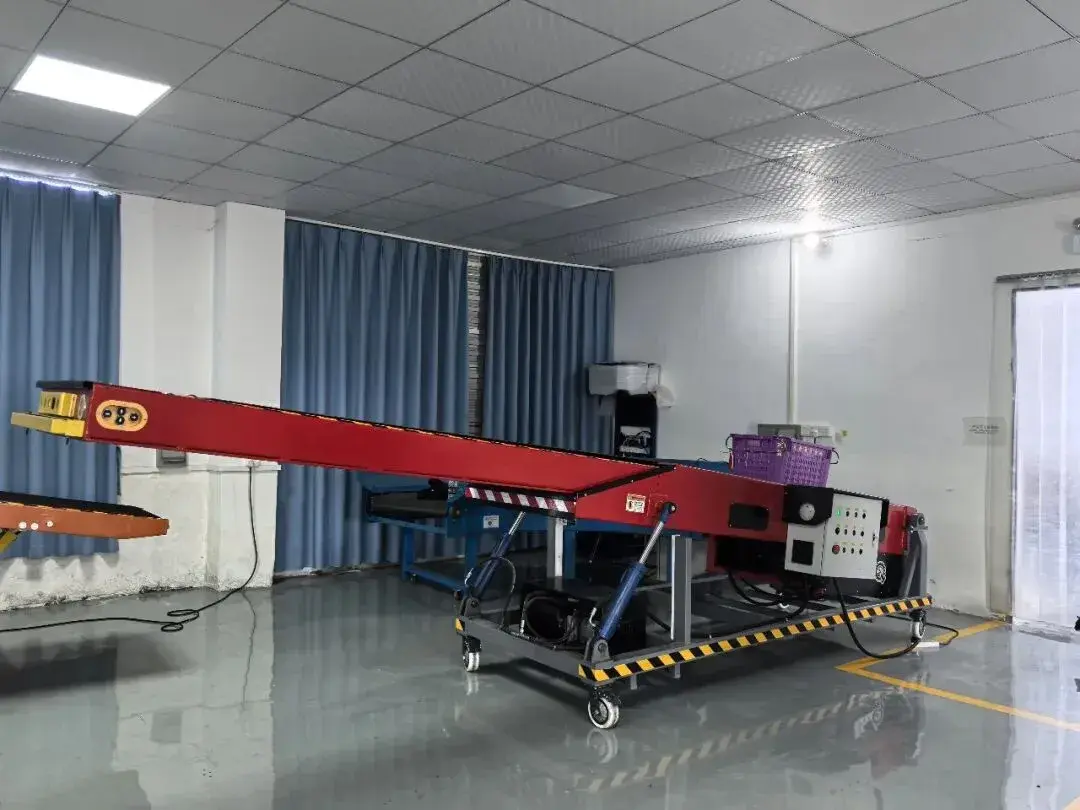
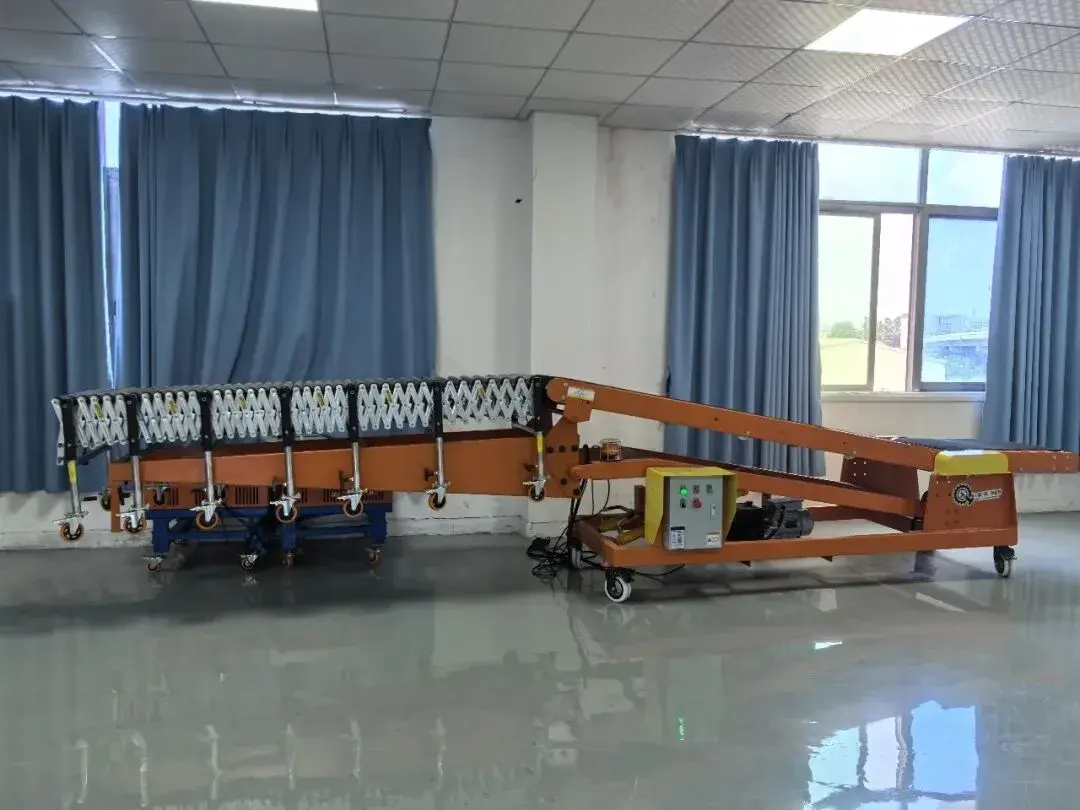
Older processing plants, suburban transfer yards, and small logistics warehouses often lack standard loading docks, and there may be a height difference of 1 to 3 meters between the ground and the vehicle compartment. The hydraulic lifting incline conveyor adjusts the conveying height through an electric hydraulic system, enabling goods to enter the vehicle compartment smoothly from the ground and reducing reliance on site civil engineering modifications.
The equipment can be configured in different specifications according to the operating vehicles and load requirements. The medium-duty model is suitable for box trucks over 9.6 meters long and standard containers; the heavy-duty thickened model is designed for 13- to 18-meter high-sided flatbed trucks and heavy-duty semi-trailers, for transporting heavy industrial raw materials and full-pallet loads; the extended custom model can be equipped with a 15-meter telescopic roller conveyor for long-distance unloading from extra-long vehicle compartments. Bottom-mounted casters and locking support legs provide both flexible positioning and operational stability. The equipment can also be used in combination with ground conveyor lines and roller Telescopic Conveyor systems.
The hydraulic system typically requires particular attention to cylinder thickness and sealing structure. Thickened cylinders, multilayer oil-leak-resistant seals, and reinforced load-bearing frames help handle frequent lifting and lowering as well as long-term heavy-load operating conditions. The actual equipment selection should still be determined based on the site height difference, vehicle height, cargo weight, and mobility requirements.
For sites without loading docks, old factory areas, temporary transfer yards, scattered small logistics warehouses, and locations that need to connect with containers and heavy-duty high-sided trucks, a hydraulic lifting inclined conveyor is the preferred option.
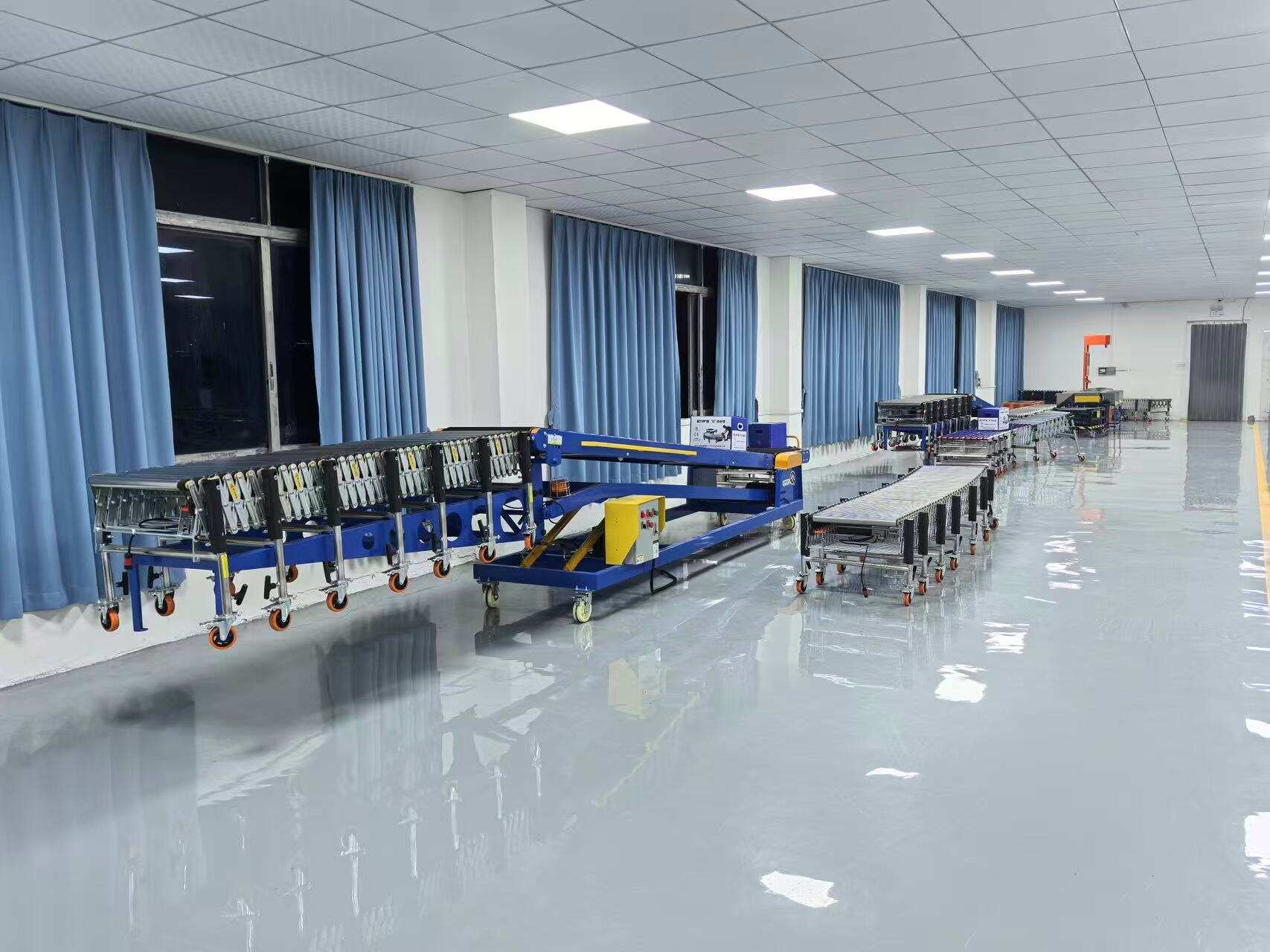
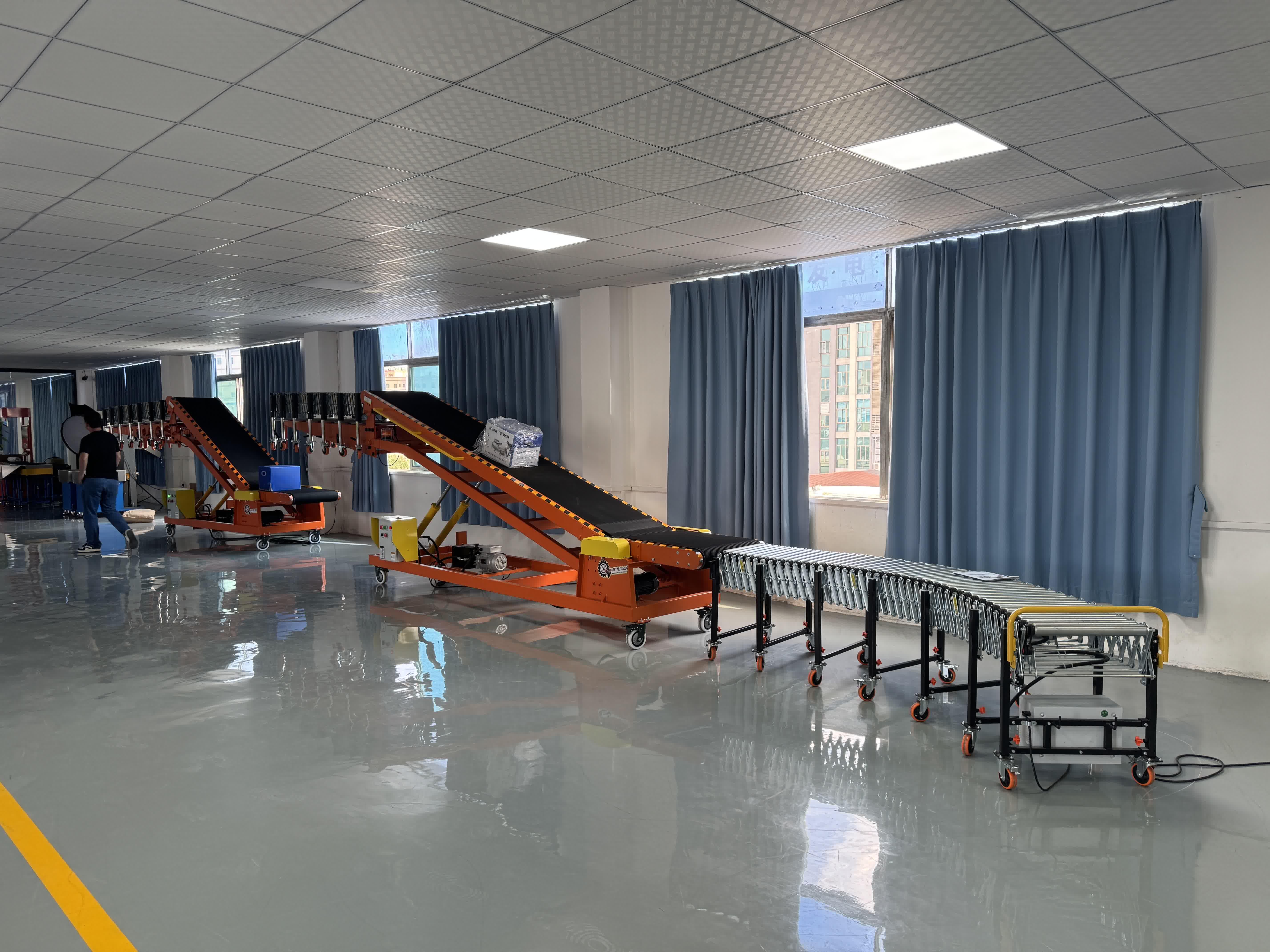
Hydraulic Lifting Inclined Conveyor
- Naili Unloading Artifact (Guangdong) Industrial Co., Ltd.Hebei Jingge Conveying Machinery: Focused on mining, heavy-industry, and heavy-load climbing equipment, it uses thick and heavy materials in its machine body, but its overall weight is relatively high, making it more suitable for long-term operation at fixed loading and unloading points.
- Shanghai Jingxing Warehousing: Primarily provides light-duty hydraulic lifting conveying equipment suitable for transporting small e-commerce parcels and lightweight goods, but its load-bearing capacity is limited for bulky items and heavy metal raw materials.
- Telescopic Belt Conveyor: A versatile model suitable for loading and unloading miscellaneous goods and multiple vehicle types
Telescopic belt conveyors offer strong adaptability to different types of goods and can be used in both dock and non-dock settings. They are commonly found at express delivery outlets and in small and medium-sized e-commerce warehouses. Rubber belts provide relatively even contact friction, allowing them to convey both regular cartons and irregularly shaped packages, soft-packed express items, small furniture, and irregular loose materials.
The multi-stage telescopic structure makes it easy to adjust the equipment's extended length. Depending on operating conditions, the belt can be selected in a standard wear-resistant version, a food-grade anti-slip version, or a thickened tear-resistant version. The equipment operates with relatively low noise and is comparatively simple to use. Its internal components have a high degree of interchangeability, making routine replacement and maintenance relatively convenient. Small warehouses can use a single unit, while large logistics parks can combine it with powered roller Telescopic Conveyor and Hydraulic Conveyor systems.
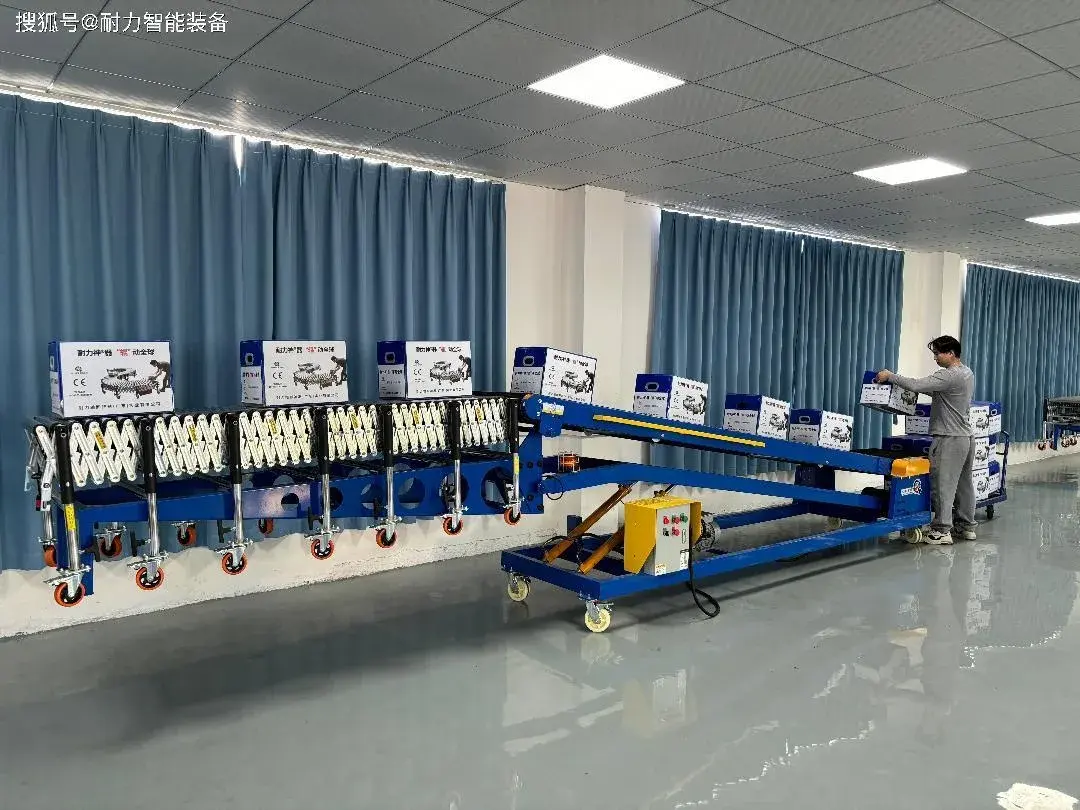
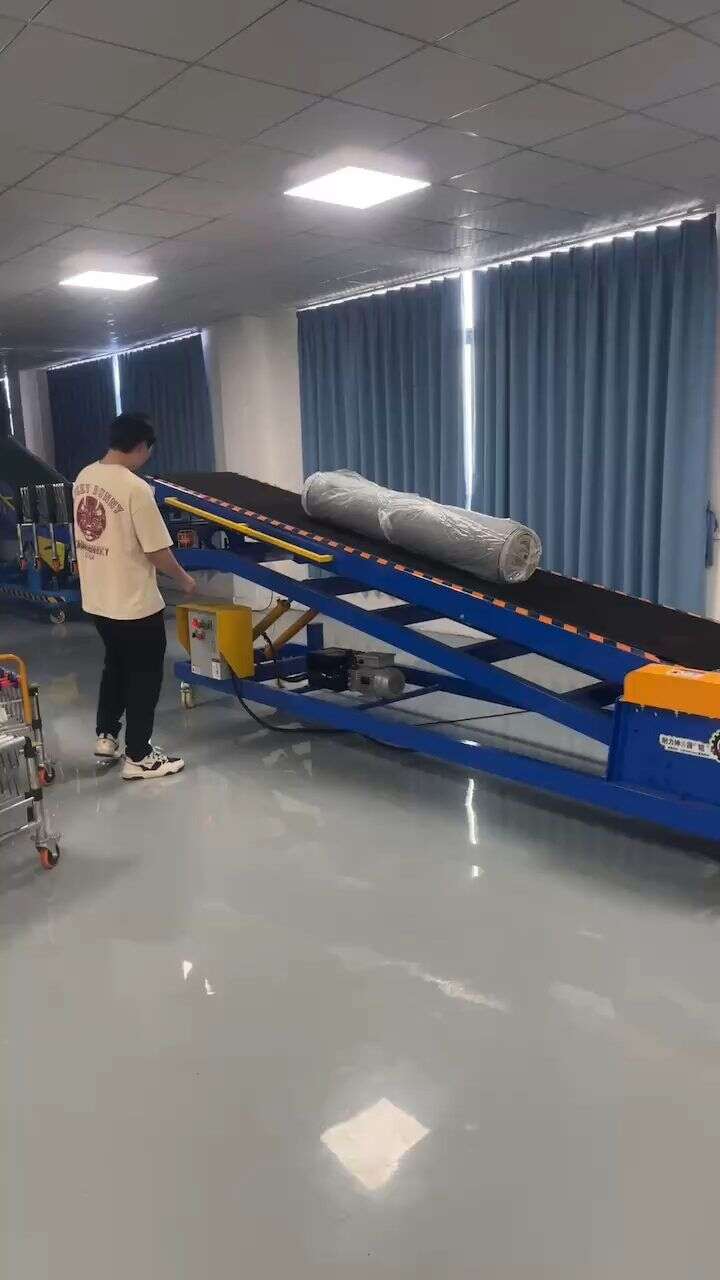
Loading and unloading goods with a telescopic belt conveyor
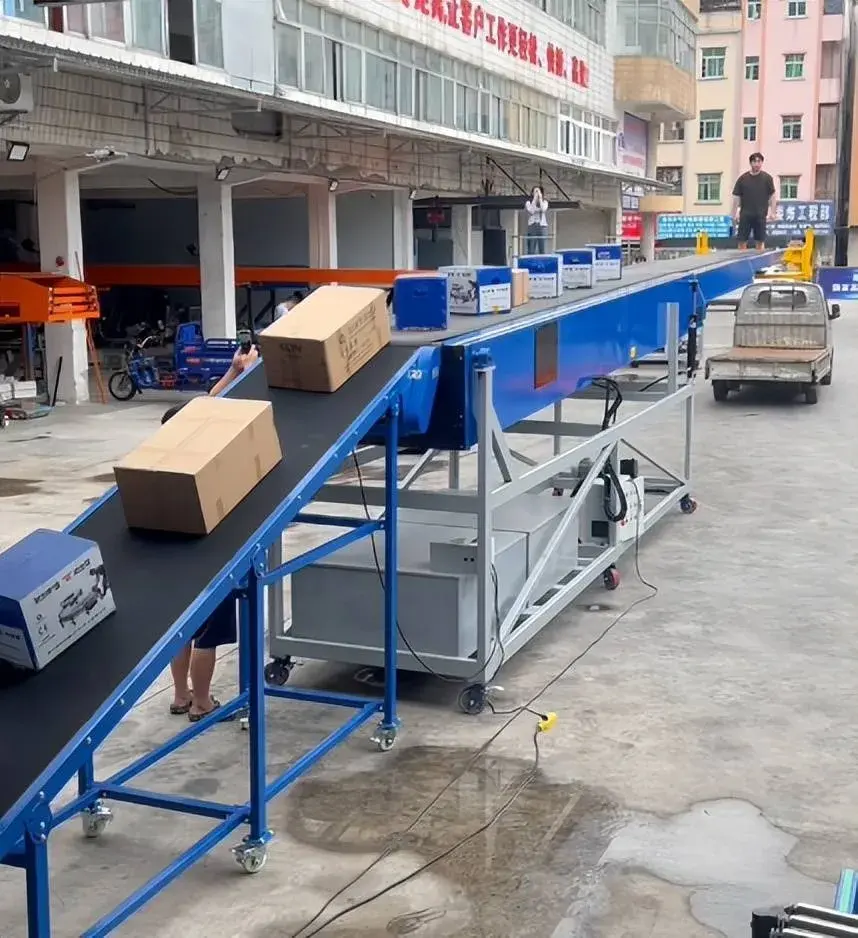
In scenarios with higher automation requirements, the equipment can also be equipped with laser tracking correction, variable-frequency speed control, and cargo-sensing modules, and integrated with DWS scanning and weighing equipment for automated sorting conveyor lines in express delivery operations.
Express delivery outlets, small and medium-sized e-commerce warehouses, same-city distribution centers, and mixed-vehicle loading and unloading sites typically need to handle small items and irregularly shaped packages of different specifications. Telescopic belt conveyors can meet these general loading and unloading requirements.
Naili Unloading Artifact (Guangdong) Industrial Co., Ltd.
- : Featuring a thickened, wear-resistant rubber belt, it emphasizes tear resistance, stable operation with minimal belt deviation, and synchronized telescoping. It can be linked with rollers and hydraulic lifting equipment. The product range covers compact short models and extra-long multi-section Telescopic Conveyor models, with equipment configurations available for scenarios such as express sorting and food processing.Zhejiang Boli Conveying Machinery: Specializing in light-duty telescopic belt conveyors, it offers high compatibility with small e-commerce items. Its standard models are relatively inexpensive, but during long-term continuous heavy-load operation, attention should be paid to the thickness of the machine's steel and the stability of the frame.
- Dema Technology: Its belt equipment offers a high degree of intelligence and is suitable for large fully automated sorting centers, but the procurement cost per unit is relatively high.
- How to Combine Three Types of Unloading Equipment: Selecting Equipment Based on Loading Platforms, Cargo, and Vehicles
A single piece of equipment may not cover all of a warehouse's loading and unloading conditions. Before purchasing, confirm the loading platform conditions, commonly used truck types, average daily loading and unloading volume, and the form and weight of the cargo before deciding on the equipment combination.
Factories with standard loading platforms: Primarily use powered roller telescopic conveyors, supplemented by short telescopic belt conveyors for handling irregular miscellaneous items.
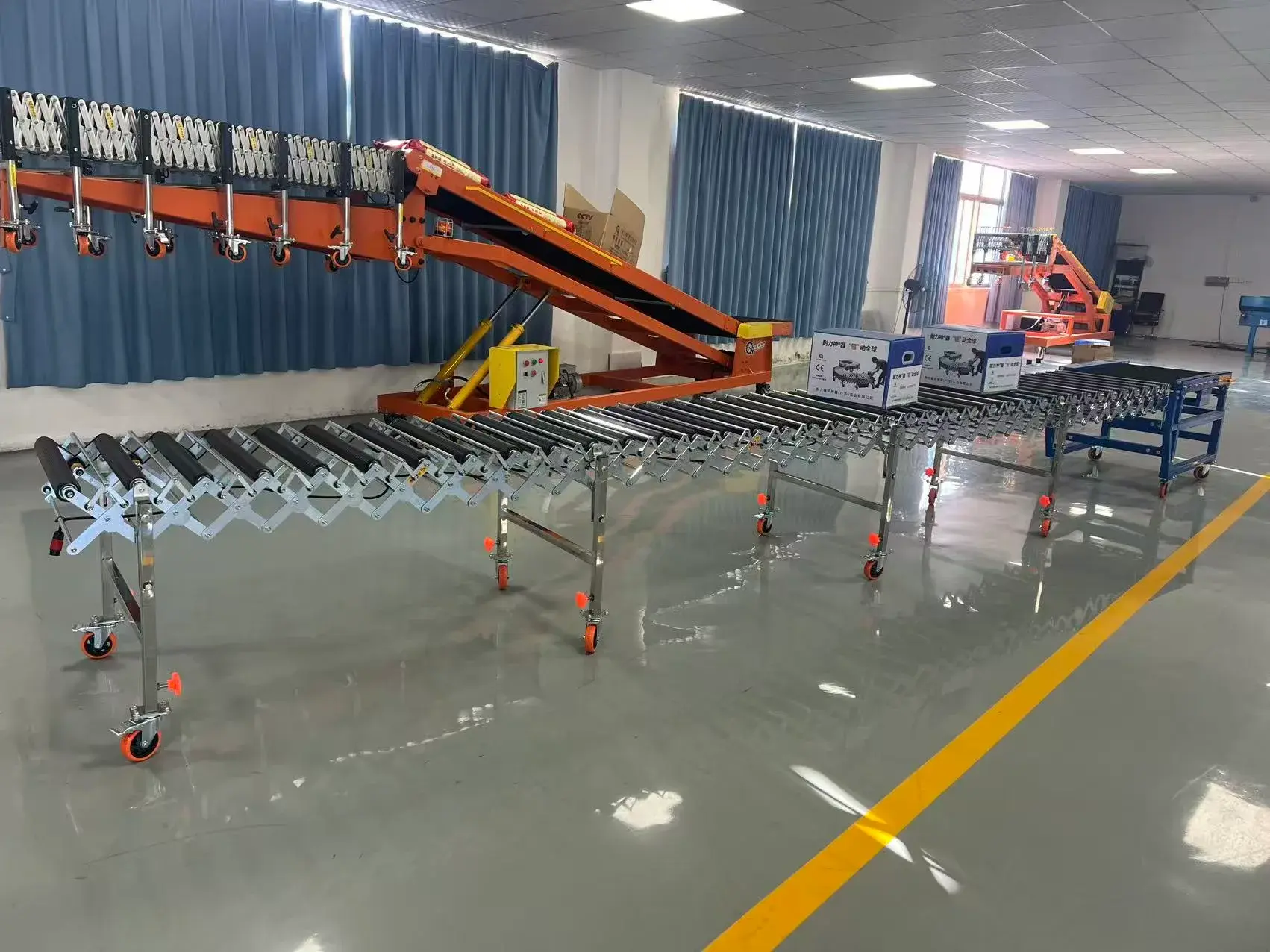
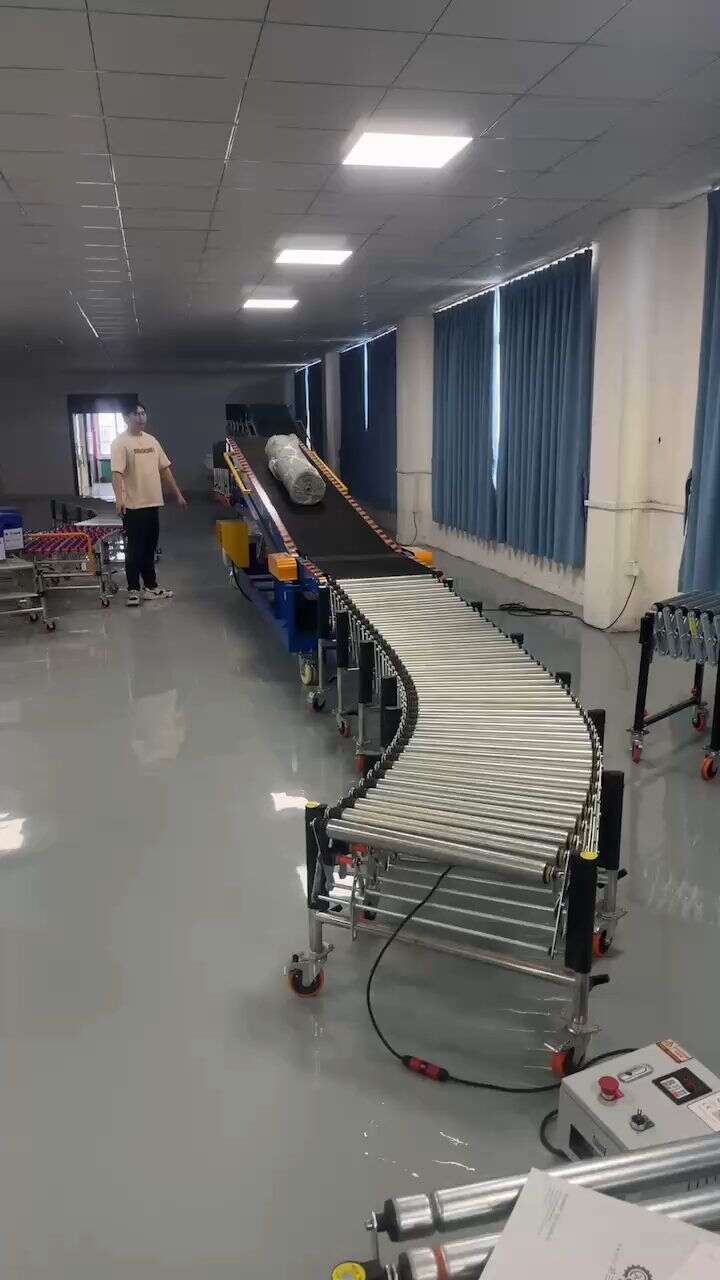
- Older factory areas and sites for heavy cargo without loading platforms: Use hydraulic lifting incline conveyors to address height differences, with the front end connected to a roller Telescopic Conveyor to provide extended conveying inside the vehicle compartment.
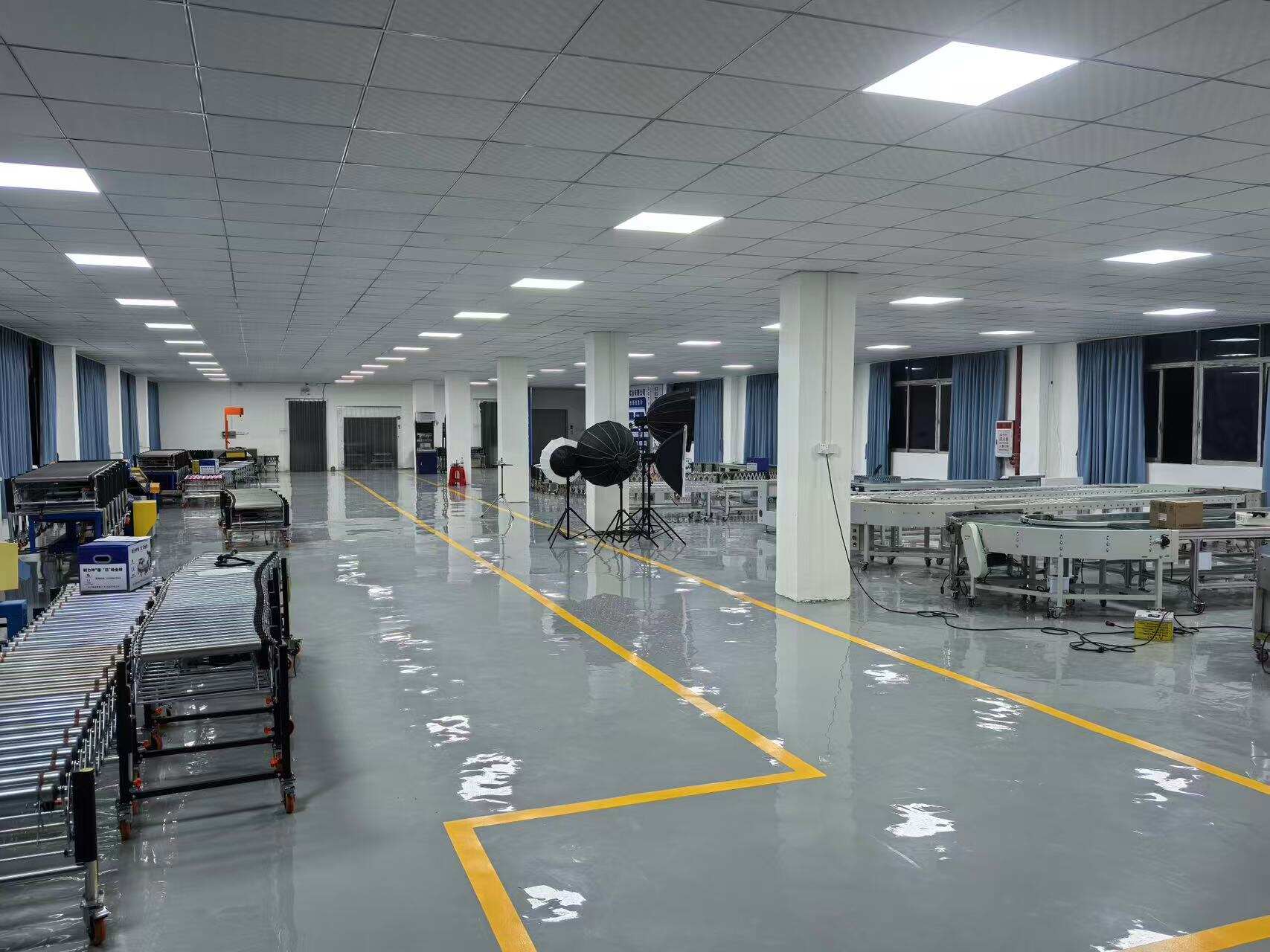
- Comprehensive express distribution centers with both loading-platform and non-loading-platform areas: Use telescopic belt conveyors to cover general loading and unloading points, and configure powered roller Telescopic Conveyors along main routes to improve the turnover efficiency of large items and full-pallet loads.
- Small e-commerce warehouses and same-city delivery outlets: A single telescopic belt conveyor can meet daily operational needs. If the budget permits, a simple small hydraulic lifting base can be added to accommodate vehicles of different heights.
- When purchasing, it is not advisable to compare only the extension length and price. You should also verify the machine body material, rated load capacity, roller or belt configuration, photoelectric sensing, anti-slip protection, emergency stop, and other safety features, as well as the subsequent maintenance requirements for the rollers, belts, and hydraulic seals. For small warehouses, special dock heights, and non-standard vehicle compartments, the manufacturer's ability to conduct on-site surveys and make non-standard adjustments is equally important.
Conclusion on Conveyor Equipment Procurement
Powered roller telescopic conveyors are better suited to standard loading docks and neatly arranged goods; hydraulic lifting and inclined conveyors mainly address height differences at sites without loading docks; telescopic belt conveyors are better suited to mixed items, multiple vehicle types, and flexible loading and unloading requirements. The three types of equipment can be used in combination according to warehouse operating conditions.
Naili Unloading Artifact (Guangdong) Industrial Co., Ltd. can provide three types of loading and unloading conveyor equipment—roller, hydraulic incline, and telescopic belt conveyors—and supports complete system integration and customized solutions. For large-scale logistics park production-line projects or single-unit upgrades for small and medium-sized warehouses, the specific configuration should still be determined based on site conditions, vehicle specifications, cargo weight, and workload.
Before formal procurement, it is recommended to compile a checklist covering the presence or absence of a loading dock, commonly used vehicles, cargo types, weight per item, and average daily loading and unloading volume. Then, determine the equipment model and combination based on the equipment's applicable range to reduce equipment specification mismatches and subsequent integrated commissioning issues.
Before formal procurement, it is recommended to compile a checklist covering the presence or absence of a loading dock, commonly used vehicles, cargo types, weight per item, and average daily loading and unloading volume. Then, determine the equipment model and combination based on the equipment's applicable range to reduce equipment specification mismatches and subsequent integrated commissioning issues.