The challenge of mixed-size motorcycle parts handling
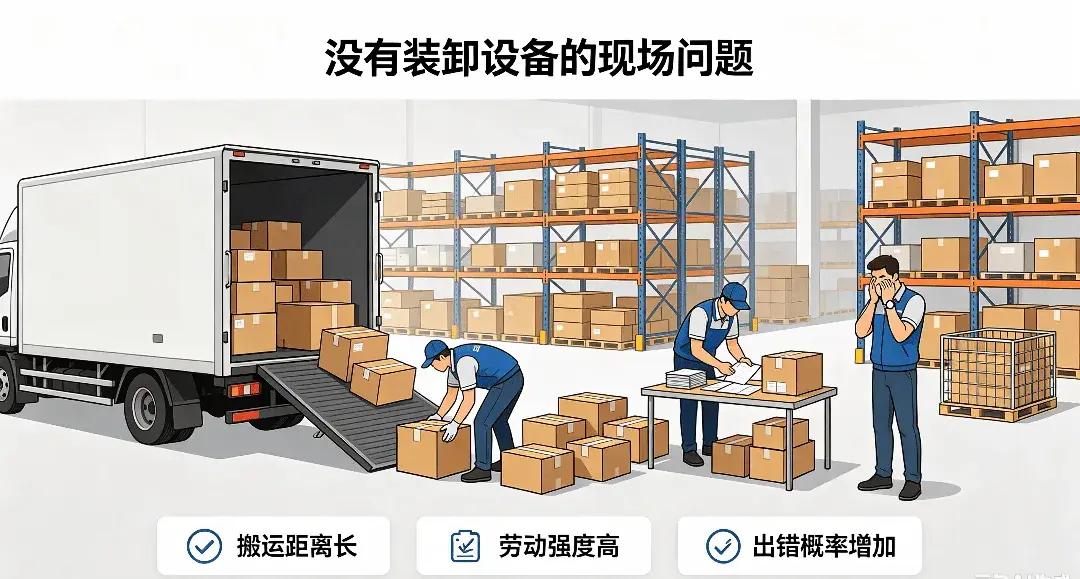
In the receiving, dispatching, and sorting area of a motorcycle parts warehouse, the reason "Powered Roller Conveyor unloading motorcycle parts" is discussed so often is that the same incoming batch often contains materials with vastly different sizes, weights, and fragility levels: from small items such as chain links, bolts, and electrical connectors to large, irregularly shaped parts such as fairings, fuel tanks, and wheel assemblies.
The main pain point for small parts is usually "organization." These materials are prone to shifting, mixing, or even being lost during transportation and transfer; when moving on a roller line, they also need to be prevented from falling through the gaps. A more common practice is to place small parts in turnover boxes/pallets and move them across the conveyor by "bridging the rollers, " so as to keep them orderly during loading, unloading, and in-line transfer.
Large parts are more sensitive to "stable support." Irregularly shaped components that are difficult to stack often bring challenges in workflow organization, fluctuating efficiency, and surface impact damage if they rely mainly on manual handling; therefore, replacing frequent lifting and intermediate ground placement with continuous conveying can better achieve a relatively "gentle handling" transfer rhythm.

How Powered Roller Conveyor supports flexible loading and unloading
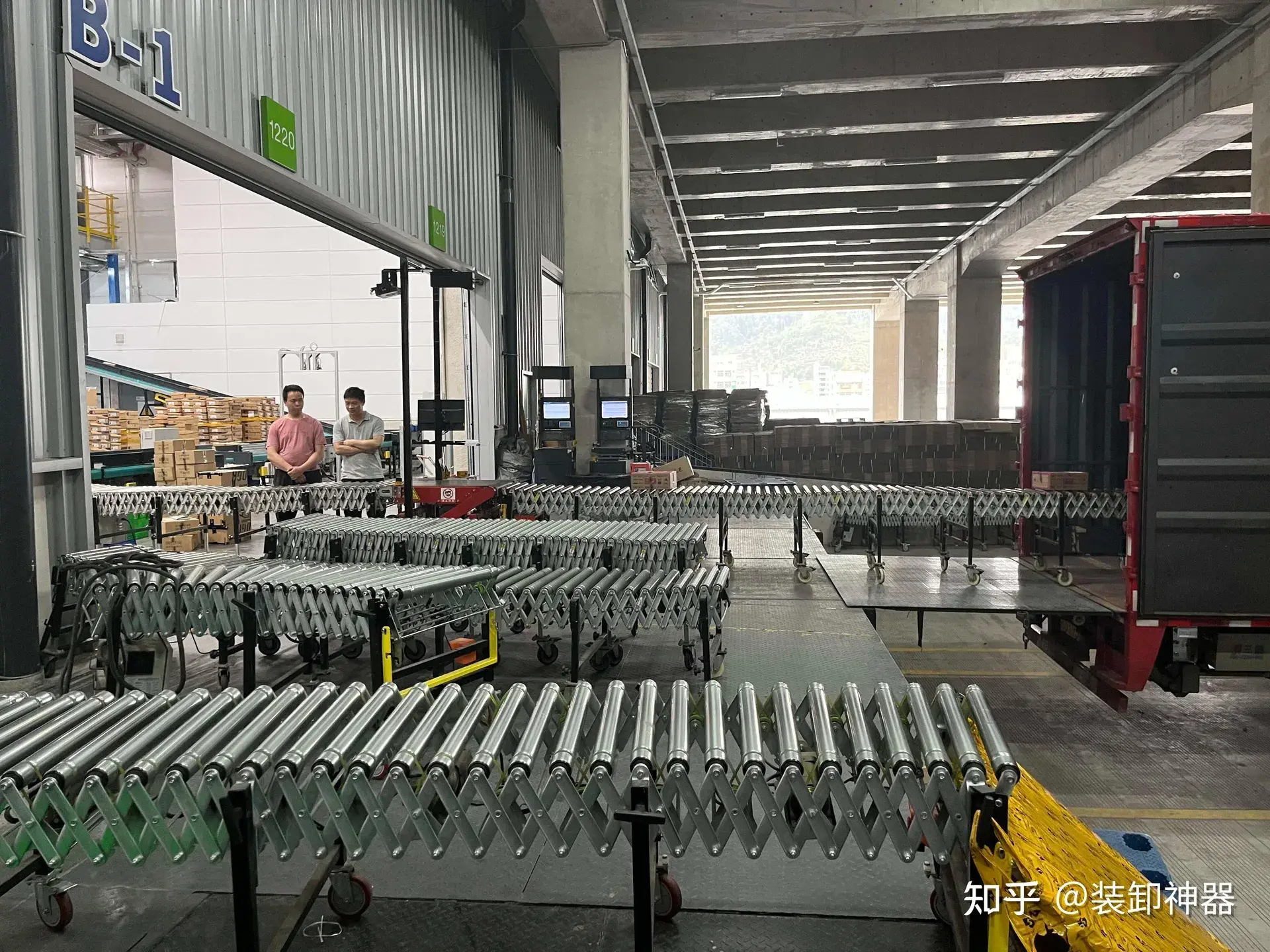
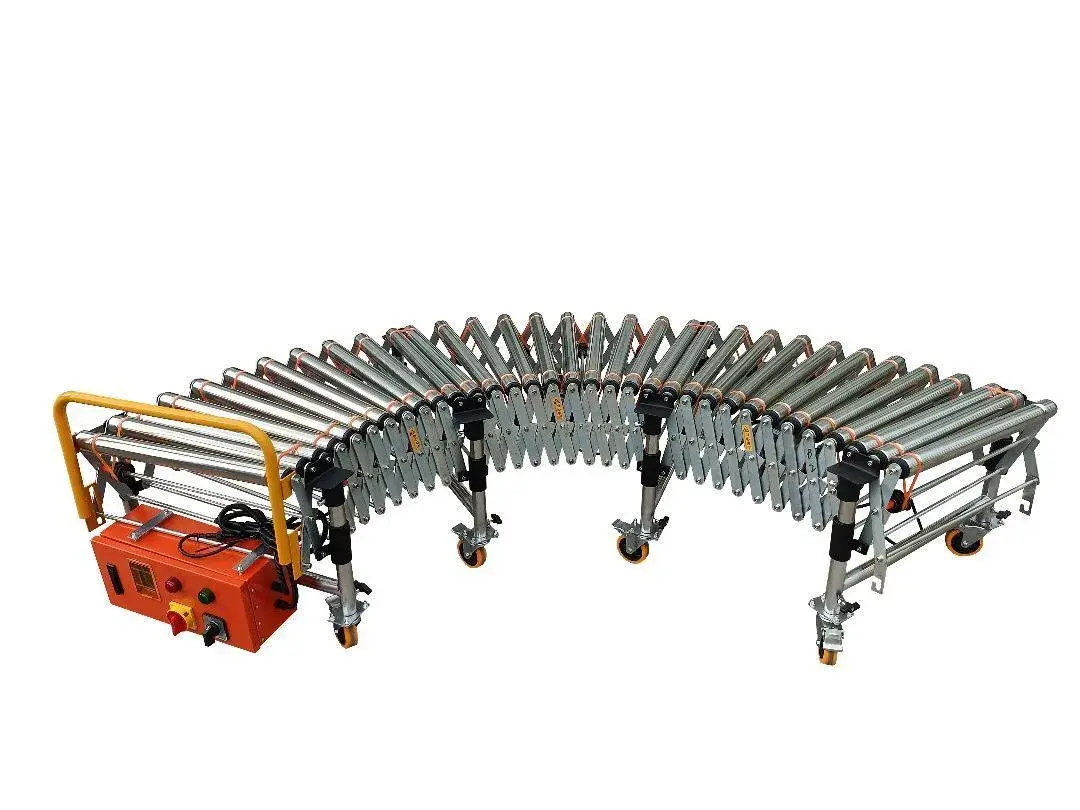
To make Powered Roller Conveyor unloading motorcycle parts both "stable" and "fast, " the key lies in two points: variable-speed control and modular splicing.
- Variable speed: Depending on the fragility of different parts and the work rhythm, the conveying speed needs to be adjustable at any time. Precision small parts or electronic components are better suited to moving steadily at lower speeds to reduce vibration and impact; larger goods with more regular packaging can be moved at higher speeds to improve throughput.
- Modularity: Loading and unloading points, sorting stations, and quality inspection stations often change according to order structure and staffing. The advantage of modular sections is that the line can be lengthened, shortened, or reconfigured on site as needed, reducing the repeated modifications caused by a "fixed line that does not match the operating conditions.".
At the structural and control level, roller spacing affects support performance: small parts are usually not placed directly on the rollers, but are transported across them in turnover boxes/pallets; for large or irregular items, the stability of the drive and control determines their posture and continuity while passing through.
On-site operation, common control actions include:
- Forward/reverse: Used as a rollback buffer during temporary downstream congestion, and also convenient for error correction and retrieval (for example, sending items back after picking errors are found).
- Emergency stop: Used for abnormal situations such as material jams or personnel intervention.
- Speed adjustment: Used to switch rhythms between different workstations, such as slowing down at picking stations and speeding up in transfer sections.


Multi-Wedge Belt Powered Roller Conveyor
The multi-wedge belt Powered Roller Conveyor uses a multi-wedge belt drive design to achieve smooth and efficient cargo conveying. Motor spacing range...
 Plastic Drum
 Metal Drum
 Carton
 Roll
Segmenting sorting areas and conveyor sections by part size
Dividing the process of unloading motorcycle parts with Powered Roller Conveyor into zones can break down the complexity of mixed loading into more manageable work units. A common arrangement is to set up sorting areas and corresponding conveyor sections by small, medium, and large parts, and achieve a smooth transition through modular sections.
- Small-parts area: More oriented toward picking and verification, usually operated at a lower speed and arranged as close to the work position as possible to ensure visibility and controllability for operators. This area mainly uses turnover boxes/pallets for carrying, reducing the risk of missing items caused by direct contact between loose parts and the roller surface.
- Medium-parts area: Needs to balance accuracy and throughput, and can be operated at a medium speed. For transfers that do not require fine speed control, a gravity roller section can be used as a supplementary section to reduce dependence on the powered section while leaving room for on-site adjustments.
- Large-parts area: While maintaining stable support, the speed can be moderately increased to reduce waiting time. Large parts rely more on continuous support and smooth transitions, so the interfaces between different areas should avoid abrupt drops or sudden rhythm changes.
When goods have soft packaging or easily scratched surfaces (for example, protective gear, seat covers, wire harnesses, etc.), the rubber-covered roller section and steel roller section can be used for different purposes: use a more forgiving contact surface for fragile goods, while allowing standard items to maintain efficiency on the standard roller section.

Maintaining part sequence and key points for quality inspection/buffer storage
In assembly kits, repair kits, or multi-item store orders, keeping the sequence intact is often more important than simply moving faster. When a Powered Roller Conveyor loads and unloads motorcycle parts, the following combined measures can improve sequence control:
- Segmented speed changes create a time buffer
By using speed differences between different conveyor sections, you can create controllable spacing and arrival rhythms: slow down the sections that need checking/picking, and speed up the transfer sections, giving the operator time to handle items without disrupting the sequence.
- Reverse capability for congestion handling and error recovery
When brief downstream congestion occurs, or when a picking/checking step finds the wrong item and it needs to be recovered, reverse operation can send the goods back to a manageable area, avoiding production-line stoppages that disrupt the cycle.
- Inspection point: slow down without stopping the line
When setting up inspection points such as barcode scanning or visual checks on the conveyor line, you can slow that section to a suitable operating speed to complete the inspection, while downstream materials continue passing in the established order, reducing manual cutting in line and temporary piling up.
- Gravity roller sections as temporary buffer zones
When waiting for release or temporary storage is needed, a gravity roller section can serve as a low-energy buffer: it allows materials to pause briefly while preserving their original sequence and spacing when released.
Further reading: For similar scenarios in auto parts transfer and warehouse organization, you can refer to the ideas in this article for comparison.