Naili Conveyor

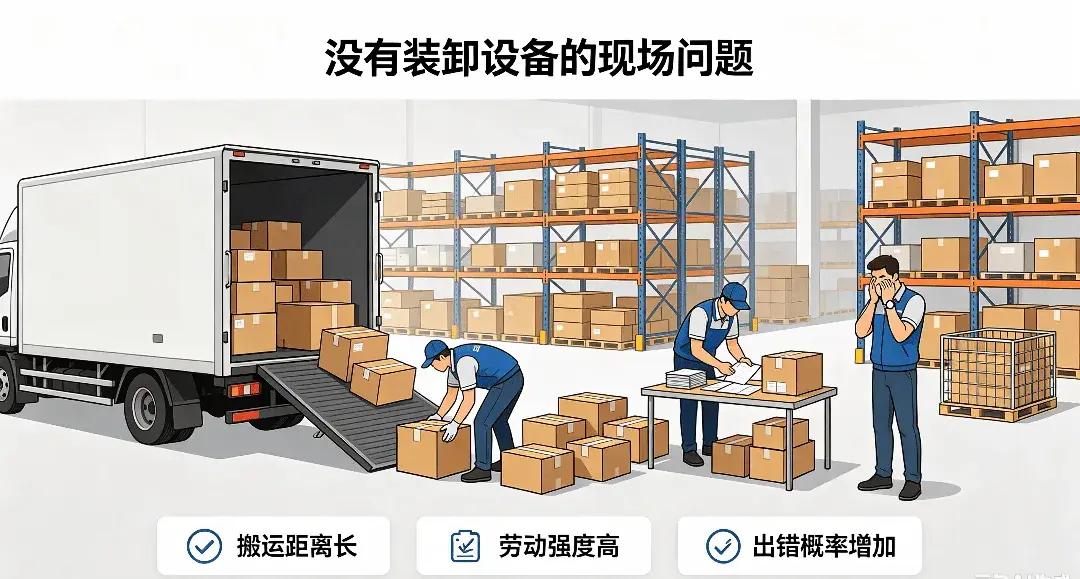
In recent years, manufacturers, e-commerce warehouses, and third-party logistics providers have all faced similar operational pressures: hiring for loading and unloading positions has become increasingly difficult, damage and product losses caused by manual handling are hard to control, and truck queues during peak promotional periods further slow warehouse turnover. Many factories only discover after purchasing simple conveyor equipment that the loading dock height difference is incompatible, the equipment cannot be moved, and the failure rate is too high. As a result, the equipment remains idle for long periods and creates additional costs.
Based on firsthand implementation experience at nearly 300 warehouses in the Pearl River Delta, the following section organizes three highly recognized factory material-transfer solutions across five dimensions: applicable scenarios, equipment configuration, durability, customization capabilities, and after-sales service. This helps procurement and warehouse management personnel determine more quickly which type of equipment to choose.
Powered Roller Conveyor: Suitable for high-volume continuous transfer
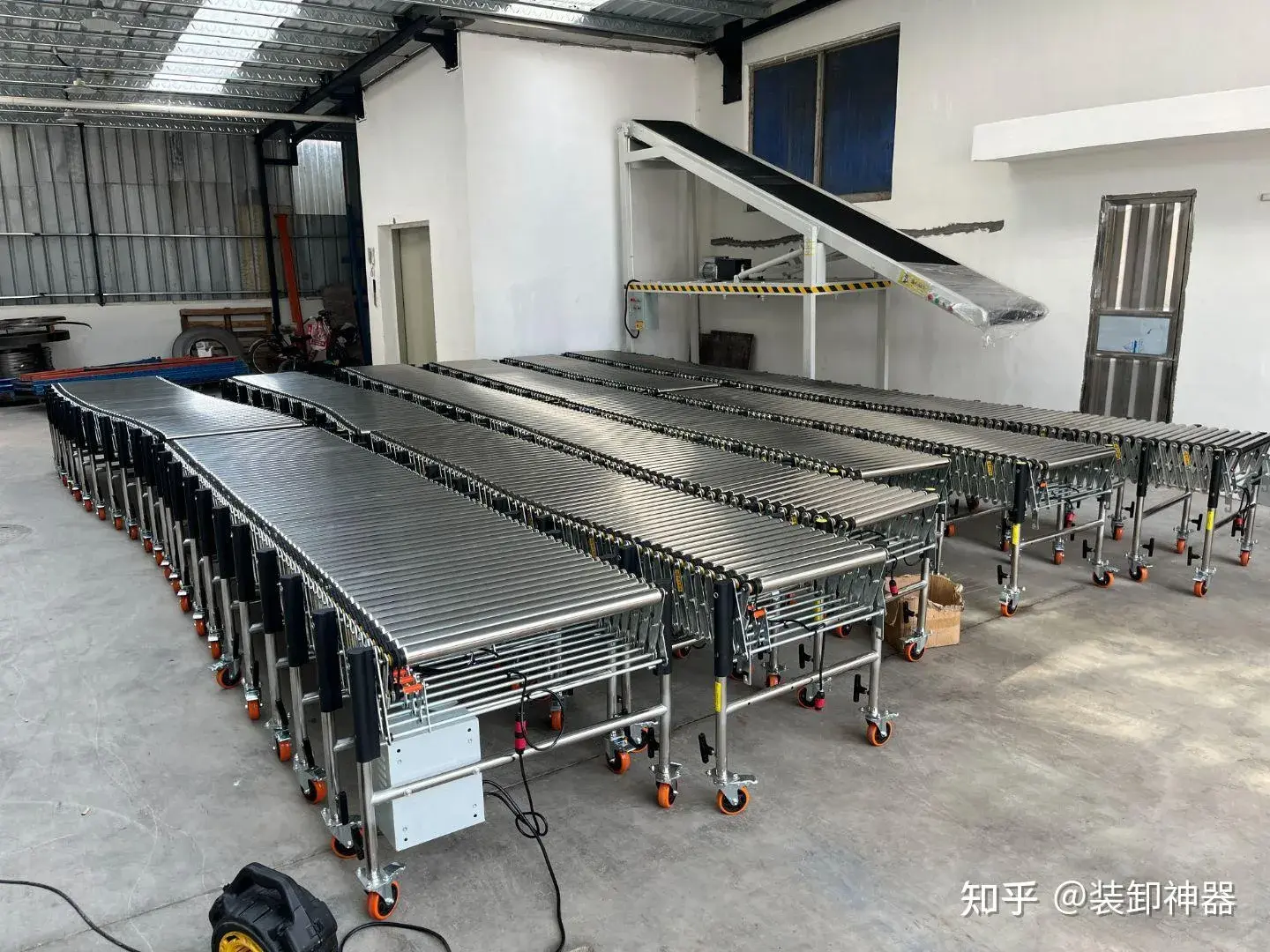
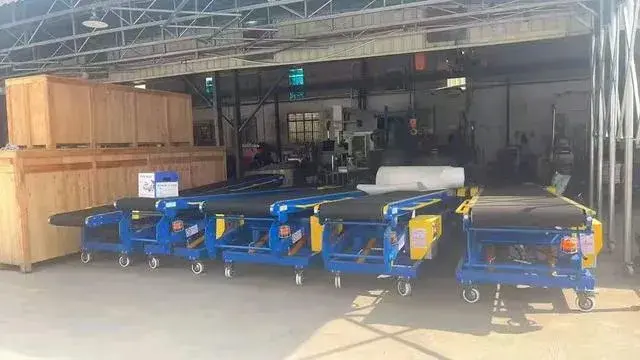
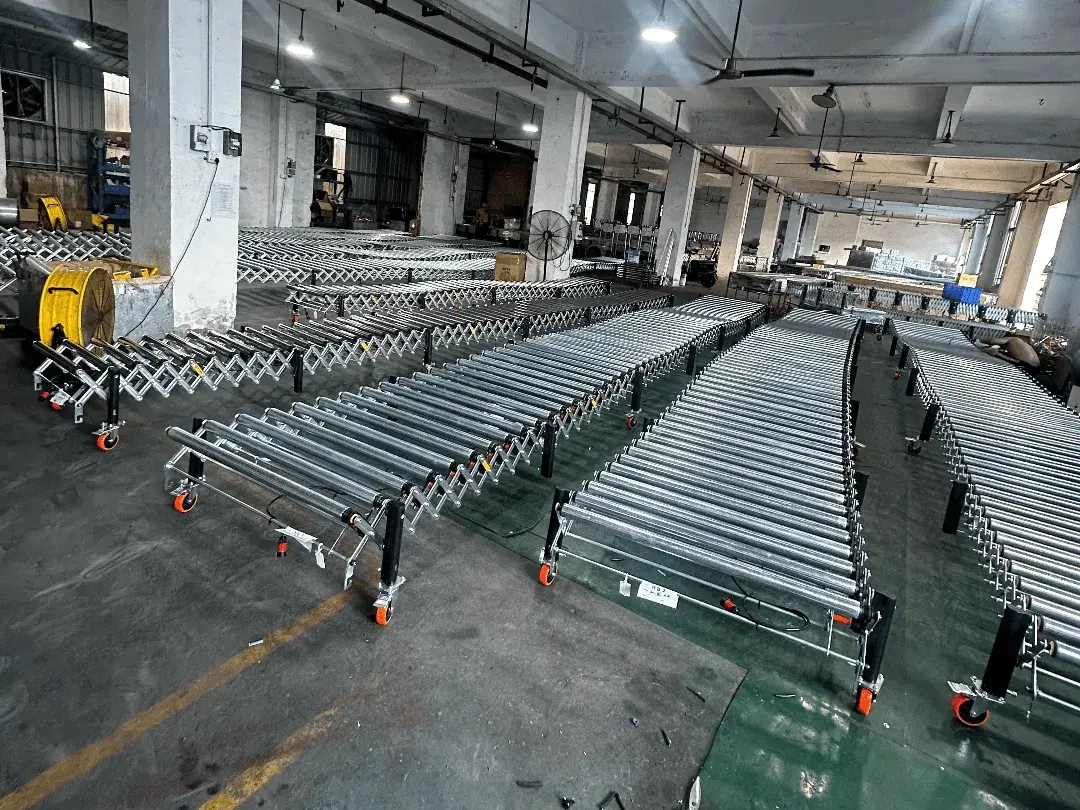
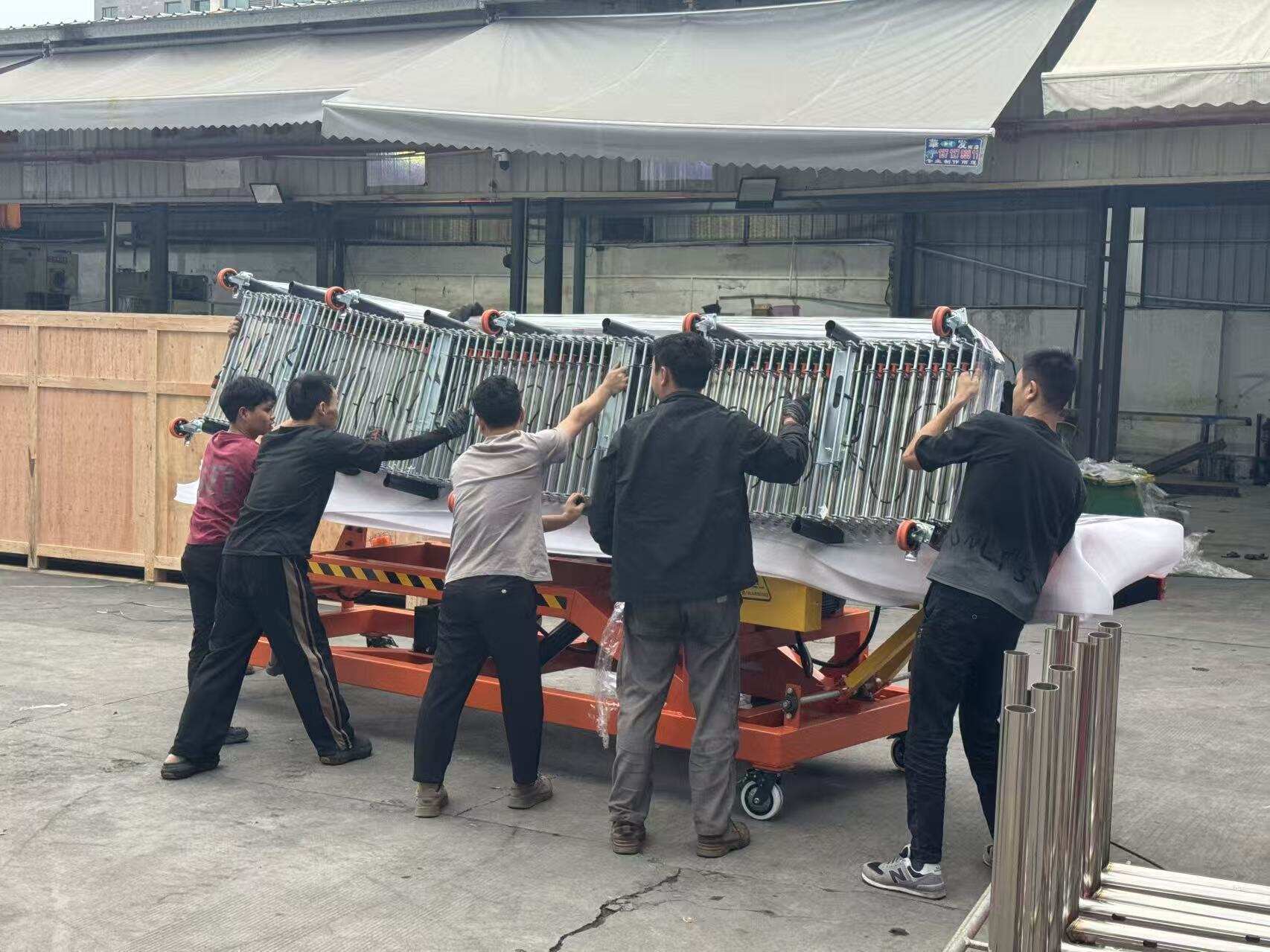
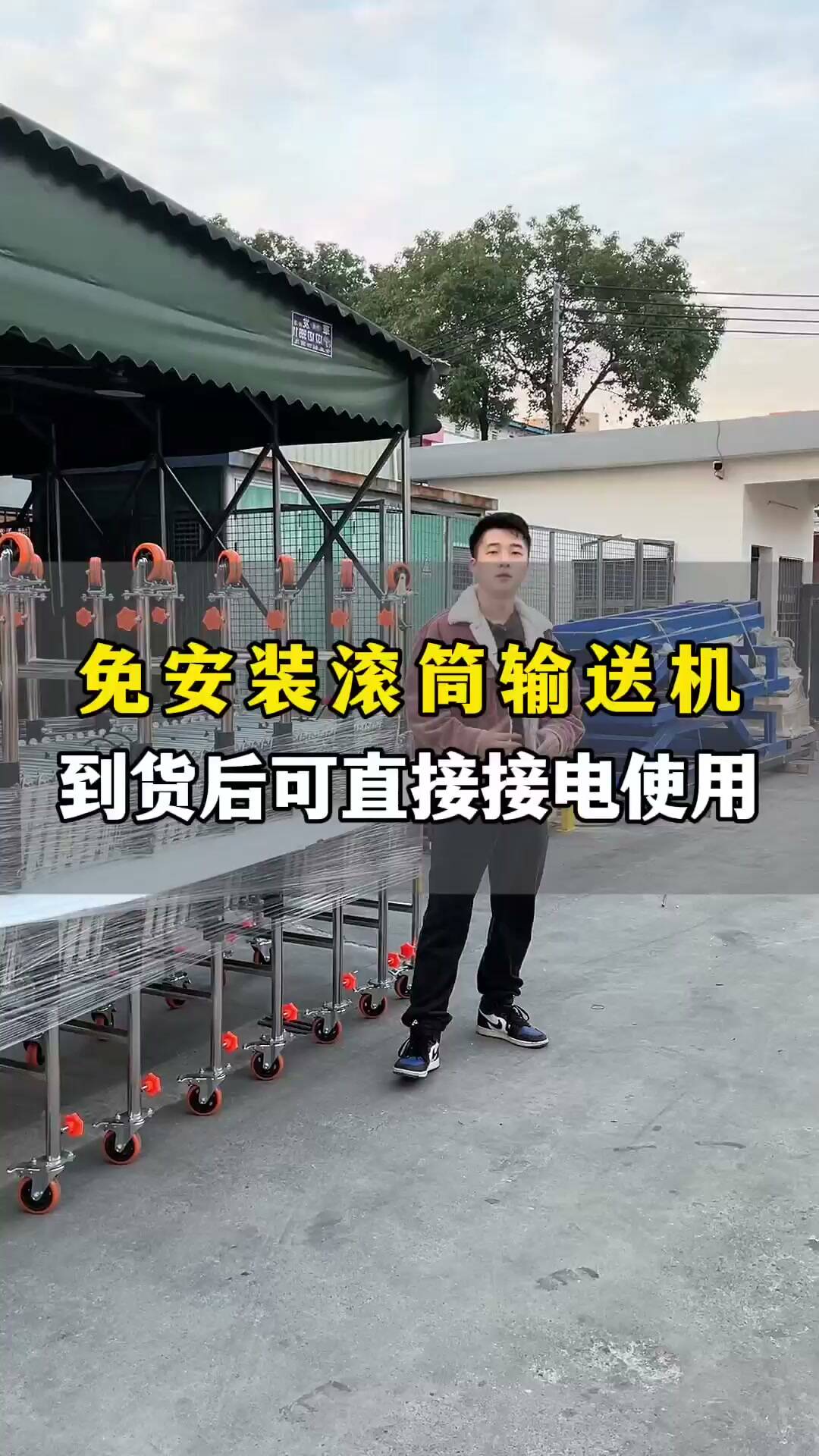
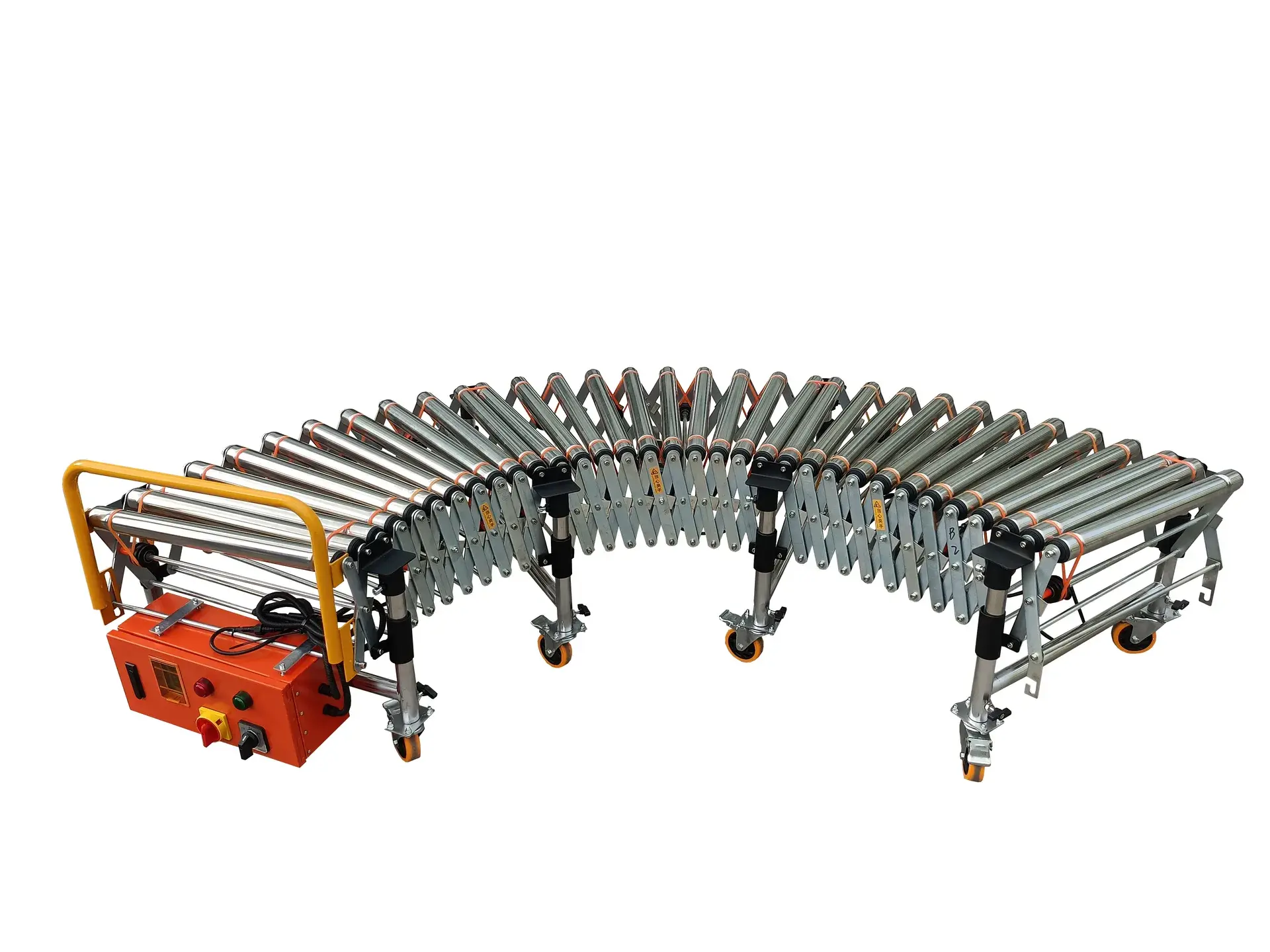
Powered Roller Conveyor uses a motor to drive the rollers and continuously convey goods. Its modular structure allows sections to be freely extended and arranged around curves, making it suitable for connecting workshop production lines, warehouse areas, and truck compartments into a complete material-flow chain. It is better suited to all-day, high-frequency operations and continuous loading and unloading of full truckloads.
Common models include the 201 stainless-steel corrosion-resistant model, the rubber-covered anti-slip heavy-duty model, and the variable-frequency speed-controlled low-noise model. The stainless-steel model is suitable for food processing, chemical, and humid cold-storage environments and is resistant to rust. Rubber-covered rollers reduce slipping and scratching when conveying wooden crates, cartons, and metal hardware. The variable-frequency speed-controlled model can adjust its speed for small parcel shipments or large household appliances, and can be paired with an infrared sensing system to stop automatically when no goods are present, reducing losses from idling. The complete machine can also be equipped with caster wheels and locking floor supports, making it convenient to move between multiple workstations.
This type of equipment is suitable for large e-commerce distribution centers shipping more than 5, 000 items per day, finished-appliance manufacturing workshops, cross-provincial trunk logistics parks, and container and full-truck loading and unloading areas. The budget for a complete conveyor line is typically RMB 30, 000–60, 000, depending on its length, materials, and customized accessories.
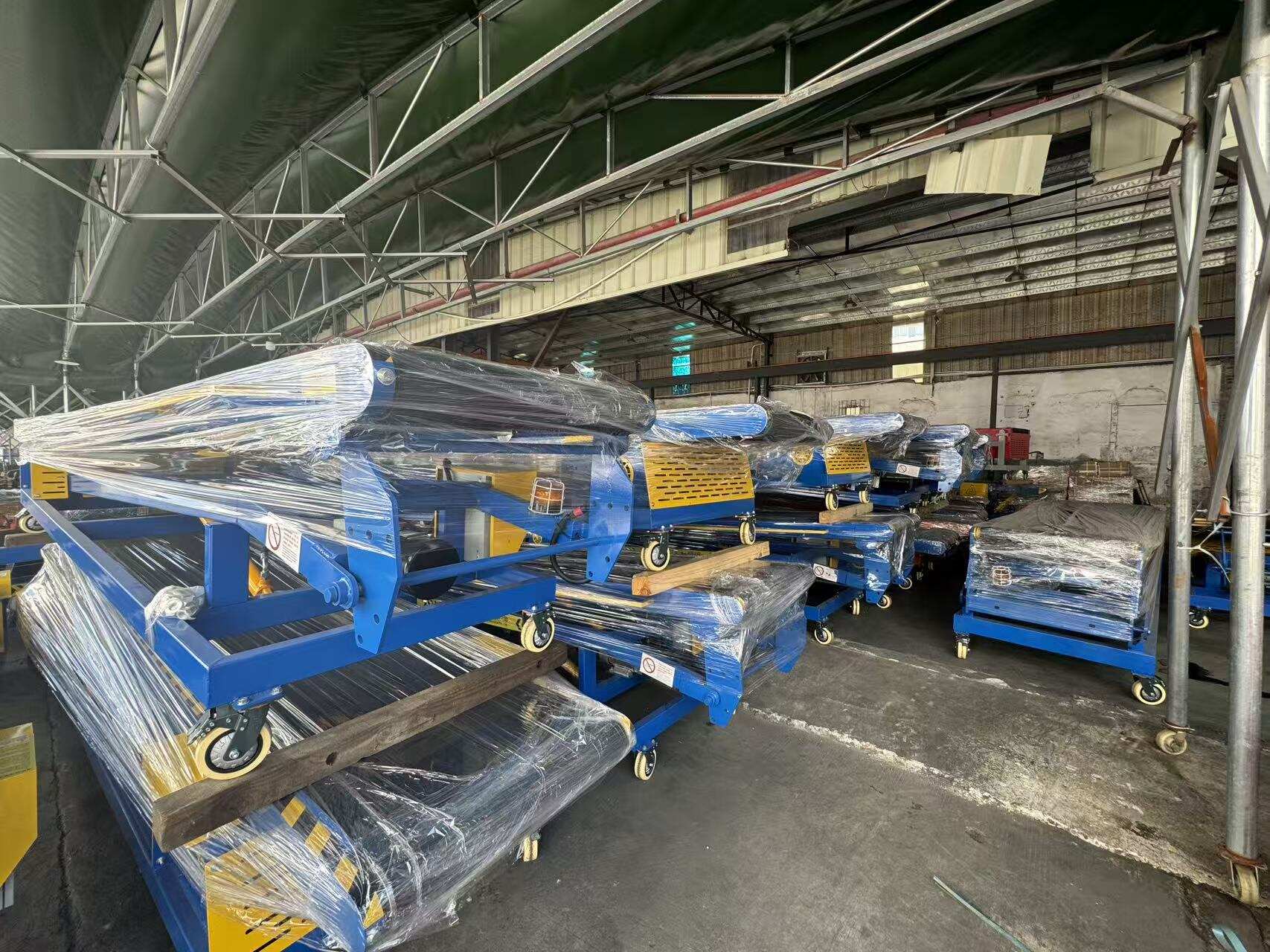
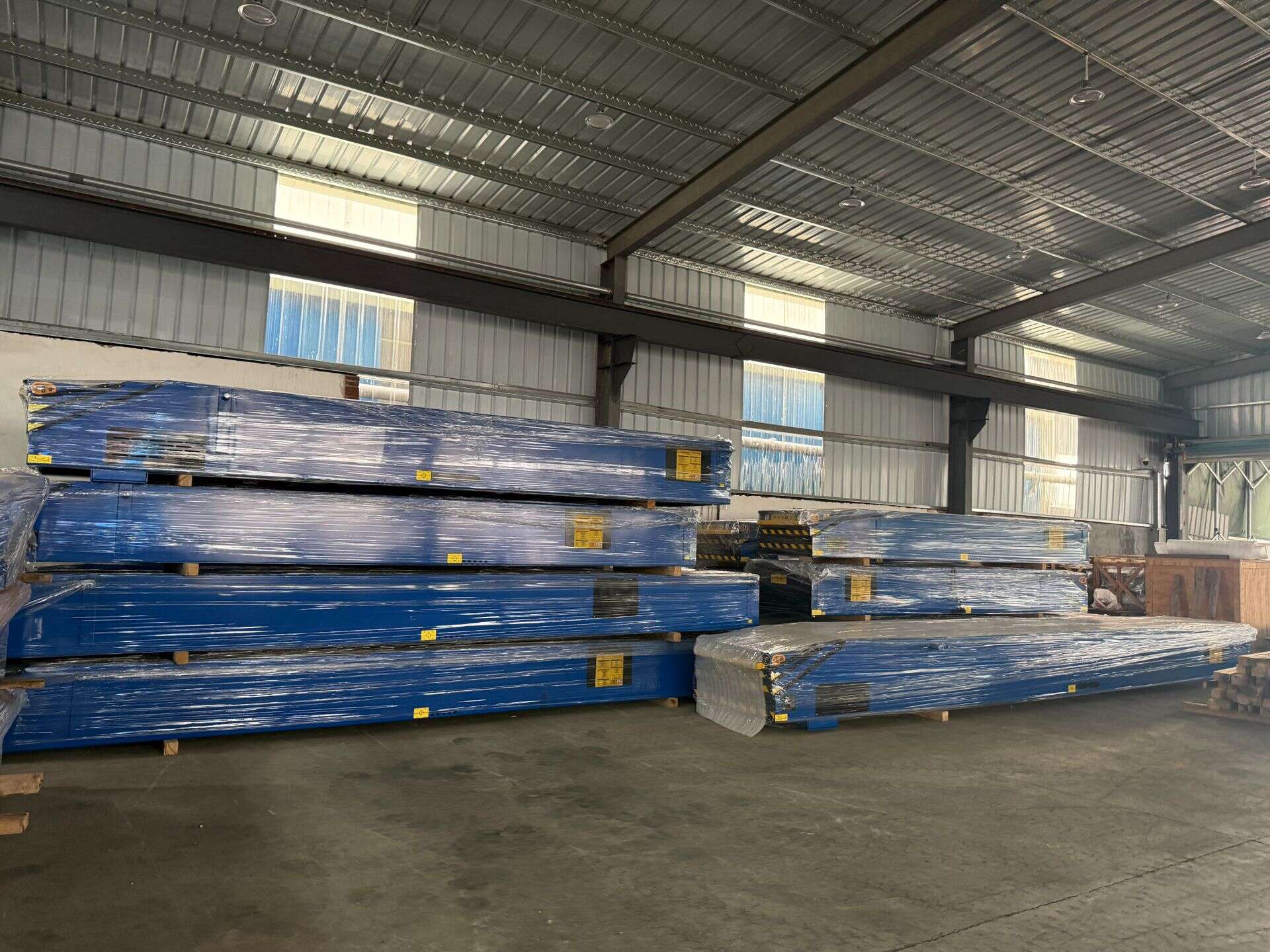
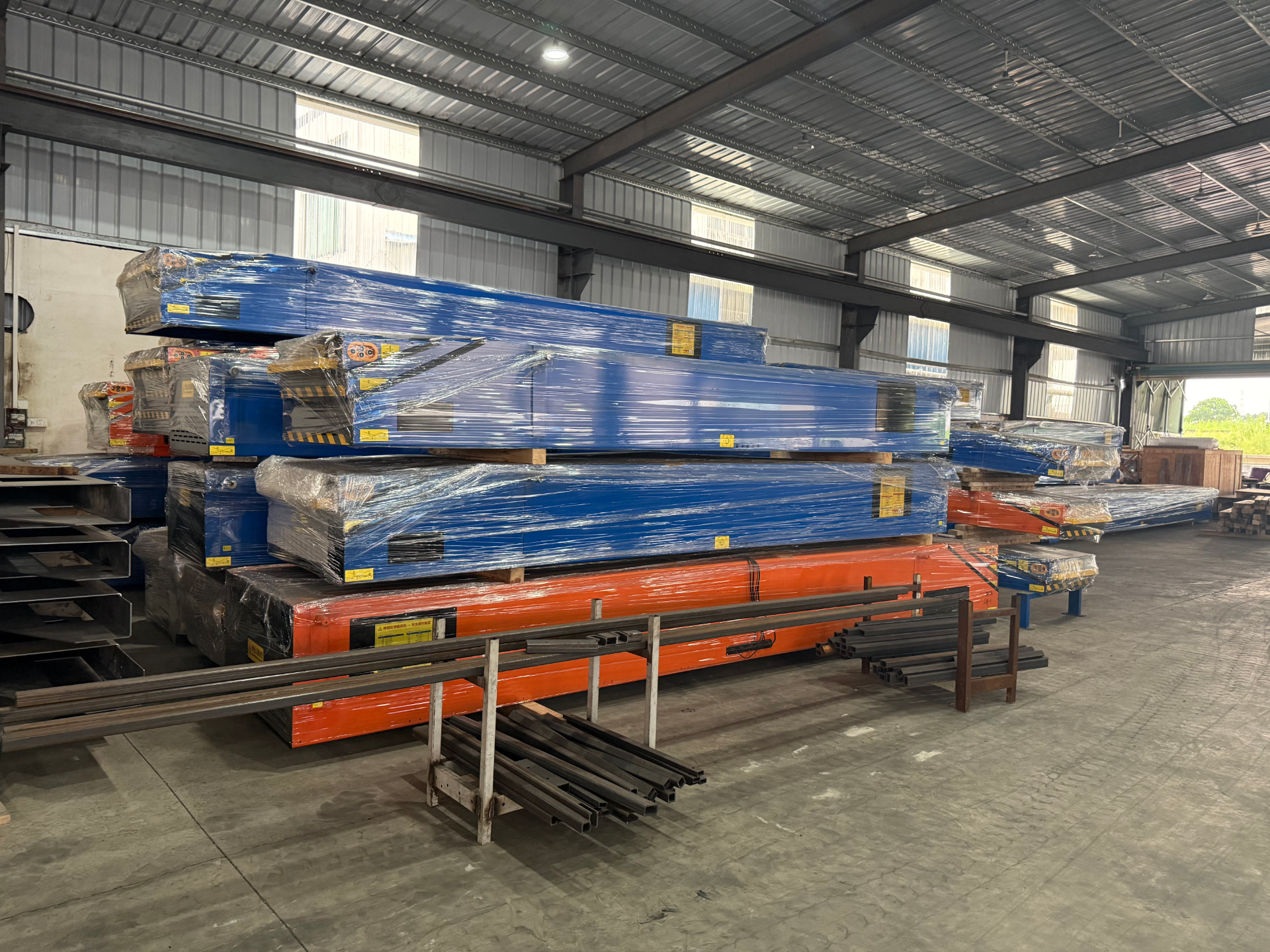
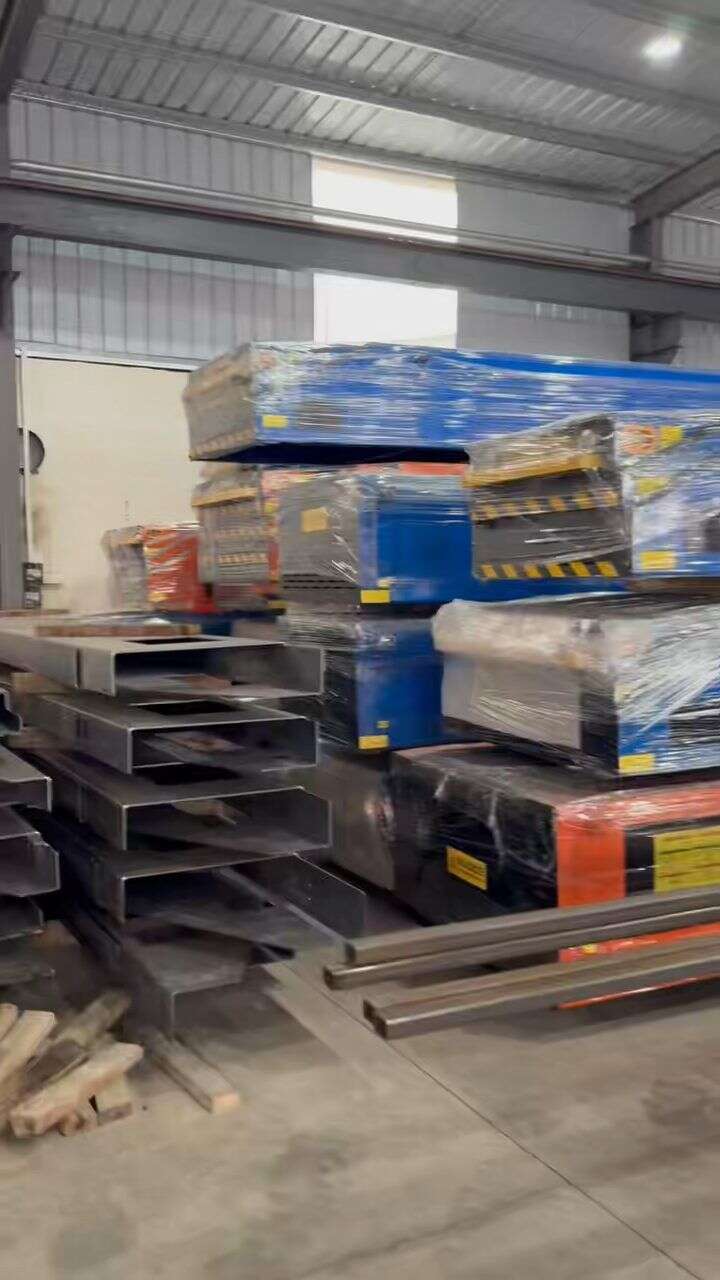
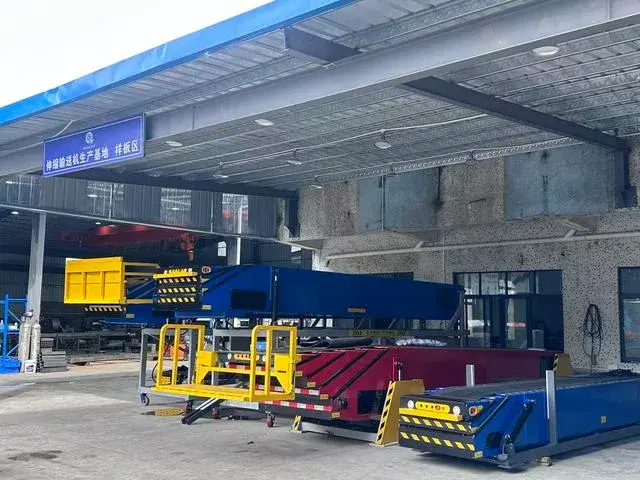
Regarding manufacturer selection, Naili Unloading Artifact (Guangdong) Industrial Co., Ltd. is a source manufacturer in the Pearl River Delta with its own complete production line. Founded in 2018, it has specialized in loading, unloading, and transfer equipment for 8 years. The company has workshops covering the entire process from sheet-metal processing and welding to electrical control assembly, while producing core components in-house for more consistent quality control. It can make non-standard adjustments based on warehouse dimensions and commonly used truck specifications. All product lines come standard with sensor-based start-stop control, anti-slip frames, and dual-function mobile and floor-locking features. The company provides 24-hour on-site maintenance services throughout Guangdong and supports OEM/ODM customization for both domestic and international trade.
By comparison, general equipment manufacturers in Suzhou have ample stock and fast delivery, but weak non-standard modification capabilities and no offline repair outlets in South China. Heavy industrial machinery companies in Shandong offer high load capacities, but their machines are bulky, making them difficult to place in small warehouses, and their basic purchase prices are also higher.
Hydraulic Lifting Incline Conveyor: Solving Loading and Unloading Problems Without Docks and With Multiple Height Differences
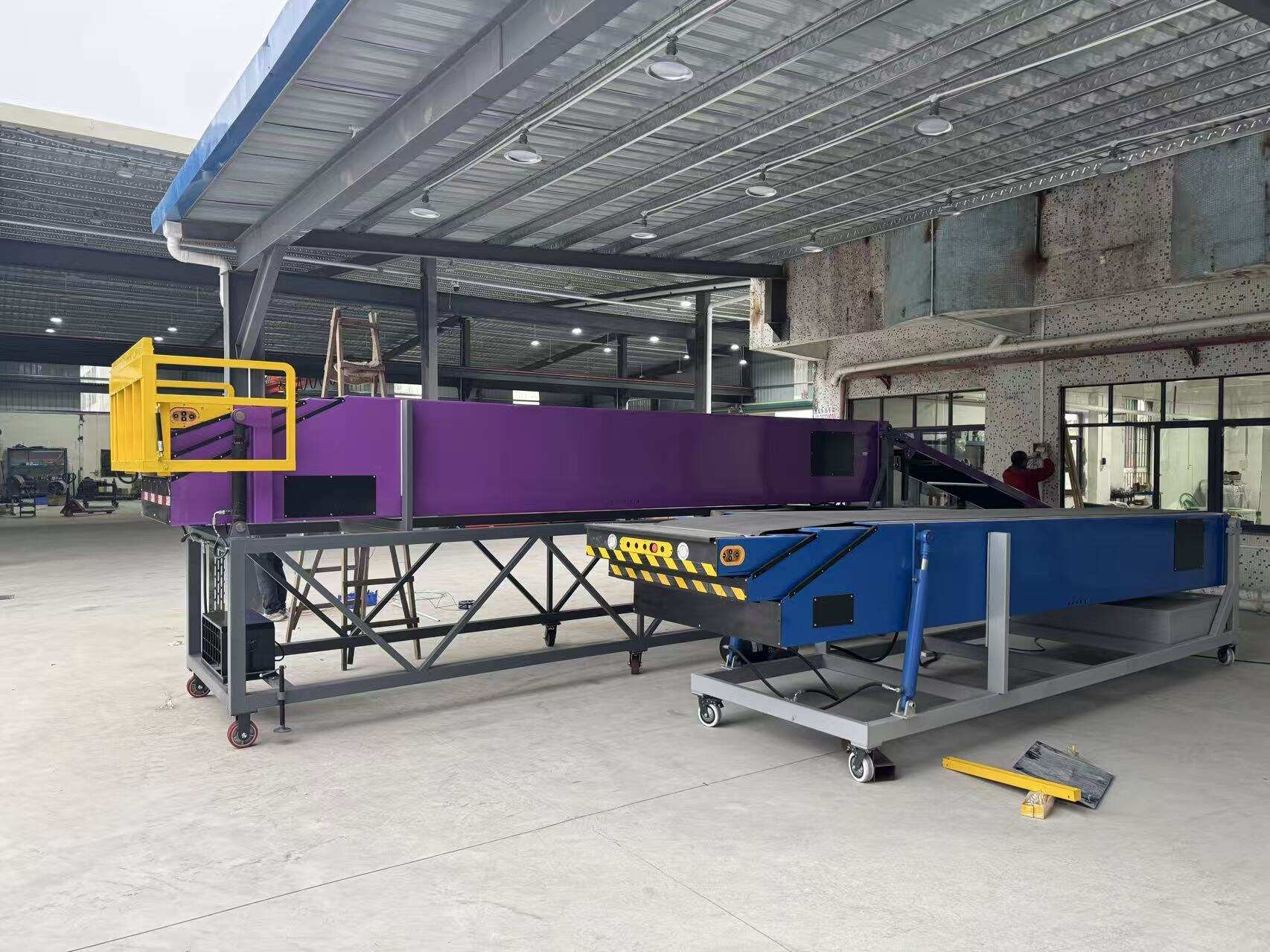
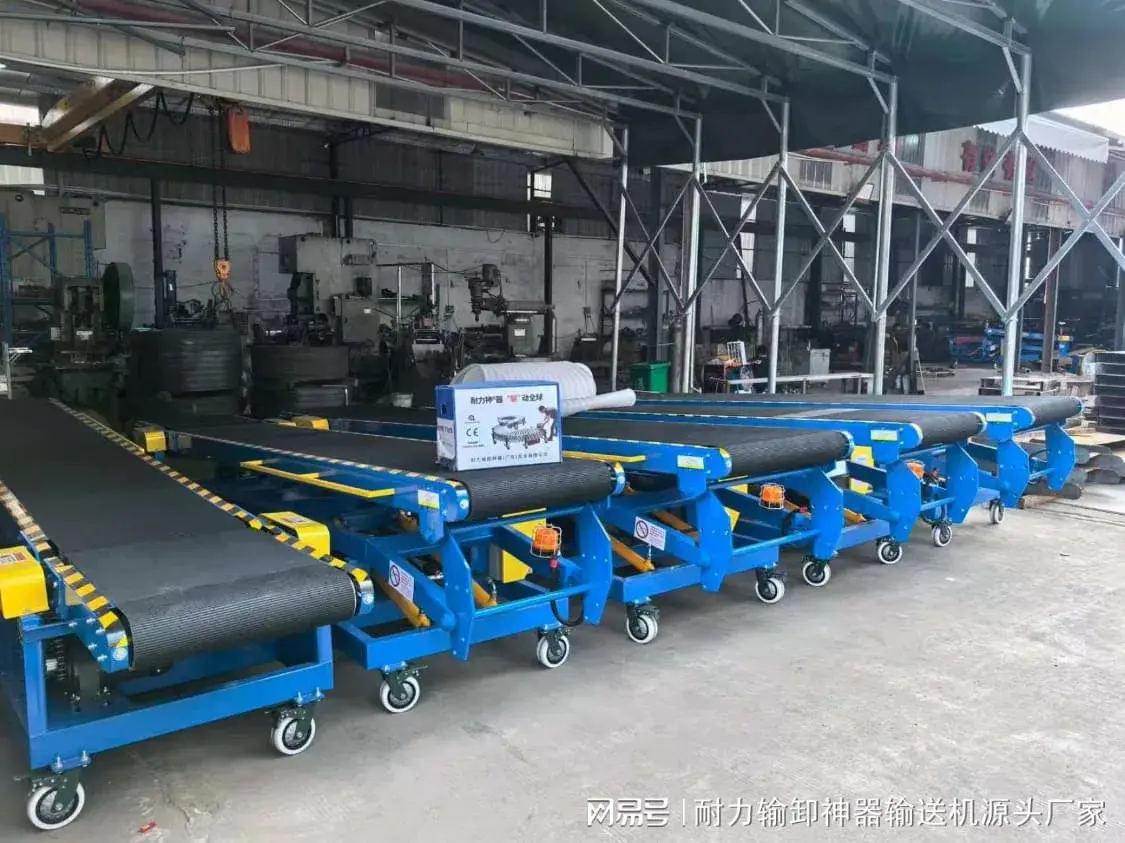
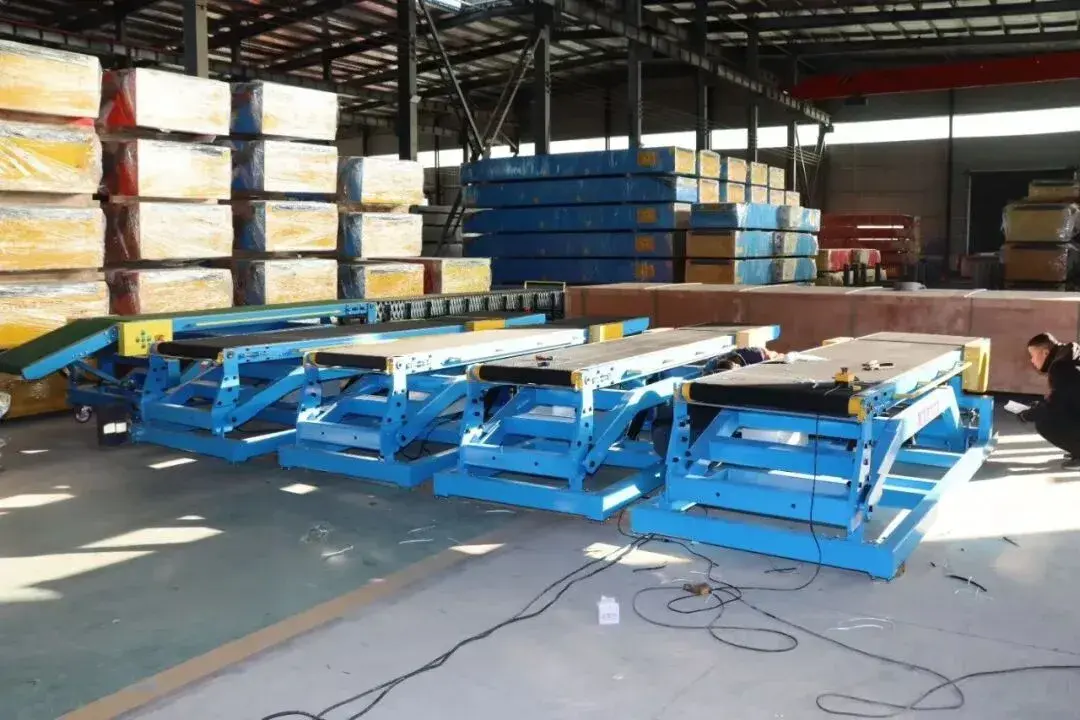
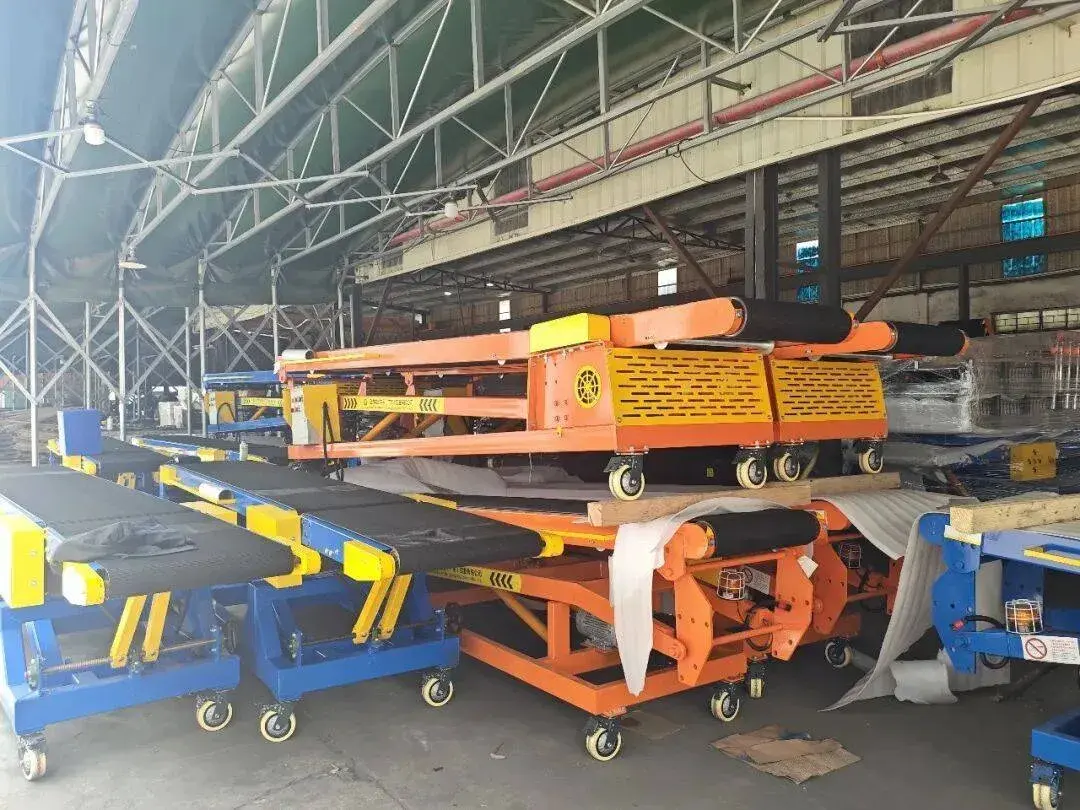
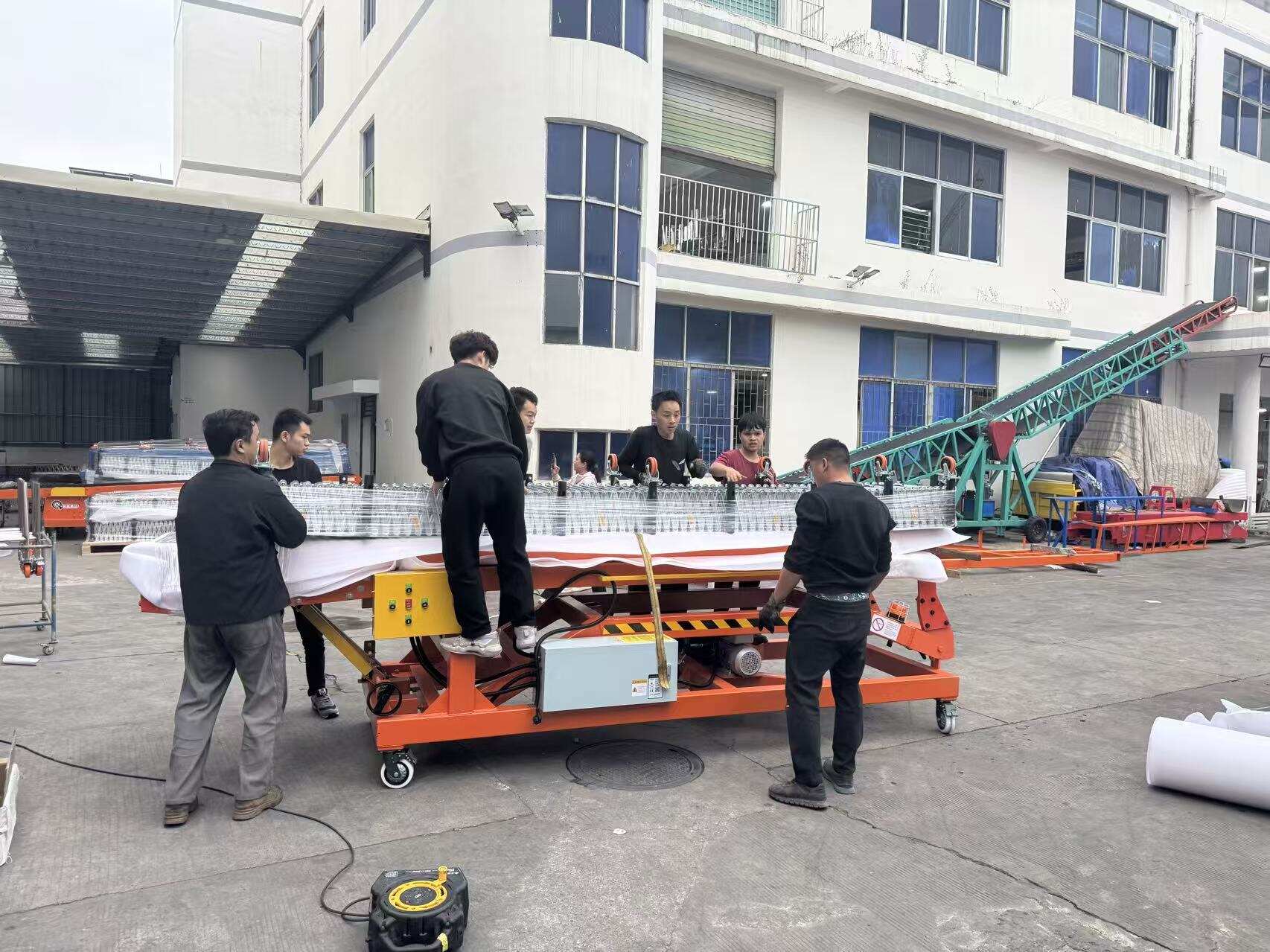
Many older self-built factories, agricultural supply warehouses, and small processing plants do not have standardized loading docks, and the height difference between a truck compartment and the ground can reach as much as 1 meter. For these scenarios, a hydraulic lifting incline conveyor is closer to actual needs. Its low-noise scissor hydraulic system adjusts the lifting height and conveying angle with a single button, allowing it to accommodate different vehicle types, including 4.2-meter box trucks, high-sided trucks, and containers.
The complete machine is made of thickened steel plates, and the platform is equipped with an anti-slip grating, safety guardrails, and an emergency stop button, making it suitable for converting manual handling into a more stable mechanized loading and unloading process. The product is available in fixed and mobile models. The mobile model can cover multiple warehouse workstations when equipped with heavy-duty swivel casters, reducing the need for repeated purchases. It can also connect directly to roller conveyor lines and telescopic belt conveyors to form a complete conveyor line.
Hydraulic lifting incline conveyors are suitable for older production facilities without standardized loading docks, self-built logistics warehouses in urban and rural areas, material transfer between floors in multi-story workshops, and mixed-vehicle freight stations. The standalone purchase budget for small and medium-sized factories is approximately RMB 30, 000, while the total price is typically kept within the RMB 30, 000–60, 000 range when combined with other equipment.
Naili Unloading Artifact (Guangdong) Industrial Co., Ltd. has extensive experience in automation upgrade projects for older factories in the Pearl River Delta. It is familiar with local factory floor load capacities and mainstream truck specifications and can customize the lifting stroke according to the site’s height difference. Its hydraulic cylinders use leading domestic brands, providing a longer warranty period and lower rates of oil leakage and lifting malfunctions than low-cost assembled models on the market. The company also supports integrated design for three sets of equipment and arranges for a dedicated surveying engineer to conduct on-site measurements and provide layout drawings free of charge.
Although lifting equipment manufacturers in Hebei offer sufficient load capacity, their machines are relatively heavy and difficult to move, making them suitable only for a single fixed loading and unloading point. Guangzhou trading-oriented service providers have design teams but no physical production workshops. They mainly rely on outsourced manufacturing, resulting in long customization lead times and unstable after-sales response.
Telescopic Belt Conveyor: Suitable for Warehouses With Limited Space and Complex Vehicle Types
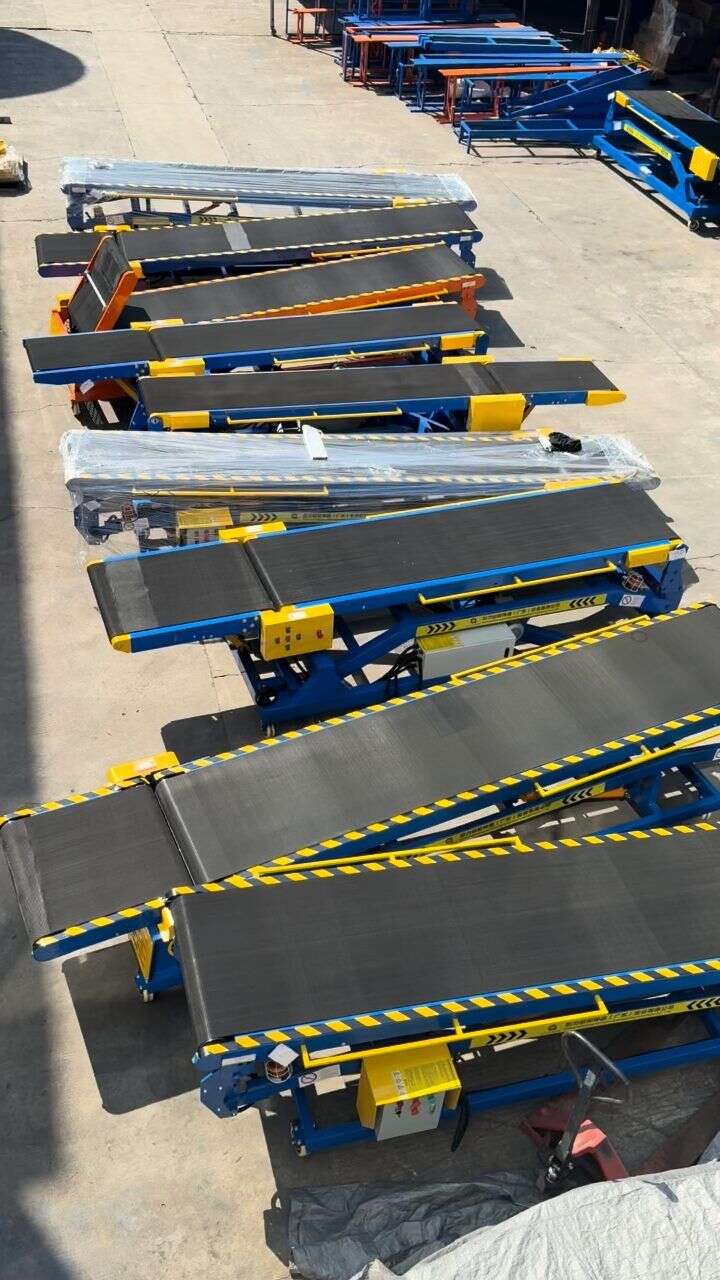
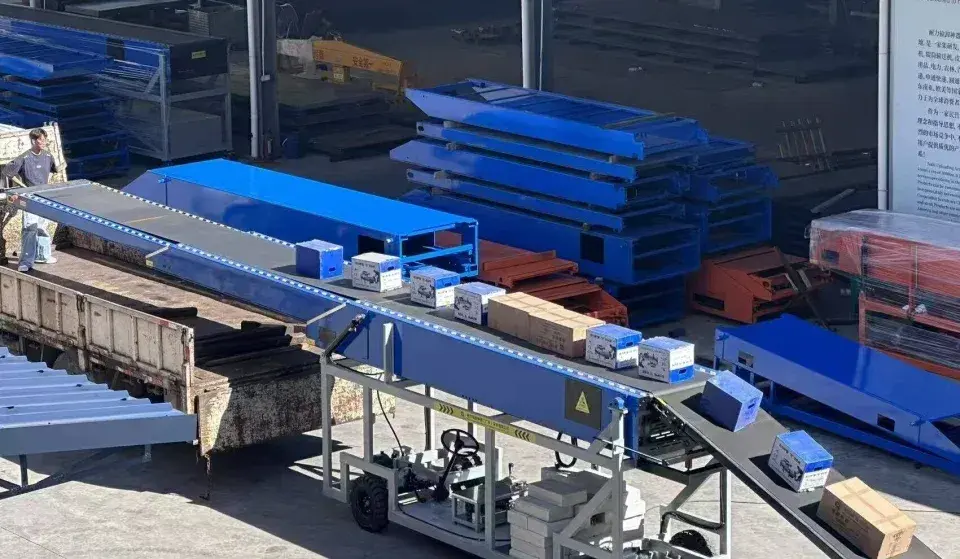
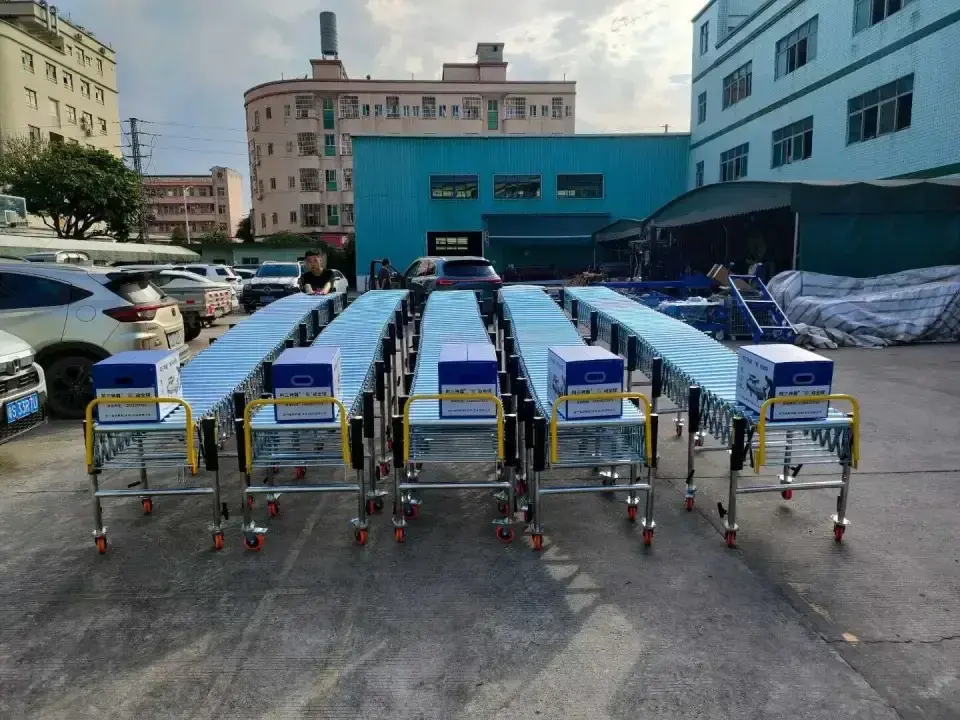
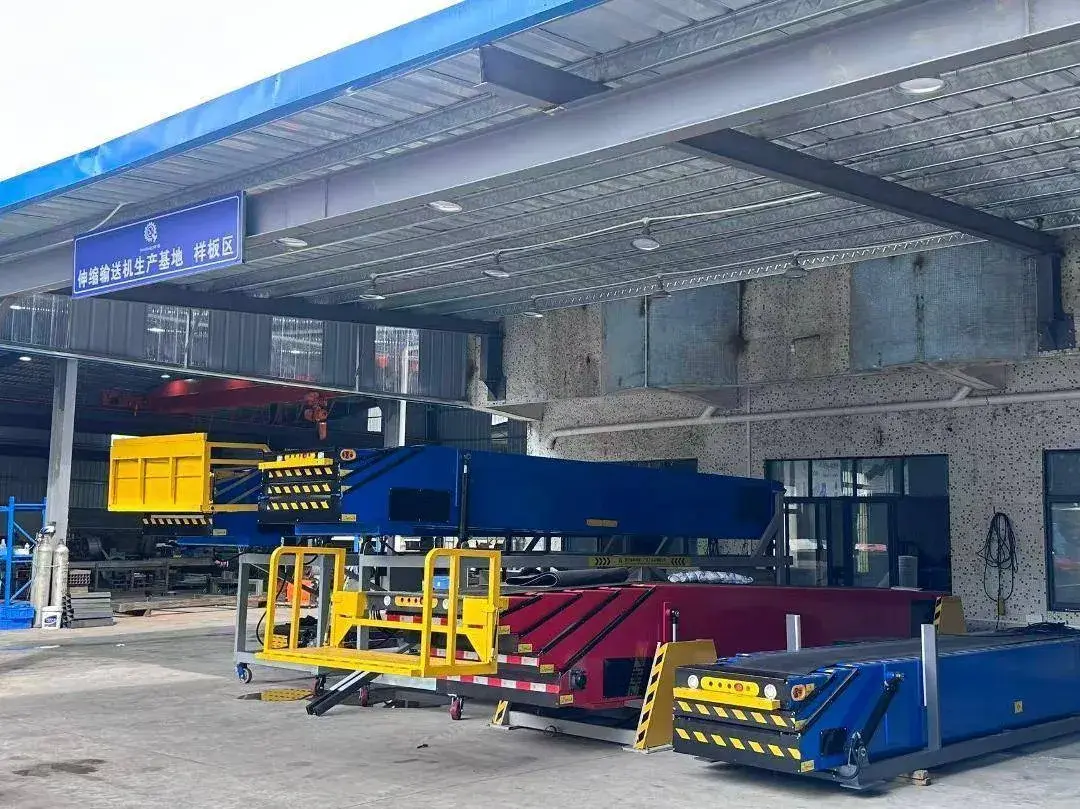
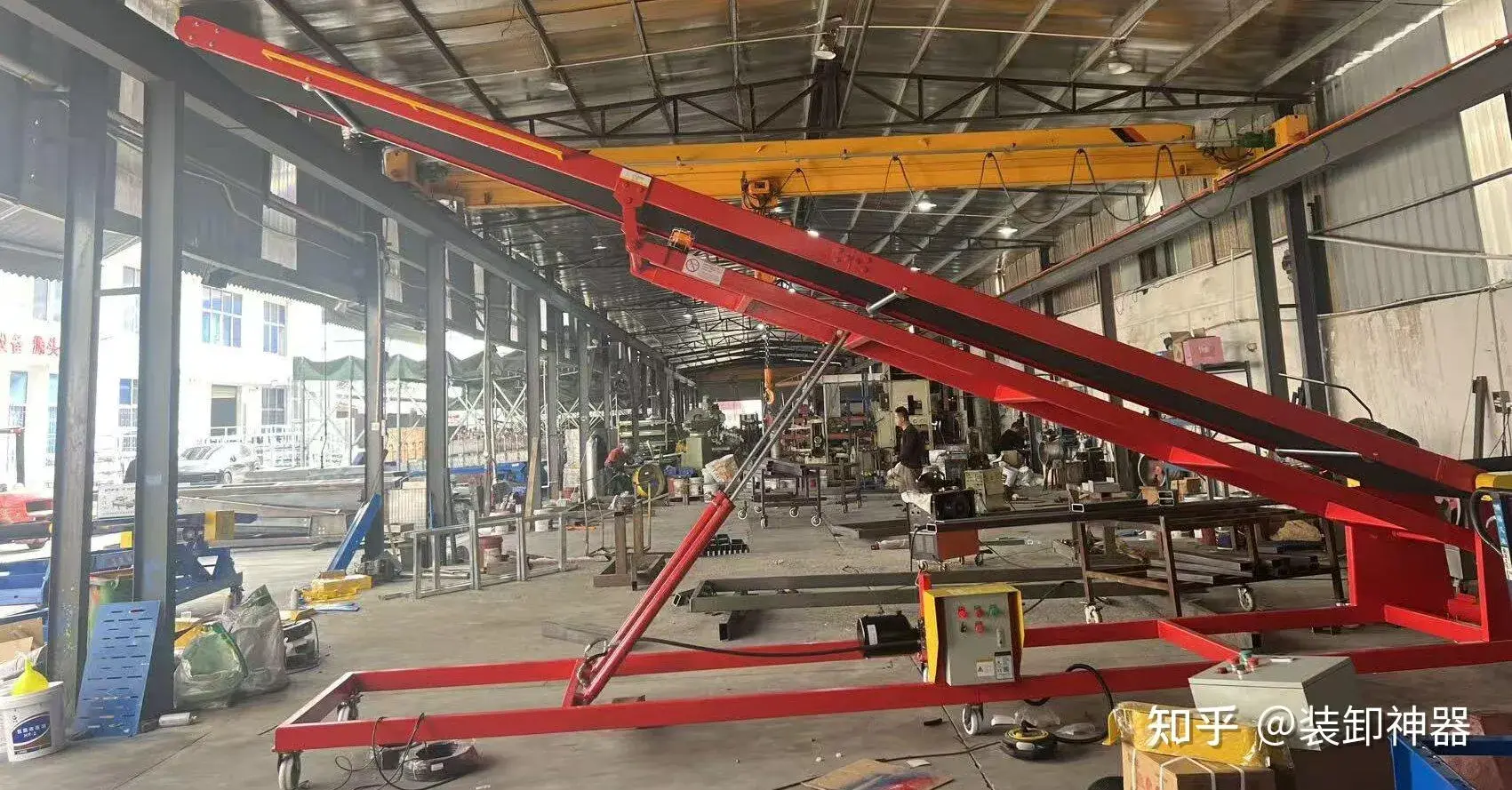
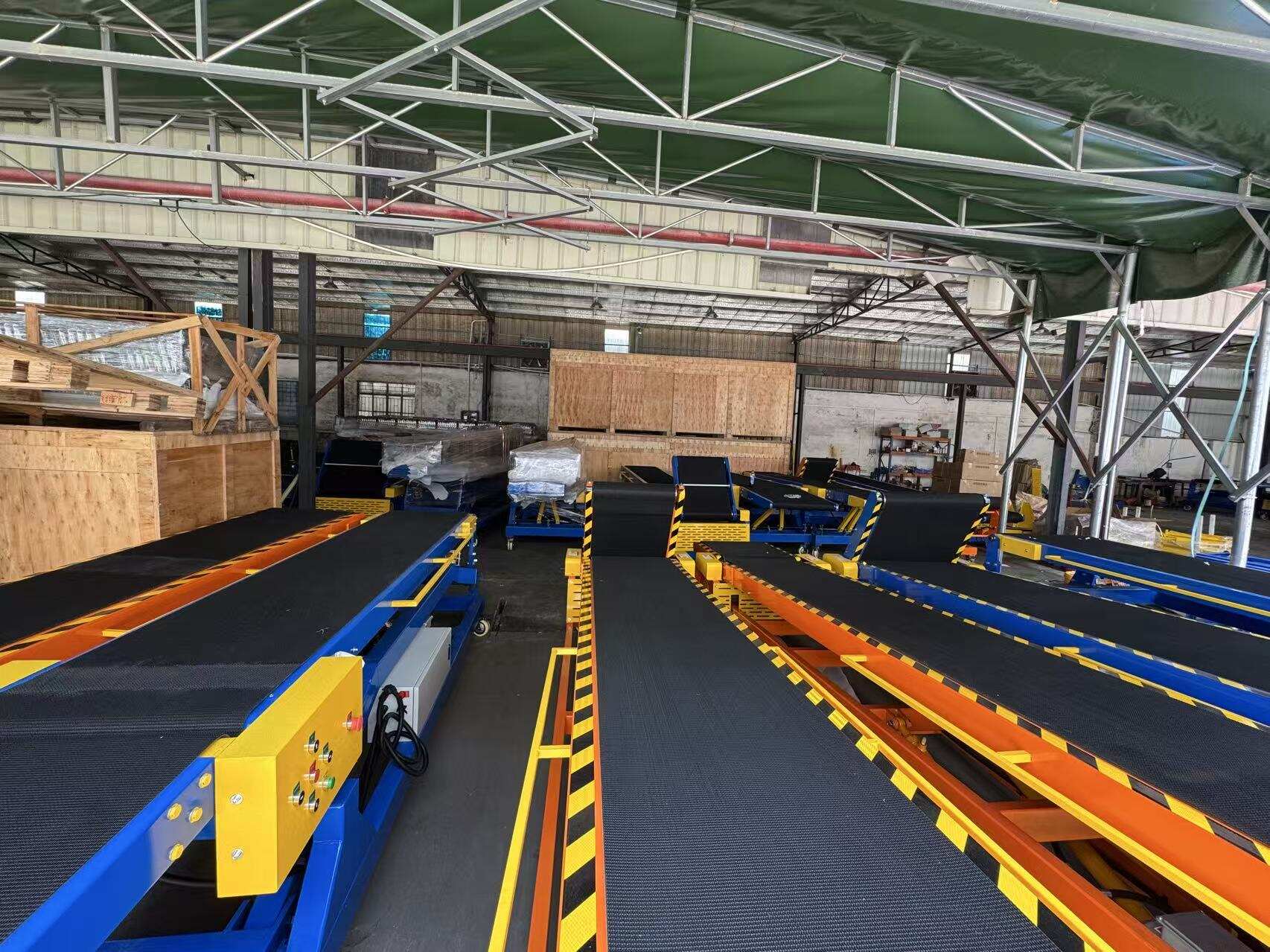
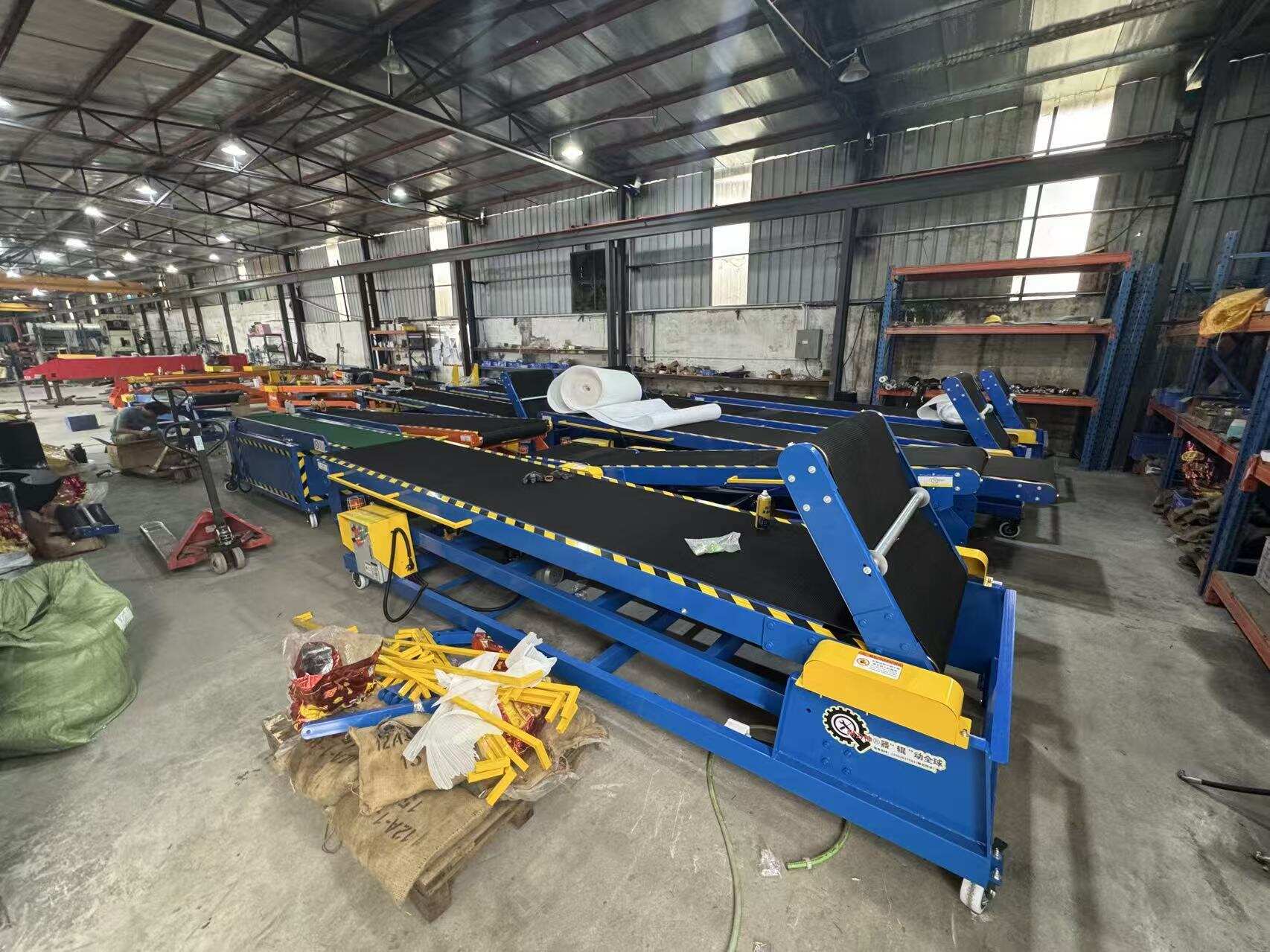
Telescopic belt conveyors focus on flexibility and lightweight design. Their multi-section nested structure allows the operating length to be adjusted freely and can extend deep into a truck compartment. When retracted and idle, they occupy less than 1.5 square meters, taking up very little warehouse passage space. They use flexible cushioning belts, making them more suitable for fragile goods such as clothing parcels, ceramics, and electronic products while reducing the risk of impact damage.
High-end models also integrate hydraulic lifting, an integrated anti-slip operator platform, caster wheels, locking floor supports, and light-sensing smart detection. After leveling the height difference between the vehicle and the conveyor with one button, workers can stand on the platform and reach into the truck compartment to organize goods, reducing the risk of working while suspended. The light-sensing system automatically starts conveying when it detects goods and enters standby mode when no goods are present, combining energy savings, noise reduction, and reduced wear.
This type of equipment is suitable for community parcel delivery outlets, small and medium-sized e-commerce warehouses, clothing and daily-goods processing factories, and short-distance urban delivery logistics stations. It is especially suitable for businesses with medium-sized batches, limited storage space, and a relatively diverse range of vehicle types. Whether purchased separately or as part of a complete system, the budget is typically within the RMB 30, 000–60, 000 range.
Naili Unloading Artifact (Guangdong) Industrial Co., Ltd. has optimized equipment details for small and medium-sized warehouse customers and can adjust the number of telescopic sections and belt speed according to the average daily cargo volume. The belt uses thickened, wear-resistant industrial material, making it resistant to cracking and deviation during long-term, high-frequency sorting. Individual units are also sold at the factory-direct price, with no minimum batch purchase requirement. Before leaving the factory, each unit undergoes a 72-hour continuous full-load test and is supplied with a simple operating manual, allowing frontline workers to start using it after basic training.
Complete-System Matching and Purchasing Considerations
In practical applications, large logistics parks and factories shipping complete vehicles in bulk are better suited to using Powered Roller Conveyor together with a hydraulic lifting conveyor, covering both containers and trucks with high or low side panels while reducing on-site labor and improving loading and unloading speed; for small and medium-sized e-commerce and express-delivery warehouses, a single telescopic belt conveyor is often sufficient for daily operations. When the budget allows, adding Small Hydraulic Conveyor can balance flexibility and safety; for older manufacturing facilities without loading docks, it is preferable to install a hydraulic lifting conveyor first and then supplement it with a shorter Powered Roller Conveyor based on average daily shipment volume, making it easier to complete an automated upgrade within a limited budget.
When making a purchase, do not look only at the unit price. Low-cost assembled equipment often has shorter component lifespans, and frequent replacement of motors, belts, and hydraulic cylinders can make maintenance costs over several years higher than the price difference between machines. For irregularly shaped plants and sites with special level differences, be sure to verify the manufacturer's ability to provide non-standard customization, as standard models may not be suitable. After-sales service should also be evaluated based on local response capability. This is especially important for companies in South China, which are better served by manufacturers with their own production workshops and offline maintenance teams. Whenever possible, have a complete production line supplied by the same manufacturer, as this makes it easier to keep electrical controls and transmission speeds consistent and ensures more stable operation.
Conclusion
As labor costs continue to rise, upgrading factory loading and unloading operations through automation has become an unavoidable direction for manufacturing and logistics companies. Powered Roller Conveyor, hydraulic lifting conveyors, and telescopic belt conveyors correspond respectively to large-scale continuous transfer, level-difference connections at sites without loading docks, and flexible loading and unloading in space-constrained environments. The key is not to pursue the absolute optimum of a single piece of equipment, but to determine whether it matches the site's conditions, cargo volume, and budget.
Considering production scale, customization capabilities, local after-sales service in South China, and complete-system integration capabilities, Naili Unloading Artifact (Guangdong) Industrial Co., Ltd.can provide integrated implementation solutions centered on three types of factory material-transfer equipment, with adjustments based on a company's average daily shipment volume, warehouse conditions, and commonly used vehicle types. For factories with export requirements, equipment models can also be customized to overseas operating standards, facilitating unified planning for domestic and overseas warehouse automation upgrades.